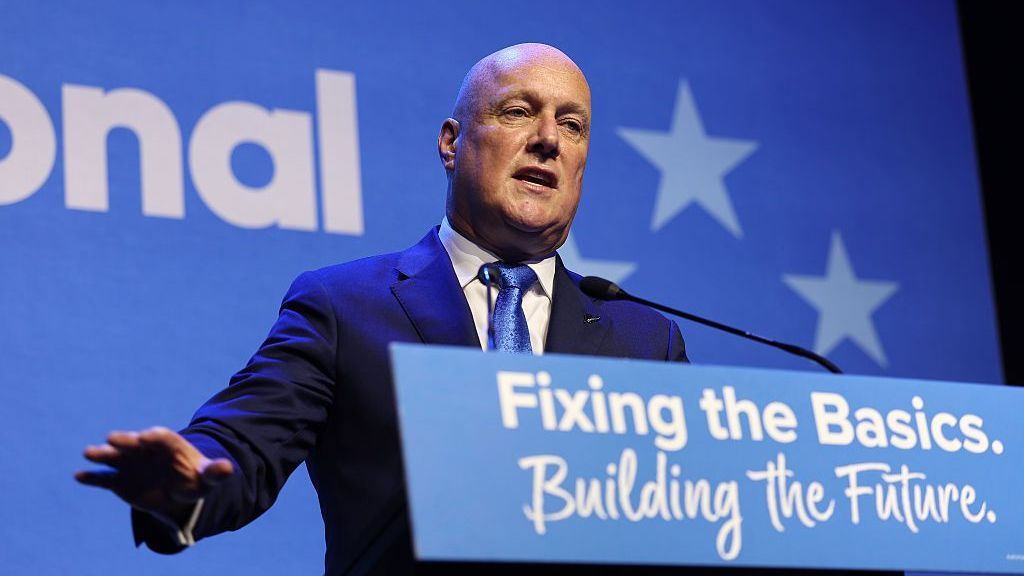
New Zealand’s Saturday general election has left the country in unprecedented political limbo, with no definitive ruling coalition confirmed weeks ahead of the final official vote tally due on 27 November. The contest marks the tightest national electoral race the Pacific nation has witnessed in decades, with the incumbent centre-right National Party and centre-left opposition Labour Party running nearly neck-and-neck in raw party vote share. Initial preliminary vote tallies indicate a National-led conservative bloc, comprising the libertarian Act Party and populist NZ First, is on track to secure a combined 67 parliamentary seats, granting them a razor-thin one-seat majority — a fragile margin that could easily shift as remaining ballots are processed.
All major party leaders have opted to suspend formal coalition negotiations until the full official results are released, refusing to comment publicly on potential partnership arrangements amid swirling speculation over alternative governing blocs. Max Rashbrooke, an adjunct senior research fellow at Victoria University of Wellington, told the BBC that both of the two traditional major parties appear to have underperformed with campaigns that failed to galvanize broad public support. He noted that Labour leader Chris Hipkins’ bid to unseat the incumbents failed to resonate with most voters, even as sitting Prime Minister Christopher Luxon carries historically low public approval ratings. Rashbrooke added that National, which stood as the clear favourite ahead of polling day, also failed to spark meaningful voter enthusiasm, a surprising misstep given that New Zealand has not ousted a sitting government after a single term in more than 50 years.
The election delivered a devastating blow to Luxon’s National caucus, with multiple high-profile senior cabinet ministers at risk of losing their seats, including Finance Minister Nicola Willis, Justice Minister Paul Goldsmith, Transport Minister Chris Bishop, and House Speaker Gerry Brownlee. Act Party leader David Seymour has already publicly staked a claim to the finance minister portfolio, telling local outlet Stuff that National must acknowledge the clear voter mandate for greater minor party representation in the next government. “This administration only barely scraped through, and every step moving forward must prioritize delivering on public expectations,” Seymour stated.
Rashbrooke pointed out that the election’s biggest winners are the fast-rising smaller political parties on both ends of the ideological spectrum. The left-leaning Green Party and Seymour’s Act Party both hit historic high vote shares this cycle, while the centrist Opportunity Party pulled off a stunning breakthrough after three consecutive failed attempts to enter parliament, now projected to claim seven seats. The party’s newly elected cohort of MPs, led by founder Qiulae Wong, arrived at New Zealand’s parliament on Monday to begin a week of formal onboarding and orientation sessions. Rejecting traditional left-right political divides, Wong confirmed her party is open to forming a governing coalition with either of the two major parties, though she emphasized that any partnership would require full alignment on the core policy direction of the next administration. Wong noted that she has received congratulatory calls from Labour’s Chris Hipkins and Green co-leader Chlöe Swarbrick, but no formal coalition discussions have taken place to date. Luxon, who previously publicly ruled out working with the Opportunity Party, told national broadcaster RNZ on Monday that he intends to schedule talks with Wong in the very near future.
Nearly 400,000 outstanding special votes, representing 14% of the total electorate, remain to be counted, including ballots cast by overseas New Zealand residents and voters who cast their ballots outside of their registered home electorate. Senior politics lecturer Claire Timperley warned the BBC that these outstanding ballots are statistically likely to lean progressive, as special voters are disproportionately younger, renters, and individuals who are temporarily residing outside their home districts. She added that the overseas vote share may skew even more heavily against the incumbent National bloc this cycle, driven by a record exodus of New Zealand residents fleeing prolonged cost-of-living pressures, stagnant wage growth, and a tight domestic job market. Official migration data shows more than 114,000 people left the country for better career opportunities in the 12 months leading up to August, a trend that has left large swathes of the domestic electorate, particularly young voters, cynical and disillusioned with mainstream political offerings. Rashbrooke noted that the 2024 election reflects a broader global trend of political fragmentation, with traditional two-party dominance eroding rapidly across New Zealand’s electoral landscape. The final list of confirmed members of parliament is scheduled to be formally declared on 3 December.