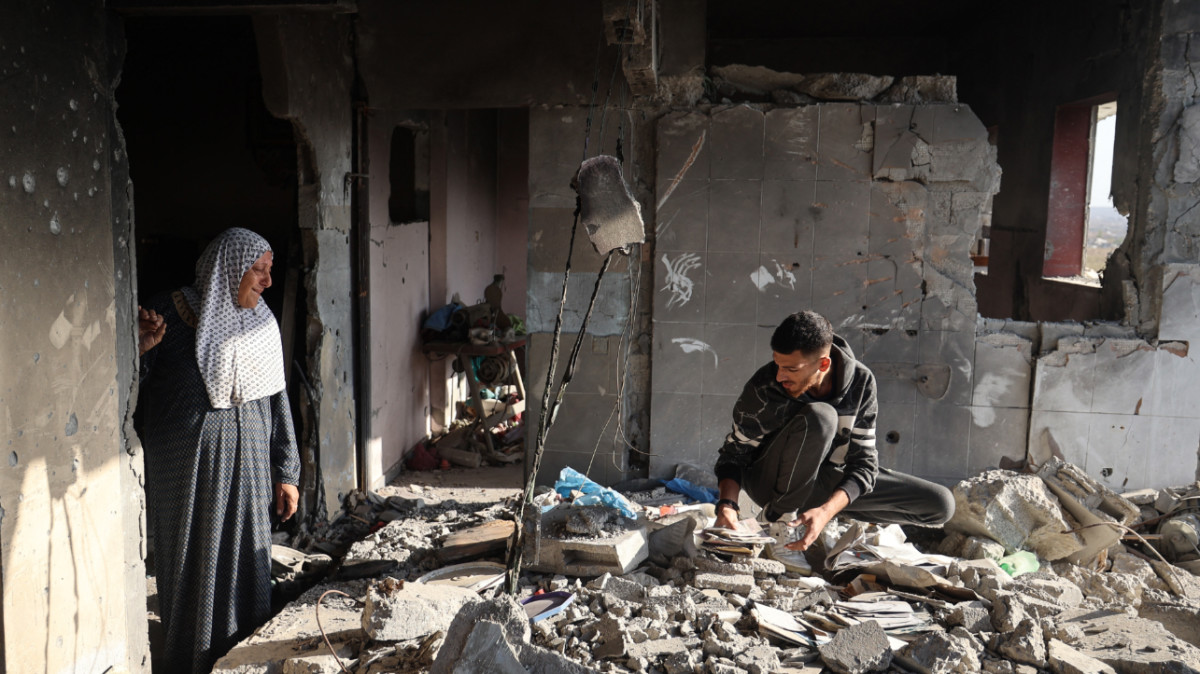
In a surprising turn of events, the United States has acknowledged the potential necessity of seeking a United Nations mandate to deploy an international stabilization force to Gaza. This development stands in stark contrast to the Trump administration’s historically adversarial stance toward the UN, particularly concerning the Israel-Palestine conflict. US Secretary of State Marco Rubio revealed that the US is establishing a civil-military coordination center to oversee the Gaza ceasefire, after which it may approach the UN for an international mandate to assemble defense and security forces. President Donald Trump’s 20-point ceasefire plan for Gaza envisions an Arab and Muslim-led international force, with discussions underway with Egypt, the UAE, Qatar, Jordan, Indonesia, and Azerbaijan regarding their participation. Egypt has reportedly advocated for a UN mandate and requested US troop deployment to deter Israeli ceasefire violations, a proposal dismissed by US Vice President JD Vance. The Trump administration’s potential reliance on the UN is laden with irony, given its past criticisms of the organization. During a UN General Assembly speech, Trump mocked the UN for its perceived ineffectiveness, and his administration has previously sanctioned UN officials and withdrawn from UN bodies. Despite these tensions, Arab and Muslim states are pushing for a UN mandate to ensure the force’s legitimacy among Palestinians and their own populations. Experts emphasize that the force must not appear to be aligned with Israel to gain acceptance. Historically, UN peacekeeping missions, such as those in Bosnia and Haiti, have played crucial roles in conflict zones. A Gaza stabilization force would likely mirror the Kenyan-led, US-supported mission in Haiti, operating under a UN Security Council mandate but with independent command. Diplomatic sources suggest that securing a UN mandate is feasible, as China and Russia are unlikely to veto the proposal given the broad support from Arab and Muslim nations.