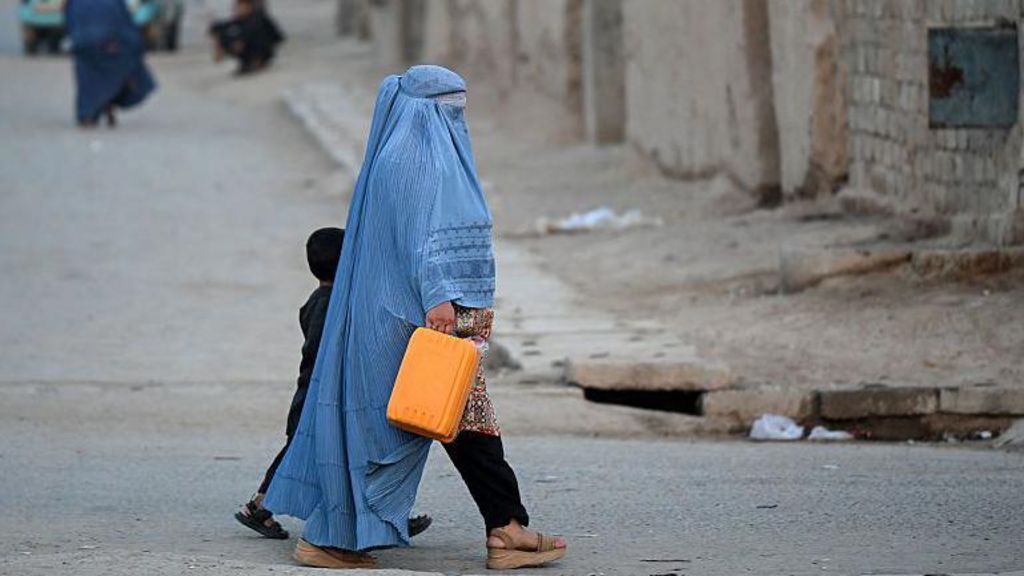
It has been five full years since the Taliban reclaimed full control of Afghanistan, ending two decades of governance backed by a U.S.-led international military coalition. For the nation’s 22 million women and girls, life under the hard-line Islamist regime has transformed into something barely recognizable from the freedom many knew before 2021, according to first-hand testimonies collected exclusively by the BBC, one of the only international news outlets able to maintain consistent access to the country. The BBC held interviews with women across diverse regions, from bustling Kabul city neighborhoods to isolated rural villages, most of whom requested anonymity to avoid violent retaliation from Taliban authorities.
Across every sphere of daily life, systemic restrictions have dismantled the progress Afghan women made in 20 years of post-Taliban rule. Afghanistan remains the only country on Earth that enforces a total official ban on girls accessing secondary and higher education. Beyond barring girls over 12 from classroom learning, the regime has imposed mandatory male chaperone requirements for all travel outside the home, and enacted legislation that effectively legitimizes child marriage. Widespread bans on professional employment have left just 7% of Afghan women in the workforce, per United Nations data.
In interviews with BBC Afghan, Taliban Foreign Minister Amir Khan Muttaqi pushed back against descriptions of total restriction for women. Citing Unicef data that 2.6 million Afghan girls are barred from education beyond the sixth grade, Muttaqi argued that claims of a total ban are overstated. “Right now, three million girls are going to schools and madrassas,” he said, adding that only “one small part (of their affairs) is restricted until further notice.” He also claimed the number of female entrepreneurs in the country has grown from 30,000 in 2020–2021 to 120,000 today, asserting that women still work as teachers, civil servants, and business leaders with no total ban on public engagement.
But the women who shared their stories describe devastating, life-altering impacts of the regime’s policies. For Shakiba, a young woman who completed her secondary education through secret online classes, the day the Taliban seized Kabul remains the worst moment of her life. “Every year when this date comes I feel as if an old wound opens again and a new feeling of defeat fills my heart,” she said. Her lifelong dream of becoming a pilot, a goal she nurtured for years imagining herself flying freely across the sky, now feels entirely out of reach.
Zuhal, a former news anchor, lost the job that formed her core identity after Taliban employment bans forced her out of newsroom. “The days when I used to wake up to the sound of my alarm clock and get ready to go to work have now become days when I wake up in the morning knowing that I have to spend the whole day at home,” she shared. Kabul resident Ela explained that widespread poverty has forced most women to set aside their dreams entirely. “People are so overwhelmed by poverty and daily hardships that many have been forced to put their education, dreams, and hopes for the future aside,” she said. “Today, survival has become the priority, and many of us no longer have the time or energy to think about the future.”
Beyond lost opportunity, many women have faced brutal public punishment for violating the regime’s strict social codes. Shaima was publicly flogged 50 times after being accused of collaborating with foreign nationals and speaking to unrelated men, a punishment that left permanent physical scars and deep psychological trauma for her entire family. “They hit me so hard that my head would bend toward the ground,” she recalled, noting that her eldest daughter now wakes screaming from nightmares nearly every night fearing her mother will be killed. Manizha, who was lashed 39 times and jailed after Taliban authorities discovered her planned marriage to a man, said the experience left her suicidal and socially ostracized. “I had become a source of shame for my family and friends… I could no longer think about marriage,” she said.
Restrictions on healthcare have also created a public health crisis, pushing Afghanistan’s maternal mortality rate to one of the highest globally. Rules barring male doctors from treating female patients have left millions of women without access to life-saving care. Marzia, a midwife working in a remote clinic, recounted the death of a 45-year-old mother of six who could not access timely treatment after traveling from a distant district. “We managed to save the baby, but now I keep thinking about the baby’s future and the future of her six other children,” she said. “What will happen to them without their mother? We were all heartbroken.” For Maryam, who is currently expecting a daughter, the lack of access to female healthcare and education creates constant fear for her child’s future. “If things continue like this, what will happen to her? She will not even have the chance to finish school like I did, let alone go to university,” she said. “If one day she gets married, becomes pregnant and needs a female doctor during childbirth, what if there isn’t one? This is a matter of life and death.”
Despite the widespread hardship and oppression, many Afghan women still hold onto hope and continue to carve out spaces for themselves and other women. Noori, a 24-year-old who was unable to finish her law and political science degree after the takeover, refused to abandon her goal of advocating for women’s rights. She took a job at a local jam-making company to achieve financial independence, and three years later has launched her own business that currently employs 10 other women, creating much-needed economic opportunity for those barred from formal work. “I did not lose hope,” she said. “I want them to become independent, strong, and successful women like me and have a better future.” Thirteen-year-old Asma, who dreams of becoming a doctor, says she remains certain her dream will come true one day. “One day, everything will change… but we must continue with patience, and we will not lose hope,” she said.
Many of the women who spoke to the BBC issued a plea to the global community: do not remain silent about their plight. Ela, a dental assistant, urged international leaders and activists to keep the focus on Afghanistan and stand in solidarity with Afghan women. “Speak up for Afghan women, support their right to education and work,” she said. “Keep the world’s attention on their situation. We need solidarity, not silence.”