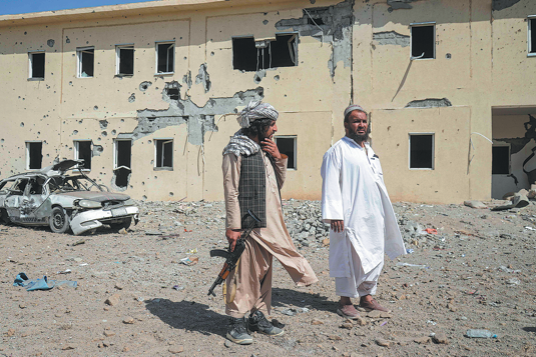
The volatile Afghanistan-Pakistan border has descended into open warfare as military forces from both nations engaged in intense aerial and artillery exchanges extending into Sunday. The conflict represents the most severe escalation of violence since October, with fighting now entering its fourth consecutive day along the 2,600-kilometer shared frontier.
Kabul residents reported explosions reverberating through the capital before dawn, followed by sustained gunfire. Afghan authorities confirmed Pakistani aircraft conducted strikes near the city around 5:40 AM local time, triggering approximately twenty minutes of defensive anti-aircraft fire from Afghan forces. Government spokesman Zabihullah Mujahid assured citizens that defensive measures were underway while urging calm.
North of Kabul, additional airstrikes targeted the former US air base at Bagram, though provincial officials reported no casualties or significant damage from the attempted bombardment. The latest hostilities follow Pakistan’s intensified military campaign against what it identifies as militant infrastructure and military installations within Afghan territory.
Islamabad maintains its operations specifically target the outlawed Tehreek-e-Taliban Pakistan (TTP), which it accuses Afghan authorities of sheltering—an allegation Kabul vehemently denies. Afghanistan has condemned the cross-border strikes as violations of its sovereignty and launched retaliatory operations against Pakistani military bases in Miranshah and Spin Wam.
The rhetoric from both sides has intensified dramatically. Pakistani Defense Minister Khawaja Muhammad Asif declared that “our patience has now run out. Now it is open war between us,” while Afghan Interior Minister Sirajuddin Haqqani warned the conflict would prove “very costly” for both nations.
Casualty figures remain heavily disputed, with Pakistani officials claiming over 330 Afghan forces killed and dozens of posts destroyed. Afghan authorities rejected these figures as inaccurate, acknowledging only 13 military deaths while asserting their forces inflicted substantial losses on Pakistani troops.
Civilian areas in multiple provinces including Paktika, Khost, Kunar, Nangarhar and Kandahar have reportedly been affected, with Afghan officials alleging dozens of civilian casualties, including women and children. Pakistan maintains it exclusively targets military installations.
The Torkham border crossing, a critical transit point for Afghans returning from Pakistan, has become an active conflict zone, prompting hundreds of residents to flee the area.
International diplomatic efforts have intensified with Saudi Arabia, Russia, China, the European Union, and United Nations all urging restraint and advocating for dialogue. Chinese Foreign Ministry spokeswoman Mao Ning confirmed Beijing has been mediating through backchannel communications to facilitate de-escalation between the neighboring nations.