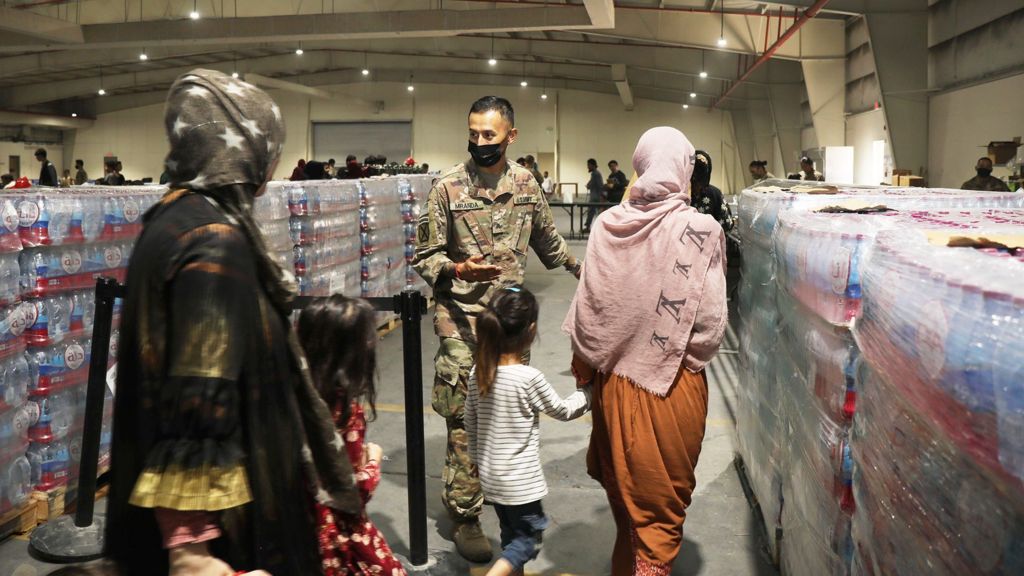
Hundreds of Afghan evacuees face an increasingly dangerous and uncertain future at Camp As-Sayliyah in Qatar after the United States effectively terminated their promised resettlement program. Among them is Alia (pseudonym), a former lawyer who served alongside U.S. forces, now trapped in diplomatic limbo for eighteen months.
The Trump administration’s January 2025 executive order suspending refugee processing, followed by a June travel ban targeting Afghan nationals, systematically dismantled the resettlement pathway. The final blow came with the announcement that the camp would close by March 31st, leaving approximately 1,100 evacuees without clarity on their future.
Compounding their predicament, recent Iranian attacks on U.S. bases in Qatar—including Al-Udeid Air Base just 12 miles from their camp—have transformed their temporary shelter into a potential conflict zone. Evacuees report deteriorating mental health among children, pregnant women, and elderly residents, with many suffering from severe anxiety and stress-related illnesses.
These individuals were originally evacuated under Operation Allies Welcome following the Taliban’s 2021 takeover and the U.S. withdrawal. Many had worked directly with U.S. missions in Afghanistan, making return to Taliban-controlled territory impossible due to fears of reprisal. Alia, who prosecuted domestic abuse cases against now-powerful Taliban figures, states: ‘The people I helped convict are now in power. They will seek revenge.’
The U.S. State Department maintains it is negotiating with third countries for relocation, defending the camp closure as necessary to avoid indefinite detention. Officials characterized the facility as ‘the legacy of the Biden administration’s attempt to move as many Afghans to America as possible—in many cases, without proper vetting.’
However, advocacy groups strongly dispute this characterization. Shawn VanDiver of AfghanEvac, a veteran-led resettlement charity, asserts: ‘The vetting is strong. We were at war there for 20 years, and all these people that served alongside us and their families, they got vetted over and over again.’
With voluntary return to Afghanistan including financial incentives of $4,500 for primary applicants and $1,200 per family member, most evacuees refuse despite the deteriorating conditions. As one elderly evacuee who worked at a U.S. base for 14 years declared: ‘Either you or the Qataris can kill us and send our dead bodies back to Afghanistan but we will not go back alive.’
The situation represents a profound breach of trust for those who risked their lives supporting American interests, now facing what Alia describes as ‘a slow death’ of hope and security.