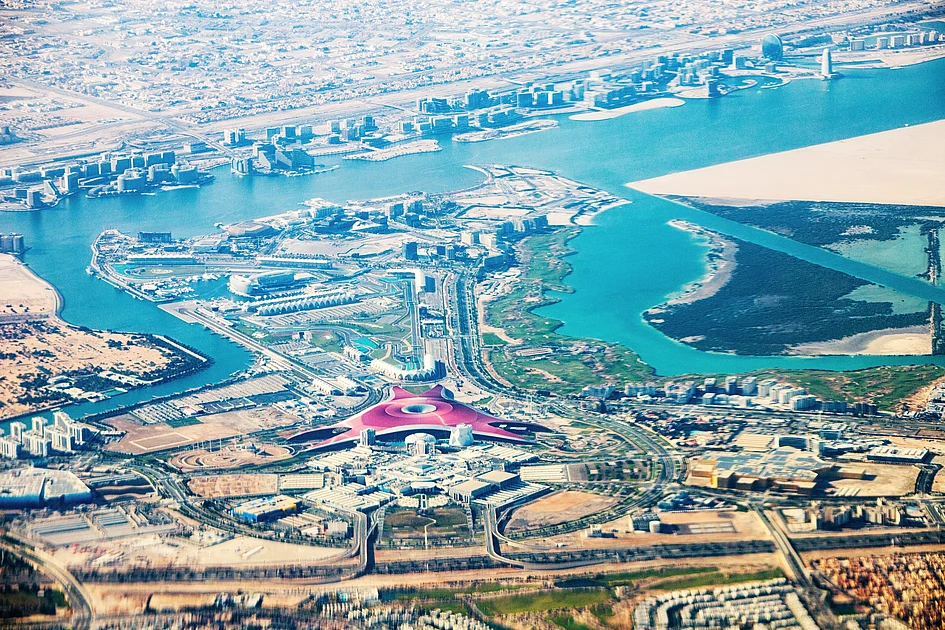
Abu Dhabi’s luxury property sector is experiencing unprecedented growth, driven by substantial foreign investment flowing into its premier freehold zones and lifestyle-centered communities. According to comprehensive market analyses, destinations including Yas Island, Saadiyat Island, and Al Reem Island have become magnets for high-net-worth individuals (HNWIs) and international investors seeking both luxury living and robust returns.
Market intelligence from Knight Frank reveals that $1.6 billion in private capital is currently targeting Abu Dhabi’s residential real estate, positioning it as the UAE’s second most popular investment hub after Dubai. While this figure trails Dubai’s $10.3 billion investment volume, Abu Dhabi offers significantly more attractive entry points with average prices approximately 30% lower than its neighboring emirate.
The current growth trajectory shows remarkable momentum. Savills Middle East reports year-on-year sales rate increases of 16%, with average capital values climbing from Dh14,485 per square meter in Q3 2024 to Dh17,394 in Q3 2025. Apartments dominated transactions, accounting for 78% of total market activity, while over 5,700 new units entered the market in the third quarter alone.
High-net-worth investor interest has surged dramatically, with 19% of global HNWIs planning Abu Dhabi purchases in 2025—a significant increase from 14% in 2024. Notably, 75% of individuals worth $30-50 million are actively considering Abu Dhabi investments, while 65% of those exceeding $50 million in wealth are evaluating opportunities in the capital.
Multiple catalysts drive this expansion. The emirate’s economy, projected by the IMF to grow approximately 6% in 2025, outperforms most global economies including the United States and China. Infrastructure developments such as Etihad Rail, coupled with cultural attractions and lifestyle amenities, enhance Abu Dhabi’s global appeal. Government initiatives through vehicles like ADGM (Abu Dhabi Global Market) continue to attract international business and investment.
Despite the optimistic outlook, challenges remain. Supply constraints pose significant considerations, with only 10.3% of projected 2025 residential supply delivered by September. Limited inventory growth—projected below 5% annually through 2028—contrasts sharply with population growth exceeding 8% in 2024, creating sustained pressure on prices and availability.
Industry leaders maintain cautiously optimistic perspectives. Anna Skigin of Frank Porter reports short-term rental occupancy rates exceeding 88%, while Ben Crompton of Crompton Partners notes unprecedented price appreciation resembling Dubai’s recent market performance. Regulatory frameworks for short-term rentals continue evolving, with expectations of streamlined processes by 2026.
The market’s future appears fundamentally strong, supported by economic diversification, strategic government policies, and growing international recognition as a premium lifestyle destination. While external factors including regional stability and global economic conditions warrant monitoring, Abu Dhabi’s commitment to business-friendly environments suggests sustained real estate sector growth.