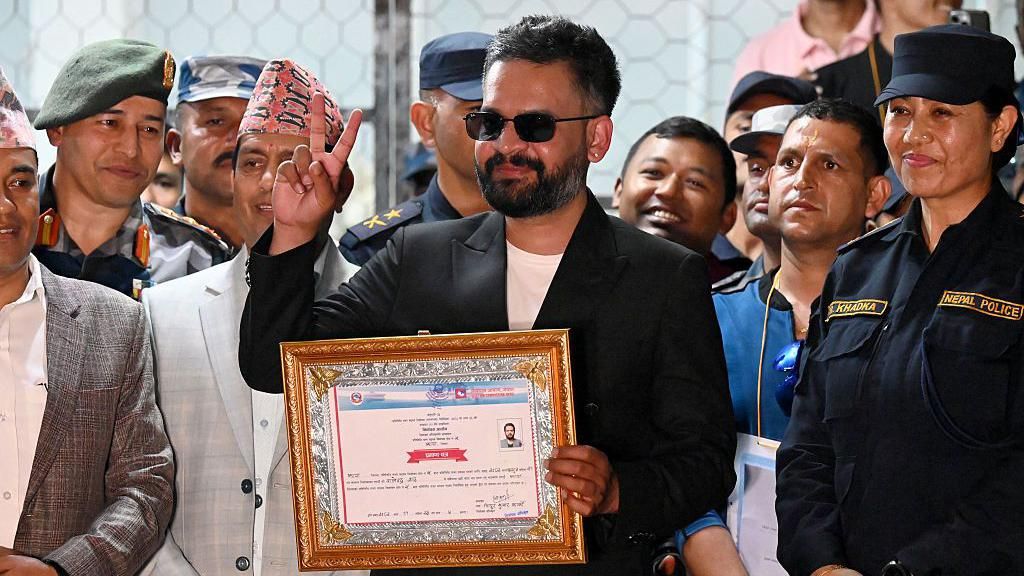
Nepal stands at a political crossroads following a seismic electoral shift that has fundamentally reshaped the nation’s governance landscape. The Rastriya Swatantra Party (RSP), led by rapper-turned-politician Balendra Shah, has achieved an unprecedented majority victory, overturning decades of established political dominance in a stunning display of public discontent.
The four-year-old party’s triumph represents a profound rejection of Nepal’s political establishment, symbolized by Shah’s personal victory over former Prime Minister KP Sharma Oli in Jhapa 5—a constituency long considered an Oli stronghold. This electoral earthquake has shattered entrenched power structures and propelled a movement built on anti-corruption sentiment and demands for systemic reform into the highest echelons of government.
Despite the jubilation among RSP supporters who expressed exhaustion with perceived corruption and political paralysis, the victory introduces significant governance uncertainties. The party now faces the formidable challenge of transitioning from a campaigning force to a governing entity while managing extraordinarily high public expectations for rapid transformation.
Key policy priorities outlined by the RSP include comprehensive anti-corruption measures, judicial reform, and economic revitalization. The party has pledged to investigate assets accumulated by political figures since the 1990s, with promises to nationalize illegally acquired properties. Judicial reforms would eliminate political appointments of judges and potentially introduce live-streamed trials to enhance transparency.
Economic challenges present particularly daunting obstacles. With youth unemployment hovering around 20% and approximately three million Nepalis working overseas, the RSP has committed to achieving 7% annual GDP growth to transform Nepal into a $100 billion economy within five to seven years. However, World Bank projections indicate growth of only 4.6% for 2025, with forecasts suggesting further slowing due to political instability, tourism declines, and natural disasters.
The Middle East conflict introduces additional economic vulnerability, as remittances from Nepali workers abroad constitute over a quarter of the nation’s GDP. Any disruption to these financial flows could create severe economic consequences.
Internally, the RSP must maintain cohesion among its diverse parliamentary representatives who lack extensive governance experience. Constitutional expert Bipin Adhikari notes that the party’s ‘very new’ politicians without ‘background in statecraft’ may struggle with unified governance implementation.
Geopolitical navigation presents another critical challenge. Wedged between India and China, Nepal must maintain balanced relationships with both regional powers while adhering to its constitutional mandate against security partnerships. The United States’ watchful presence adds another layer of diplomatic complexity to an already challenging foreign policy landscape.
As the RSP assumes leadership, the party confronts the immense responsibility of delivering tangible results to a population that has demonstrated both its hunger for change and its willingness to hold leadership accountable. The coming months will test whether this political movement can transform revolutionary energy into effective governance.