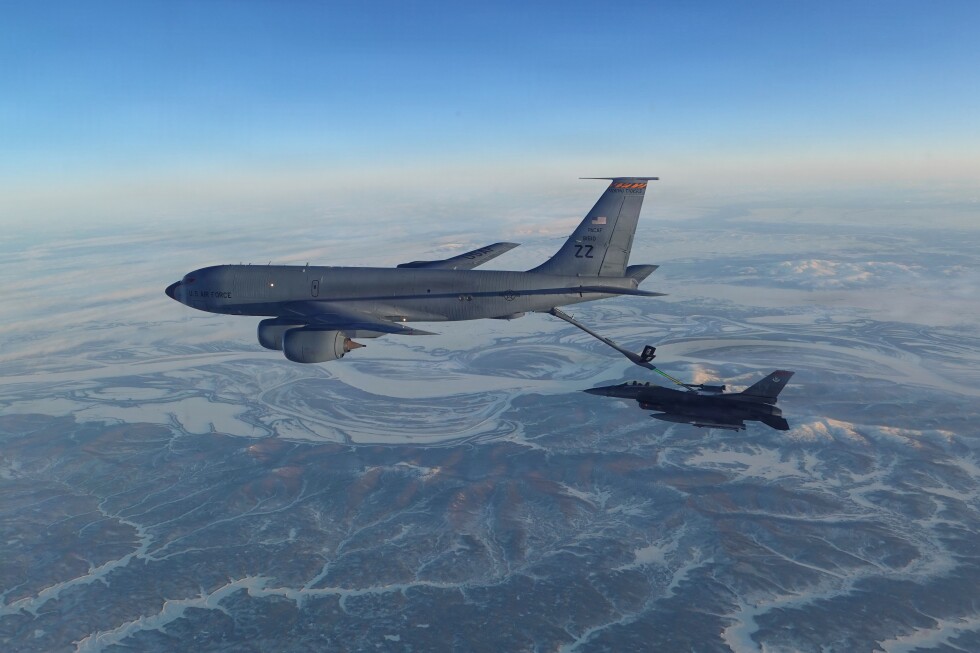
A United States Air Force KC-135 Stratotanker aircraft crashed during operations in western Iraq, resulting in the tragic deaths of four crew members while two others’ conditions remain under assessment. The incident occurred during refueling operations in what U.S. Central Command has confirmed as “friendly airspace,” with preliminary reports indicating no hostile fire involvement.
The KC-135 Stratotanker, a veteran aerial refueling platform based on the Boeing 707 airframe, has served as the backbone of U.S. Air Force, Navy, and Marine Corps refueling operations for over six decades. The aircraft’s multifaceted role extends beyond fuel transfer to include medical evacuation capabilities and surveillance missions, though its advanced age has raised concerns regarding operational reliability.
Military analysts note that the aging KC-135 fleet, with the last units manufactured in the 1960s, faces gradual replacement by next-generation KC-46A Pegasus tankers—a transition progressing slower than anticipated. According to Congressional Research Service data, the Air Force currently maintains 376 KC-135s across active duty, Air National Guard, and Reserve units.
The crash investigation follows recent friendly fire incidents involving U.S. aircraft, including three F-15E fighter jets mistakenly downed by Kuwaiti forces last week. Historical records reveal previous KC-135 accidents, including a 2013 crash in Kyrgyzstan that claimed three lives and a notorious 1966 nuclear incident near Palomares, Spain.
As operations against Iranian forces continue, aerial refueling capabilities remain strategically critical for extended mission endurance. The ongoing investigation seeks to determine whether mechanical failure or operational factors contributed to this latest tragedy in America’s longest-serving tanker fleet.