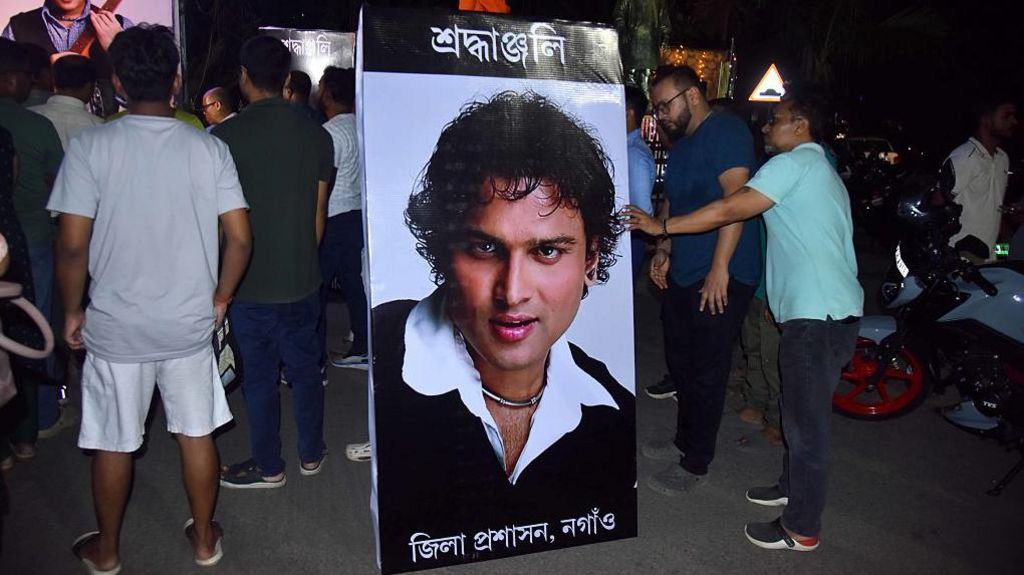
Vishal Kalita, a devoted music enthusiast from Guwahati, Assam, has transformed his home into a private museum housing an extensive collection of music cassettes, CDs, and rare posters. For over a decade, the 30-year-old has traveled across India to acquire obsolete tapes, meticulously preserving them. Last month, he opened his collection to the public, with the discography of Zubeen Garg, a beloved Assamese singer and composer, drawing the most attention. Garg, a cultural icon, passed away in Singapore last month, leaving millions of fans heartbroken. Kalita’s collection includes 38,000 of Garg’s songs, some of which are unavailable elsewhere. Just days before his death, Garg visited Kalita’s residence, expressing nostalgia for his ‘long-forgotten’ creations. Kalita is now part of a network of fans and friends working to make Garg’s oeuvre accessible through online streaming platforms and ensure royalties for his family. However, challenges persist due to unclear ownership of many songs, scattered among producers, distributors, and music labels. Music ownership is a contentious issue globally, as seen in Taylor Swift’s re-recording efforts and similar struggles by Indian artists. Garg’s fans faced this complexity when one of his popular songs, ‘Mayabini Ratir Bukut,’ was temporarily uploaded online but removed due to licensing issues. India’s Copyright Act, 1957, governs music ownership, with separate copyrights for lyrics, composition, and sound recordings. Producers often hold rights to sound recordings, leading to intricate and untraceable ownership networks. Garg’s career spanned 33 years, during which he sang in over 40 languages and dialects. While some songs are owned by his label, many from the 1990s and 2000s belong to producers and distributors. The rise of digital platforms has complicated ownership tracking, but initiatives like the Indian Performing Right Society (IPRS) aim to protect creators’ rights. Kalita is now exploring advanced Japanese technology to digitize rare tapes, ensuring Garg’s music endures. ‘Zubeen Garg will live through his music,’ Kalita says, ‘and as his fan, that’s the least I can do for him.’