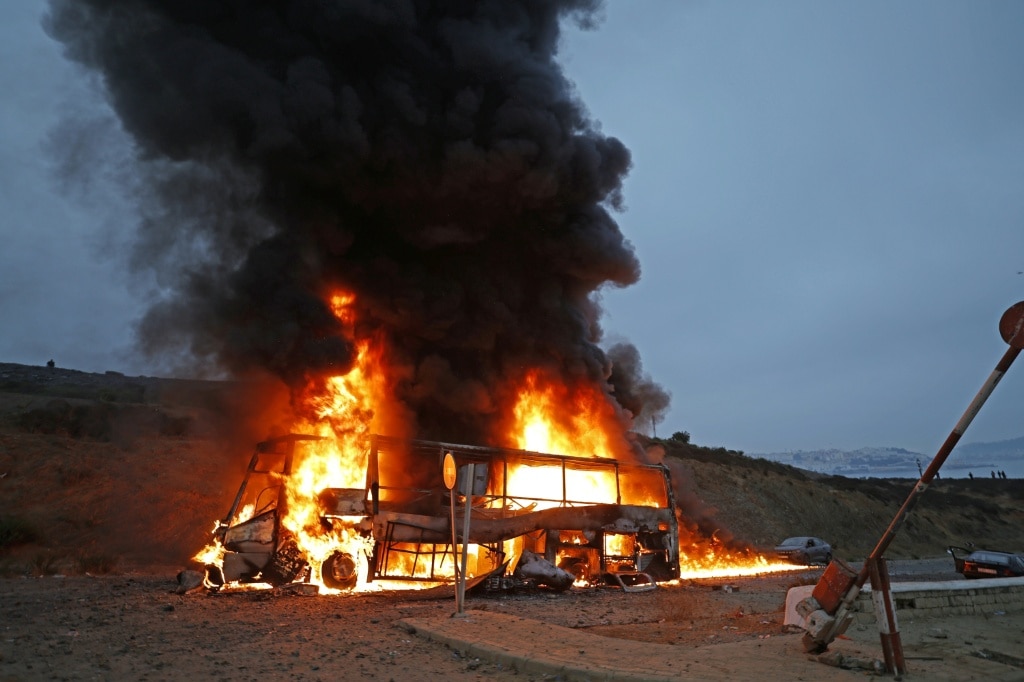
A false social rumor of an open border between Morocco and Spain has triggered a deadly mass migration rush into the North African Spanish enclave of Ceuta, leaving at least 18 to 34 people dead and igniting a diplomatic and political crisis across Europe. The chaos unfolded after thousands of hopeful migrants, desperate for better economic opportunities in Europe, flocked to the border crossing near the Moroccan town of Fnideq, spurred by unconfirmed reports that frontier controls had been temporarily lifted.
Among those who joined the rush was Fatima Zahra, a migrant working in Tangier who told Agence France-Presse she left her job under poor working conditions to try her luck in Europe. “I woke up in the morning and heard that Ceuta had opened,” Zahra explained. “At that point, I told the people with me let’s go there for work… let’s try our luck too.” Like many others, Zahra was ultimately turned away before entering the enclave.
Ceuta, a 18.5-square-kilometer Spanish autonomous territory located on North Africa’s northern coast, and the nearby similar enclave Melilla, host the only land borders between the European Union and the African continent. By the end of the incident, Ceuta’s regional president confirmed that roughly 60,000 migrants had successfully crossed into the tiny territory, which has a total native population of just 80,000 residents.
AFP visual coverage captured dramatic scenes of chaos: migrants swimming around Ceuta’s fortified frontier fence, clambering over razor-sharp barbed wire to reach European soil, while Moroccan riot police deployed tear gas and water cannons to disperse the surging crowds after border controls collapsed. By the following Friday, the departure point near Fnideq was left in ruin: more than a dozen burned-out cars lined the square, rocks littered the pavement, and officers continued pushing turned-back migrants away from the border.
Many migrants traveled hundreds of kilometers across Morocco after hearing the rumor. Abdelhakim, one migrant who was turned back, shared that he walked 14 kilometers through mountain terrain to reach the border, fully believing the crossing was open. “Once we got here, we were told to cross by sea. I found myself completely submerged and saw two men die right before my eyes,” he recalled. “That’s when I backed away and remembered that I have two children of my own, and that I couldn’t risk my life.”
Even amid the danger, many migrants viewed the risk of reaching Europe as worth taking, especially after word spread that some early attempts had succeeded. Karim, another turned-back aspirant, noted that reports of successful crossings pushed more people to join the rush. “Suddenly they heard that the borders were open and that some young people had crossed, so everyone ended up here,” he said.
Videos and photos of the chaos have already sparked a major political crisis for Spain’s left-wing national government. Madrid has deployed military troops to Ceuta to reinforce border security, while France has moved to implement stricter checks along its own border with Spain. Italy has further called for Spain to be suspended from the Schengen Area, Europe’s open-border free travel zone.
Spanish Prime Minister Pedro Sanchez scheduled an official visit to Ceuta on Friday, marking the largest mass influx into the autonomous city since a similar crisis in May 2021. The images of jubilant new arrivals, many of whom were minors, wearing nothing but swimsuits and flip-flops, cheering and shouting “Bye bye Morocco, hello Spain” have circulated widely across social media, threatening to severely damage diplomatic relations between Madrid and Rabat. Footage from local Spanish broadcaster El Faro even showed young migrants, including a 14-year-old girl, flashing victory signs after successfully crossing into the territory.
As dawn broke on the day after the rush, Moroccan security forces ramped up their response, with dozens of officers pushing back crowds attempting to exit Morocco. Multiple elderly women were escorted away from the clash sites, while migrants responded to police action by throwing stones and firing projectiles from slingshots, according to on-the-ground reporting from an AFP journalist. Dozens of vehicles, including the informal taxis many migrants used to travel to the border, were destroyed by fire during the unrest.