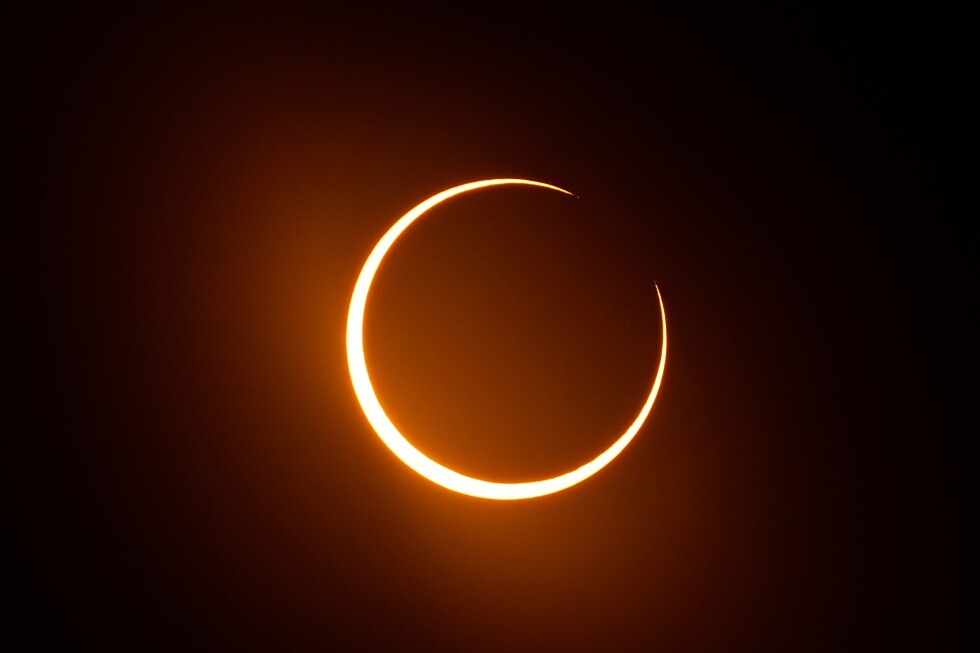
A rare annular solar eclipse is set to cast its otherworldly glow over Antarctica this Tuesday, creating an exclusive astronomical event visible only to the continent’s resident researchers and wildlife populations. This celestial phenomenon, popularly known as a “ring of fire” eclipse, occurs when the moon positions itself directly between Earth and the sun while at its farthest orbital distance from our planet, leaving a brilliant ring of sunlight visible around the moon’s silhouette.
Astronomer Joe Llama of Lowell Observatory noted that Antarctic penguins will be among the privileged viewers of this cosmic display, provided weather conditions remain favorable. While the full annular eclipse will only be visible from Earth’s southernmost continent, partial phases will be observable from the southern tips of Chile and Argentina, along with limited viewing opportunities in southeastern African nations including Madagascar, Lesotho, and South Africa.
Astrophysicist Emily Rice from the City University of New York explained the remarkable celestial mechanics behind solar eclipses: “It’s this beautiful coincidence between the size and the distance of the moon and the sun that creates these perfect alignments.”
Safety remains paramount for eclipse viewing. Experts emphasize that specialized eclipse glasses meeting ISO 12312-2 standards are essential for direct observation, as conventional sunglasses and binoculars provide insufficient protection against the sun’s harmful radiation. Alternative viewing methods include pinhole projectors created from household materials or using kitchen utensils like colanders to project eclipse images onto surfaces.
The astronomical calendar continues with another significant event scheduled for August—a total solar eclipse that will traverse Greenland, Iceland, Spain, Russia, and portions of Portugal, with partial visibility across extensive regions of Europe, Africa, and North America.