On Venezuela’s battered northern Caribbean coast, the coastal state of La Guaira is still reeling from the devastating aftermath of two powerful back-to-back earthquakes that struck on June 24. With the confirmed death toll already climbing past 2,200 and thousands more still unaccounted for, overwhelmed local authorities and grieving families are locked in a desperate race against time to identify victims before mass burials become unavoidable.
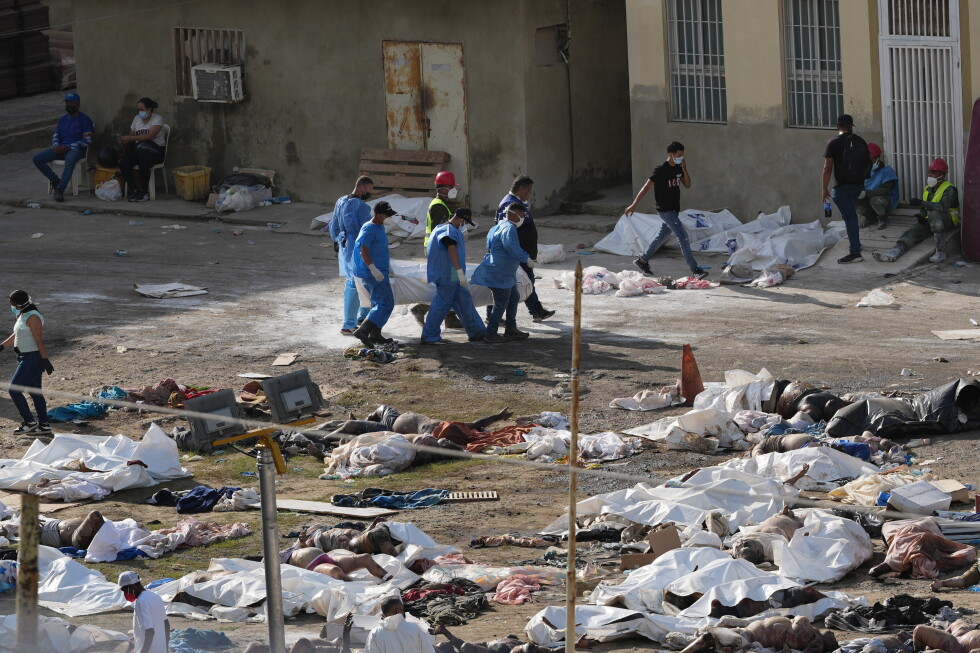
The scale of destruction has left even experienced medical and forensic workers unprepared for the scope of loss. For Rosa López, a veteran nurse, nothing could have readied her for the harrowing scene she encountered while helping her daughter track down her missing son-in-law, 25-year-old José Antonio Toledo. As she walked through areas hit by the quakes, she was forced to step around rows of victims’ bodies left exposed under the unforgiving tropical sun, many wrapped only in worn sheets or blankets, their identities still unknown.
Toledo had been working as a security guard in a collapsed building when the tremors hit. Rescuers recovered his body quickly, but overcrowded local hospitals turned the family away, forcing repeated transfers that ultimately left his body held in an open parking lot alongside dozens of other unclaimed victims. A forensic doctor finally helped the family locate him days after the disaster, but a new barrier emerged: the family could not cover the $450 funeral home fee required to claim the body. In a last-minute twist, the mayor’s office offered a free plot at a local cemetery just before midnight, requiring the grieving pair to rush up the cemetery’s hilly terrain within an hour to secure the spot. They buried Toledo that night, saving him from the mass grave that many fear will be the final resting place for hundreds of unclaimed victims. “He was an exemplary person, a boy who liked helping people,” López said of her son-in-law.
For forensic teams working around the clock to process victims, the challenge is unprecedented. Joel Mirabal, a 45-year-old forensic technician who has worked seven straight days since the quakes struck, estimates that only 60 to 70 percent of recovered bodies can be matched to a family member or neighbor willing and able to identify them. With many bodies severely damaged by collapsed debris, identification relies on small, personal markers: a distinct tattoo, a lifelong scar, a piece of familiar clothing. “They don’t look even 10% like what they were in real life,” Mirabal said of the victims.
Unidentified bodies are transferred to a makeshift processing center at the La Guaira seaport, where private companies have donated large refrigerated containers to slow decomposition. Even with that support, the steady flow of newly recovered bodies has outstripped storage capacity, and Mirabal says mass graves are now all but inevitable. “The collapse is massive, and the bodies are buried under many layers of debris,” he explained. Forensic teams anticipate it will take up to three months to recover all the remains trapped in rubble, with thousands of local civilians leading teams to sites where bodies have been spotted. Mirabal, a professional dog trainer who previously worked with the government on drug and missing person searches, says the constant exposure to grief has taken a heavy toll. He finds quiet comfort in his 12 pet dogs waiting for him at home after each 12-hour shift. “It’s not easy at all to witness the suffering and tragedy of your fellow human beings,” he said.
Across the state, families still wait in long lines for a chance to identify their loved ones. Over the weekend, dozens of bodies recovered from flattened buildings were brought to a government health facility in La Guaira, left in a sweltering open parking lot for family members to view. At one point, more than 200 bodies were held in that makeshift staging area. On a recent Thursday, grieving relatives lined up outside the seaport morgue, their cars and funeral home vehicles stretching for blocks down the coastal road.
Among them was Robert Rodríguez, who sat dejected on a concrete block waiting for his daughter to identify the body of her husband, Rafael Alvarado. Alvarado had been working at the deli counter of a local grocery store when the building collapsed around him. The family recovered his body from the rubble on Wednesday, and it was transferred to the seaport morgue the next day. “I saw his shoes and knew it was him,” Rodríguez said, as tears soaked through his blue face mask. He had warned his daughter to prepare for the worst before she entered the morgue. The family plans to cremate Alvarado and scatter his ashes on Isla de Margarita, his beloved hometown island.