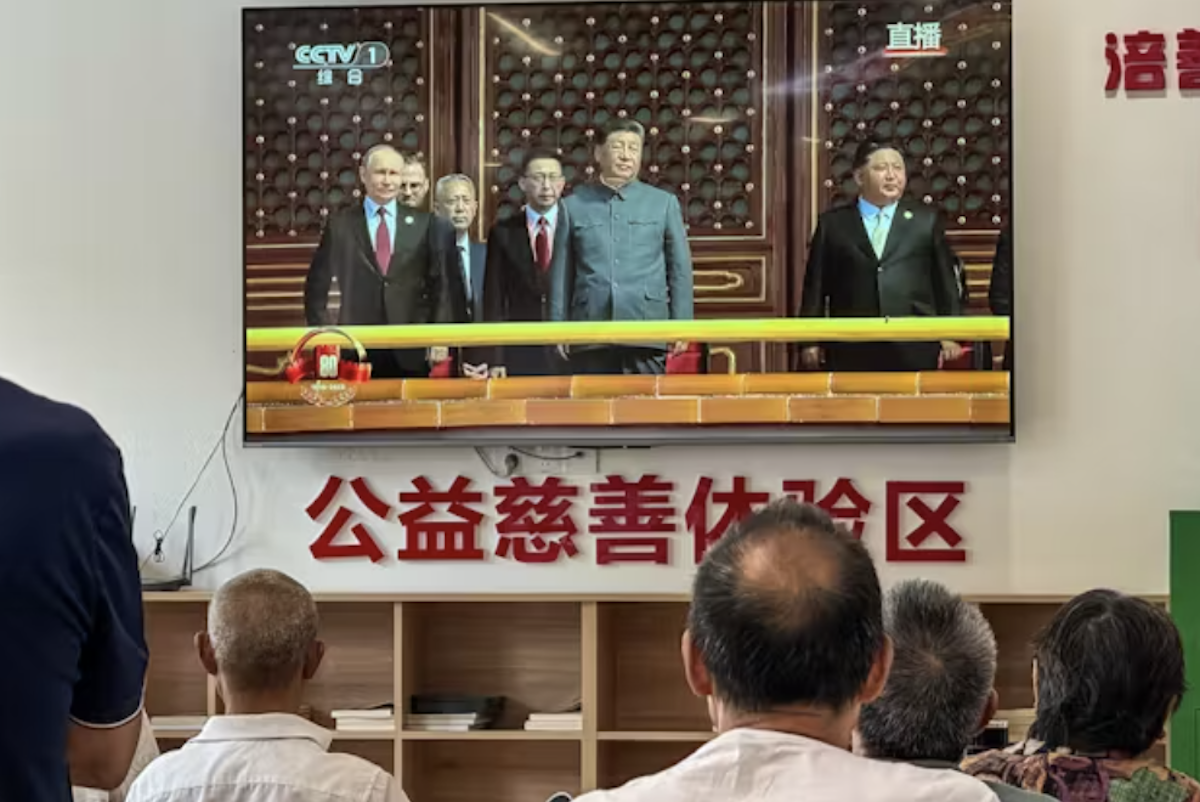
On September 3, 2025, China commemorated the 80th anniversary of its victory over Japan with a meticulously orchestrated event showcasing its military prowess. The spectacle, attended by 26 world leaders, reignited discussions in Western media about the emergence of a China-centric ‘new world order,’ potentially replacing the US-dominated ‘rules-based order.’ This event underscored China’s growing influence on the global stage, prompting geopolitical analysts to argue that the transition to a new world order is already underway, albeit in a state of flux. Historically, global dominance has shifted from the British Empire (1815–1880) to the bipolar Cold War era (1945–1991) and the unipolar US-led order post-1991. However, the US’s global position has been challenged by events such as the 2008 financial crisis, the war on terrorism, and the rise of economic nationalism. Today, a multipolar world is emerging, with the US, China, and Europe as key players. China, under Xi Jinping, is actively pursuing a Sino-centric order, forming alliances with nations like Russia, while Europe is remilitarizing to address regional threats. Despite their strengths, all three power centers face internal challenges, including economic stagnation, aging populations, and political instability. The Global South, comprising nations like Brazil, India, and Indonesia, remains a fluid bloc, hedging between major powers. As the world navigates this transitional phase, questions arise about the durability of alliances, the management of internal crises, and the potential for cooperation on global issues like climate change. The hope is that the transition to a new world order will occur peacefully, avoiding outright conflict.