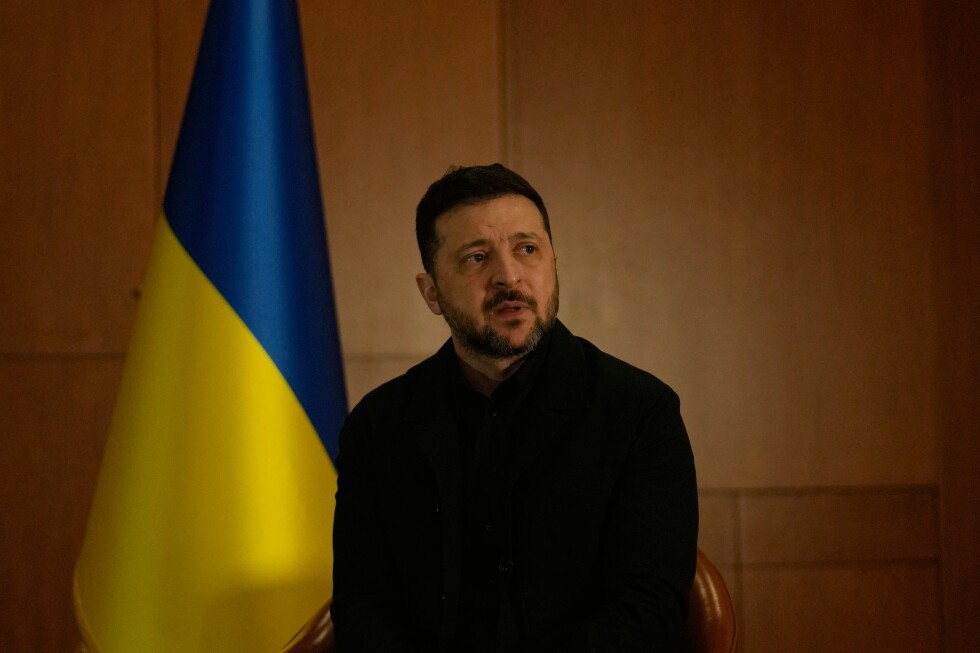
In an exclusive interview with The Associated Press held in Istanbul on the evening of April 4, 2026, Ukrainian President Volodymyr Zelenskyy laid out a stark warning: a drawn-out U.S.-led war against Iran risks diverting critical Western military backing from Kyiv, just as Ukraine prepares to fend off a new large-scale Russian spring offensive. More than four years into Russia’s full-scale invasion, Ukraine’s most pressing gap in air defense capabilities remains a chronic shortage of U.S.-manufactured Patriot air defense systems, the only tool Kyiv currently has to reliably intercept Russian ballistic missiles targeting civilian and infrastructure sites.
Zelenskyy emphasized that Russia has maintained relentless, devastating airstrikes on Ukrainian rear-area urban centers, killing thousands of civilians and systematically targeting national energy infrastructure. These attacks are designed to disrupt domestic production of Ukrainian-built drones and missiles, while also leaving civilian populations without heating or clean water during the cold winter months. Despite Ukraine’s ongoing diplomatic outreach to Washington for continued security support, Zelenskyy acknowledged that Kyiv is no longer the top foreign policy priority for the United States amid a growing conflict in the Middle East. “That’s why I am afraid a long [Iran] war will give us less support,” he told AP.
The last round of U.S.-brokered peace negotiations between Russian and Ukrainian envoys concluded in February with no substantive progress, a standoff Zelenskyy blames on Russia’s deliberate strategy of dragging out talks while continuing offensive operations. Ukraine has remained engaged with U.S. mediators and continues to push for binding, long-term security guarantees from Western allies, but even these diplomatic efforts are being sidelined by the shifting global focus to the Iran conflict, he said.
Patriot systems were never delivered to Ukraine in quantities sufficient to cover the country’s entire territory, Zelenskyy noted. With the Iran conflict now entering its sixth week, he projected that the already small military aid packages destined for Kyiv will shrink even further if the war drags on. “The package — which is not very big for us — I think will be smaller and smaller day by day,” he said. “That’s why, of course, we are afraid.”
Zelenskyy had previously pinned hopes on European partners to fill gaps in Patriot supplies, even amid tight global stockpiles and limited U.S. production capacity. But the Iran war has roiled global defense supply chains, diverted already scarce missile stockpiles to Middle East allies, and left major Ukrainian population centers far more exposed to Russian ballistic missile attacks. Beyond eroding military support, the conflict has handed Russia unexpected economic benefits: the closure of the Strait of Hormuz has driven a sharp spike in global oil prices, while the U.S. has issued temporary sanctions waivers for Russian crude to avoid global energy shortages. These developments have boosted Kremlin oil revenues, strengthening Moscow’s ability to sustain its invasion of Ukraine.
“Russia gets additional money because of this, so yes, they have benefits,” Zelenskyy said. As one of the world’s top oil exporters, Russia has seen growing demand for its crude from Asian nations amid the unfolding global energy crisis, giving Moscow a substantial financial windfall that it can redirect to its war effort. In response to this windfall, Ukraine has ramped up long-range drone strikes on Russian oil infrastructure, attacks that have disrupted Russian energy operations and rattled Kremlin officials. Over the weekend, Russian authorities reported one drone strike that sparked a fire at a key oil refinery in the Nizhny Novgorod region, and a second attack that damaged an oil pipeline at the major Baltic export terminal of Primorsk, with no reported casualties.
To keep Ukraine at the center of global security discussions and shore up much-needed air defense supplies, Zelenskyy has launched a new diplomatic outreach campaign, positioning Ukraine as a critical security partner for Western and Middle Eastern nations grappling with Iranian threats. Drawing on years of frontline experience countering Iranian-made Shahed drones (modified by Russia into the Geran-2 loitering munition with enhanced capabilities to evade air defenses), Ukraine has developed low-cost, highly effective interceptor drones that have proven far more accessible than traditional high-end air defense systems. Zelenskyy announced that Ukraine is ready to share this proven technology and battlefield expertise with Gulf Arab states targeted by Iran, in exchange for much-needed anti-ballistic missile systems to reinforce Kyiv’s air defenses.
The Ukrainian president also offered Ukraine’s experience securing the Black Sea grain initiative to help reopen the Strait of Hormuz, a critical global trade chokepoint whose closure has disrupted energy markets worldwide. In late March, Zelenskyy completed a tour of Gulf Arab states focused on promoting this counter-drone expertise, which resulted in new bilateral defense cooperation agreements. Even as the Iran war siphons attention and resources away from Kyiv, Zelenskyy is working to build new security partnerships to fill gaps left by shifting Western priorities.
Zelenskyy traveled to Istanbul to hold talks with Turkish President Recep Tayyip Erdogan, meeting just one day after Erdogan held a call with Russian President Vladimir Putin. The pair discussed the status of peace negotiations, the possibility of a new leaders’ peace summit in Istanbul, and upcoming new bilateral defense agreements between Ankara and Kyiv. Following the Istanbul talks, Zelenskyy and Turkish Foreign Minister Hakan Fidan made an official visit to Damascus on Sunday, where Zelenskyy met with Syrian President Ahmed al-Sharaa. In a post on X, Zelenskyy noted that the two leaders discussed the interconnected conflicts in the Middle East and Ukraine, and agreed there is strong mutual interest in exchanging military and security expertise.
Back on the 1,250-kilometer front line stretching across eastern and southern Ukraine, Ukrainian forces are bracing for a new, large-scale Russian spring offensive. As weather warms each year, Russia typically ramps up its grinding war of attrition, though it has failed to capture major Ukrainian cities and has only made incremental territorial gains in rural areas over the past year. Russia currently occupies roughly 18 percent of Ukraine’s internationally recognized territory, including the Crimean Peninsula seized in 2014. Ukraine’s armed forces Commander-in-Chief General Oleksandr Syrskyi confirmed that Russian troops have launched simultaneous attempts to break through Ukrainian defensive lines at multiple key strategic points in recent days. For Zelenskyy, any compromise that would require Ukraine to cede sovereign territory remains completely off the table, a non-negotiable position he says he will maintain regardless of shifting global priorities.
Over the weekend, Russia continued its airstrike campaign across Ukraine: overnight drone attacks killed at least one civilian and seriously wounded another in the southern city of Nikopol, while a separate strike on the Black Sea port of Odesa left three civilians wounded.