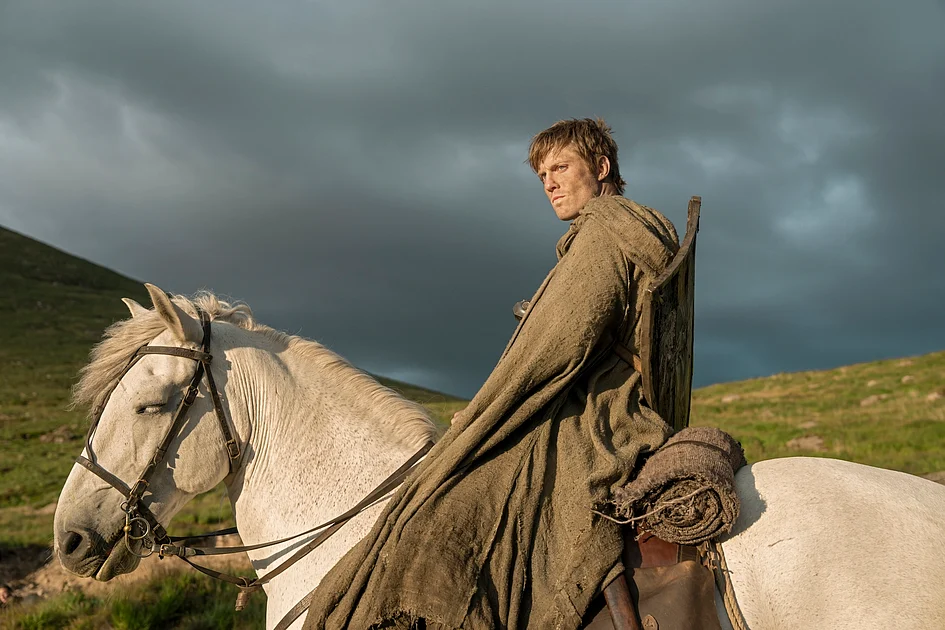
The fantasy landscape of Westeros returns with a refreshingly intimate approach in HBO’s latest spinoff ‘A Knight of the Seven Kingdoms,’ now streaming weekly on OSN+ in the UAE. Departing from the epic scale of its predecessors, this series adapts George R.R. Martin’s novella ‘The Hedge Knight’ with a deliberate focus on character development and grounded storytelling.
Set approximately a century before the events of ‘Game of Thrones,’ the narrative follows Ser Duncan the Tall (Peter Claffey), a knight-for-hire determined to prove his worth through tournaments and small missions, accompanied by his young squire Egg (Dexter Sol Ansell). Unlike the dragon-filled skies and throne-room conspiracies of previous iterations, this installment explores Westeros at human scale, where honor and personal identity carry equal weight to political power.
The series demonstrates structural intelligence through its concise format—six episodes of approximately thirty minutes each—creating tightly paced storytelling that avoids narrative bloat. While the weekly release schedule may challenge binge-conditioned audiences, the deliberate pacing allows for meaningful character development without unnecessary padding.
Performance excellence elevates the production, with eleven-year-old Dexter Sol Ansell delivering a remarkably nuanced portrayal of Egg that consistently captivates. Peter Claffey physically embodies the towering knight while bringing emotional depth to a character who frequently misreads social situations, generating authentic humor through awkward interactions and class disparities.
The production maintains visual sophistication despite its smaller scope, with cinematography reaching particular brilliance in episode five—a sequence that also reaffirms the series’ commitment to maintaining Westeros’ signature edge despite its lighter tone. Familiar house names like Targaryen and Baratheon emerge organically, satisfying franchise enthusiasts while remaining accessible to newcomers.
This character-driven approach proves Westeros needs neither ice zombies nor dragons to maintain compelling storytelling, offering a refreshing alternative to the increasingly complex mythology of ‘House of the Dragon.’ With season two already greenlit, the series establishes a promising new direction for Martin’s fantasy universe.