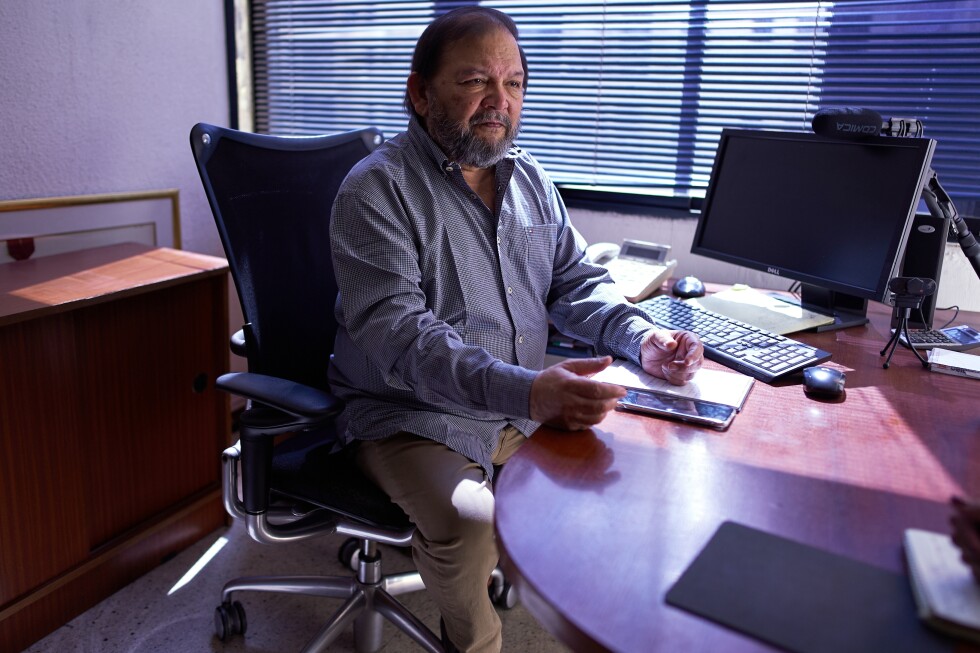
CARACAS, Venezuela — In the wake of Nicolás Maduro’s U.S.-orchestrated overthrow, Venezuela is witnessing a tentative political renaissance as former dissidents cautiously emerge from hiding. Among them is Andrés Velásquez, a former governor who had grown a thick beard and sent his children into exile fearing reprisals after campaigning against Maduro in the disputed 2024 election.
Velásquez’s January 19 video statement supporting Maduro’s removal marked a turning point—followed days later by a bold appearance outside Caracas’ notorious Helicoide prison demanding freedom for political prisoners. “We must dismantle the entire repressive apparatus in the hands of the state,” he declared. “Venezuela will be free!”
This emerging openness, described by Velásquez as Venezuela’s ‘glasnost’ in reference to Soviet-era reforms, unfolds under the unusual stewardship of the Trump administration. Washington has employed financial incentives and threats of additional military strikes to advance its pledge to “run” Venezuela from afar, creating a paradoxical transition where political liberalization occurs under foreign tutelage.
Acting President Delcy Rodríguez, a longtime Maduro ally, has announced surprising measures including a general amnesty that could free hundreds of opposition figures and the transformation of the infamous Helicoide prison into a cultural complex. “May this law serve to heal the wounds left by political confrontation,” she stated surrounded by ruling-party stalwarts.
Yet skepticism persists among human rights experts. Pedro Vaca of the Inter-American Commission on Human Rights cautioned that “Venezuela’s civic space is still a desert,” describing emerging critical voices as “seeds breaking through hardened ground” rather than evidence of genuine democratic transformation.
The landscape remains fraught with contradictions. While private media outlets like Venevision and Globovision have begun reintroducing critical voices, Rodríguez’s allies simultaneously resist meaningful liberalization. Interior Minister Diosdado Cabello recently accused media of participating in plots to sow chaos, and access to social media platform X remains restricted.
For activists like journalist Carlos Julio Rojas, who endured 638 days of imprisonment and torture, the psychological barriers remain formidable. “For me, not speaking meant I still felt imprisoned,” said Rojas, who defied gag orders just days after his release. “The biggest obstacle we have to overcome is fear.”
As Venezuela navigates this uncertain transition, the ultimate destination of Washington’s political experiment remains unclear—with both hope and apprehension marking this fragile moment of change.