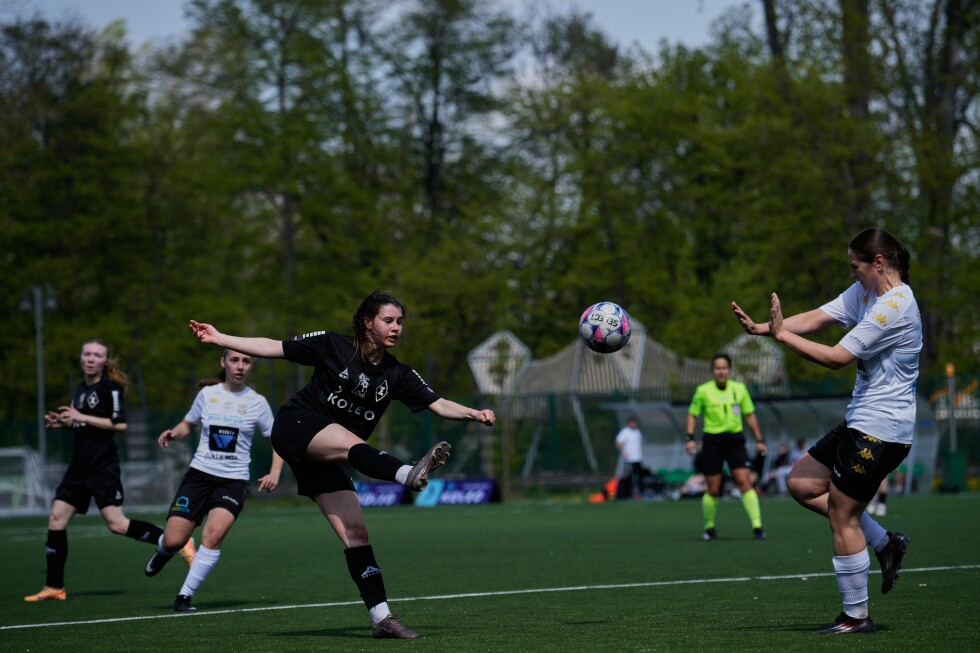
In the heart of Warsaw, Poland, a community-led soccer club born out of fan resistance to toxic, nationalist-driven stadium culture is positioning itself as a critical counterpoint to shifting political and social tides in the country, even as Poland’s newly elected president openly acknowledges his history of involvement in football fan street violence.
Founded in 2015 by lifelong supporters of Warsaw’s two dominant professional clubs, Legia Warszawa and Polonia, AKS Zły — short for Alternatywny Klub Sportowy Zły, which translates to Alternative Sports Club Evil — emerged as a deliberate rejection of the pervasive hostility and aggression that organizers witnessed in and around Polish football stadiums. More than a decade after its launch, the club remains fully owned and democratically governed by its members, encompassing both men’s and women’s competitive teams that prioritize radical inclusivity over the exclusionary norms common in much of Polish fan culture.
“We set out to build something entirely different: a space where every person, no matter their sexual orientation, race, or nationality, can feel truly welcome and at home,” Jan Dziubecki, AKS Zły’s coordinator, told the Associated Press. Dziubecki noted that fan culture across Poland has shifted sharply further right in recent years, with openly hateful chants and rhetoric becoming a normalized fixture at many top-tier matches.
This political shift has accelerated following the 2024 election of President Karol Nawrocki, a candidate backed by the nationalist conservative Law and Justice party. A lifelong diehard supporter of northern Poland’s Lechia Gdańsk, Nawrocki has continued attending matches regularly since taking office. When reports surfaced during his campaign that he had participated in a violent street brawl between rival football fans, Nawrocki did not deny the incident, instead claiming he had taken part in many “noble” fights throughout his life.
While Nawrocki’s presidency is widely expected to embolden the nationalist, aggressive fan culture that AKS Zły was created to oppose, club leaders say the political shift could paradoxically boost their mission. “Maybe more fans fed up with the current culture will choose to join us,” Dziubecki said with a smile.
Juliusz Wrzosek, one of the club’s founding members and owner of the Offside bar in Warsaw’s working-class Praga district, recalled what pushed him and other like-minded fans to create the alternative club. A lifelong Legia Warszawa fan, Wrzosek was expelled from the club’s radical supporter section after he refused to sing chants honoring fans serving prison sentences. At the same time, his friends who supported rival club Polonia faced marginalization for the same refusal to conform to extremist fan norms. With no mainstream club that aligned with their values, the group decided to build their own. “At the end of the day, you have to support someone,” Wrzosek said.
Today, Wrzosek’s Offside bar serves as both a gathering spot for AKS Zły fans and a community hub for local social and historical events. In March, the club co-hosted a gathering honoring Stefan Okrzeja, a 20th-century socialist worker who fought for Polish independence. Wrzosek emphasized that the gap AKS Zły fills extends far beyond the soccer pitch: “It always bothered me that in Poland, a country with such a rich history of leftist and progressive values, there wasn’t a single democratic club that didn’t force its extreme version of fan culture on everyone.”
That commitment to inclusive norms is visible every match day. During a recent second-division women’s fixture against a higher-ranked side from Słupca, fans in AKS Zły’s small Praga stadium cheered enthusiastically for their team, but also greeted visiting players with warm chants. Criticisms of referee calls were kept polite and minimal, a stark contrast to the confrontational atmosphere common at other Polish matches.
Eliza Górska-Tran, a former AKS Zły player who now supports the team alongside her wife and two young children, said the community built around the club is what sets it apart. After she and her wife married in Scotland — where same-sex marriage is legal, unlike in Poland — AKS Zły fans organized a public wedding celebration for the couple on the stadium pitch. Górska-Tran recalled her final match before pregnancy, when the team marked the occasion with flares, including rainbow-colored smoke, on the field.
“It’s not just empty talk when we say fans are the club’s 12th player. The support here really pushes you to give more,” she said. AKS Zły’s core values extend beyond LGBTQ+ inclusion: the club welcomes immigrant players, invests equally in its men’s and women’s programs, and runs a youth academy where wealthier families voluntarily contribute to cover fees for low-income participants.
Alicja Cichońska, who is currently in her seventh season playing for the club, said she chose to join after hearing about its intentionally inclusive community. “Football is supposed to bring all of us together, not pull us apart,” Cichońska said. “There’s already more than enough division in society as it is.”