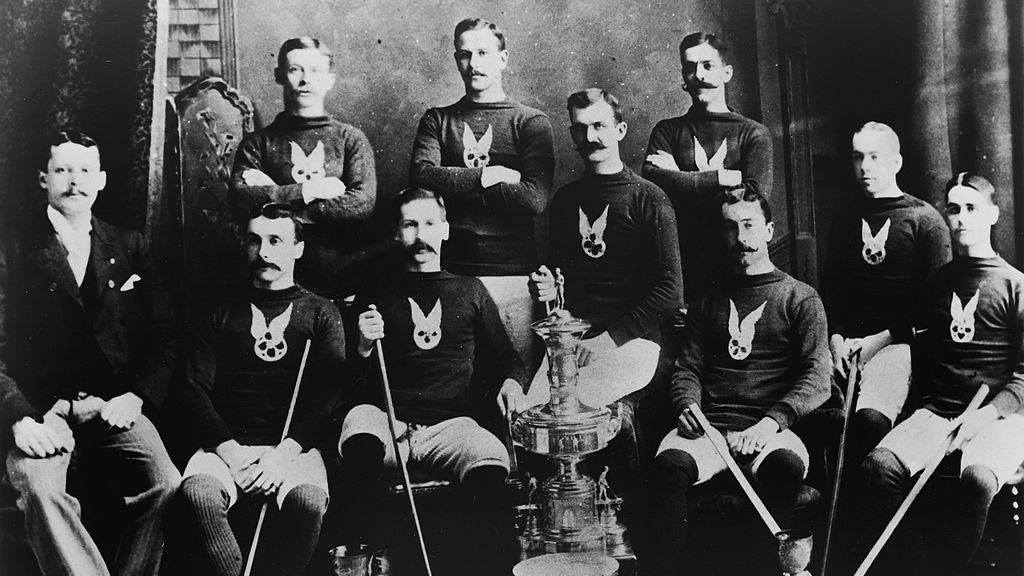
A legislative proposal in Nova Scotia has ignited a fiery historical debate among scholars regarding the true origins of modern ice hockey. The controversial bill, introduced by lawmaker Melissa Sheehy-Richard in late February, seeks to officially designate the town of Windsor as hockey’s “birthplace” based on documented accounts of “hurley on the ice” being played there as early as 1810.
The proposed legislation traces hockey’s evolution from these early ice adaptations of hurling—an ancient Irish field sport—to British soldiers playing organized games in Halifax by the mid-1850s, before the sport gained widespread popularity in Montreal where the first Stanley Cup was awarded in 1893.
However, prominent historians have challenged this narrative. Jean-Patrice Martel, co-author of “On the Origin of Hockey,” presented evidence suggesting the sport was played earlier in Manhattan, though his research ultimately points to 1607 Scotland during The Great Frost as the earliest documented instance of shinty played on ice.
Indigenous communities have also voiced strong objections. Mi’kmaw historian Cheryl Maloney testified that her ancestors were playing ice games with tree roots in Tufts Cove, Dartmouth, as early as 1749—decades before the Windsor documentation. Local historian David Jones supported this claim, emphasizing the Mi’kmaq’s significant role in hockey’s evolution and suggesting the bill should be scrapped entirely.
Sheehy-Richard has responded to critics, stating the bill was “not intended to be exclusionary” and that she remains open to amendments. The controversy mirrors other Canadian historical disputes, including the origins of poutine and butter tarts, highlighting the complex nature of tracing cultural heritage.