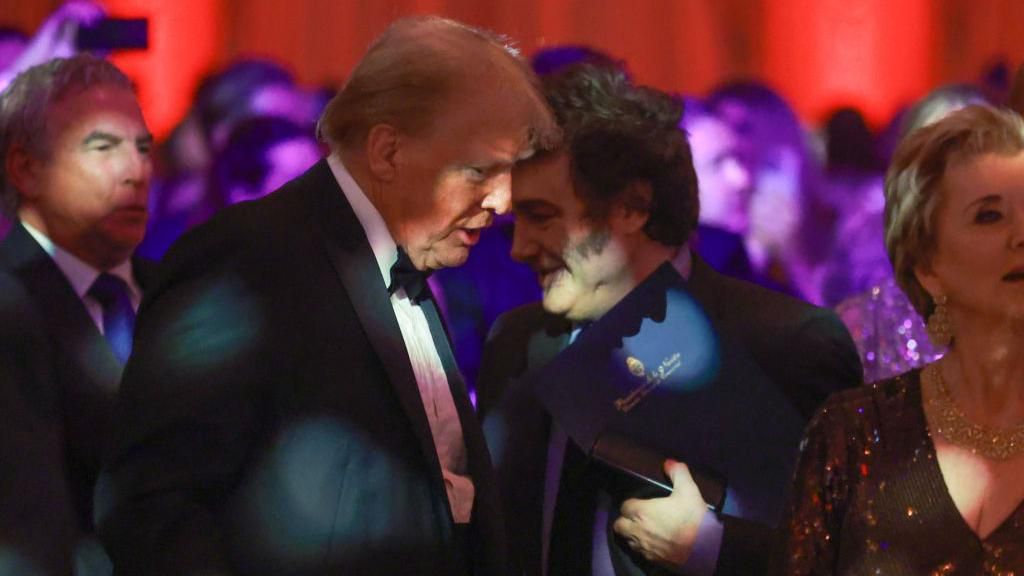
US Treasury Secretary Scott Bessent has affirmed the United States’ readiness to intervene and stabilize Argentina’s worsening financial crisis. In a statement on social media, Bessent emphasized that ‘all options for stabilization are on the table,’ highlighting Argentina’s strategic importance as a key ally in Latin America. This declaration has provided some relief to financial markets, which have been volatile due to concerns over the future of President Javier Milei’s austerity-driven, free-market policies. The Argentine peso has experienced a sharp decline, prompting investors to offload Argentine stocks and bonds. Milei, a libertarian economist and ally of former US President Donald Trump, was elected in 2023 on a platform of radical spending cuts and reforms to combat rampant inflation. However, the peso’s instability has raised doubts about the government’s ability to uphold its economic promises. In recent weeks, the Argentine central bank has intervened, spending $1.1 billion of its reserves to support the peso, but this has further strained the country’s financial position. Bessent revealed that the US is considering measures such as purchasing Argentine pesos and dollar-denominated government debt to assist. Further details are expected after Milei meets with Trump in New York on Tuesday. Bessent expressed confidence in Milei’s commitment to fiscal discipline and pro-growth reforms, which he believes are essential to reversing Argentina’s economic decline. Milei has expressed gratitude for the US’s support, which has already bolstered Argentine stocks and dollar-denominated debt prices. Despite international backing, Milei faces domestic challenges, including recent local election losses and a bribery scandal involving his sister. Argentina’s upcoming mid-term elections in October will serve as a critical referendum on his controversial policies, which include cuts to social programs. Earlier this year, Bessent played a pivotal role in helping Argentina secure a $20 billion loan from the International Monetary Fund.