A newly unearthed set of archival documents obtained by Middle East Eye has confirmed that the paternal grandfather of Lana Nusseibeh, the United Arab Emirates’ nominee for the next United Nations Secretary-General, was a registered member of the Muslim Brotherhood’s Jerusalem chapter in the 1940s — a revelation that surfaces against a backdrop of existing widespread scrutiny over Nusseibeh’s high-profile global bid to lead the world body.
Nusseibeh, who has previously publicly stated that “politics is in my blood… Grandfathers on both sides were involved in politics,” has repeatedly denounced the Muslim Brotherhood as a terrorist organization, including during a 2020 UN General Assembly debate. This stance aligns directly with official UAE policy: the absolute Gulf monarchy formally bans the Muslim Brotherhood as a domestic threat, and has for years led global diplomatic campaigns to label dozens of Islamist civil society groups across North America, Europe and the Middle East as terrorist entities by linking them to the organization.
The verified archival materials include an official June 8, 1946, Arabic letter from the Muslim Brotherhood’s Jerusalem chapter notifying Anwar Nusseibeh — Lana’s late grandfather — that his membership application had been formally approved, a September 5, 1946, receipt confirming he had paid his required membership dues, and a handwritten August 1946 letter from Anwar Nusseibeh to the chapter’s secretary agreeing to deliver a public lecture titled “Us and Communism” at the group’s Jerusalem headquarters. Historical records confirm that the Jerusalem Muslim Brotherhood chapter of the 1940s, consistent with the organization’s mainstream orientation at the time, advocated for democratic political participation rather than violent insurrection.
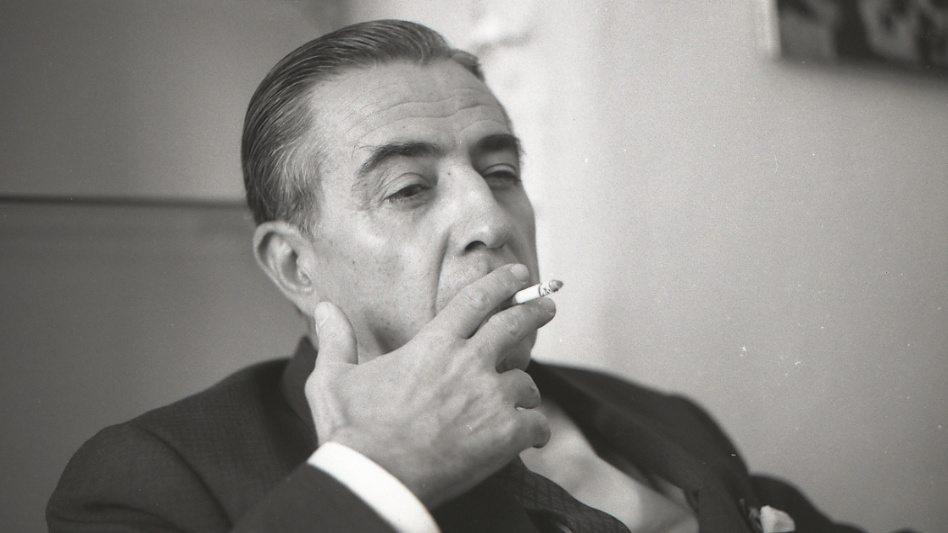
Anwar Nusseibeh, who died in 1986 at age 73, was a towering, widely respected moderate Palestinian statesman from a storied Jerusalem family that has held the custodianship of the keys to the Church of the Holy Sepulchre since the 7th-century Islamic conquest of the city, with lineage tracing back to Nusseibah bint Ka’b, a revered female companion of the Prophet Muhammad. A Cambridge-educated law graduate who captained the university’s tennis team, he was a pious Muslim who had memorized the full Quran, a self-described liberal pan-Arab nationalist who prioritized democratic governance, and a vocal advocate for a single binational state where Arab and Jewish people could coexist with equal guaranteed rights. He lost his leg in 1948 while leading efforts to defend Jerusalem from advancing Zionist militias, later served multiple ministerial portfolios in the Jordanian government including defense and education, represented Jerusalem in Jordan’s parliament, and served as Jordan’s ambassador to the United Kingdom in the 1960s. His funeral in 1986 drew tens of thousands of Jerusalem residents, and prominent Israeli political figures including former Prime Minister Shimon Peres and ex-Defense Minister Ezer Weizman later praised him as a pragmatic, committed advocate for regional peace and coexistence.
Lana Nusseibeh’s historic bid to become the first woman ever to lead the United Nations, and only the second Arab Secretary-General after Egypt’s Boutros Boutros-Ghali, has already been mired in global controversy for months, long before the latest archival revelation emerged. Critics have raised sharp concerns over her central role in advancing the UAE-backed Abraham Accords normalization deal between Israel and Gulf states, as well as the UAE’s widely documented alleged military support for Sudan’s Rapid Support Forces, whose widespread mass atrocities in Darfur and across Sudan UN independent investigators have confirmed bear the clear hallmarks of genocide. The Emirati government and Nusseibeh herself have repeatedly denied all allegations that they have supplied arms or logistical support to the RSF, including in a public open letter she published to The Economist in September 2024. Middle East Eye reached out to Nusseibeh’s office for official comment regarding her grandfather’s 1940s Muslim Brotherhood membership, but received no response prior to publication.
The ongoing UN Secretary-General selection process hit a major deadlock last week, when three of the five permanent UN Security Council members — Britain, France and China — cast informal “discourage” votes against Nusseibeh during the first closed-door straw poll, meaning she failed to secure the minimum threshold of support required to advance the nomination to the full 193-member UN General Assembly for formal approval. Nusseibeh has publicly vowed to continue her campaign, posting on X that she remains “fully committed to this campaign and will continue engaging Member States to earn their support and make the case for a more active, results-focused and responsive United Nations.” A second round of informal straw polling is scheduled to take place in the coming week, as the UN works to select a successor to outgoing Secretary-General Antonio Guterres, whose 10-year tenure will conclude at the end of December 2025.