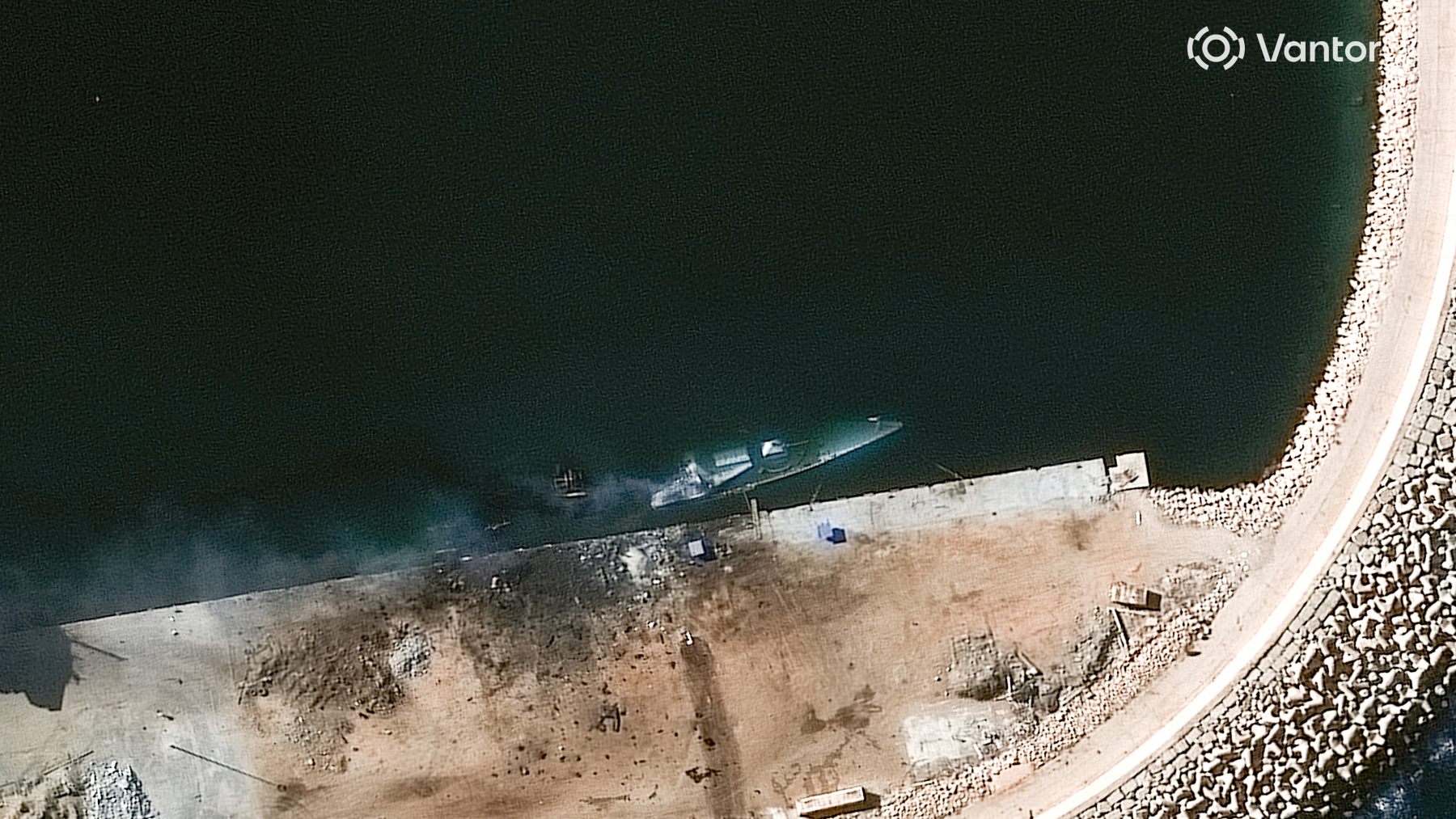
Kyiv has officially confirmed it carried out a strike that sank a Russian naval corvette docked at a port in eastern Libya, marking a dramatic geographic expansion of its military campaign against Moscow that has pulled the long-running Russia-Ukraine conflict far beyond the Black Sea and into the Mediterranean theater. In a public statement posted to social platform X on Monday, Ukrainian President Volodymyr Zelensky revealed that Ukrainian forces deployed seven domestically engineered maritime drones to target the Russian vessel *Merkury* at Benghazi Naval Base the previous Sunday. Located roughly 2,400 kilometers from Ukraine’s active front lines, the operation ranks as one of the farthest-reaching strikes Kyiv has launched against Russian naval assets since Moscow launched its full-scale invasion of Ukraine in February 2022. “Even with all of the enemy’s defensive measures deployed to repel the assault, the Russian corvette *Merkury* was sunk,” Zelensky confirmed in his post. He added that Ukraine would continue executing planned operations across relevant maritime zones, noting the strike was a direct response to ongoing Russian aggression and a demonstration of Kyiv’s advancing domestic weapons development capabilities. Ukraine’s domestic security agency, the SBU, hailed the mission as a “one-of-a-kind” operation, noting that the *Merkury* had been regularly used to escort Russian naval convoys, including the dry cargo vessel MV Angara, which Kyiv accuses Moscow of using to smuggle military hardware across regional waters. The SBU explained that the naval drones were launched from a dedicated “mothership” positioned in close proximity to the target, and that Russian defenders scrambled air, sea and land-based air defense systems in a failed attempt to intercept the incoming drones. “Ukraine’s defense forces have once again proven that no routes for the Russian navy and its supply logistics are safe, even at distances thousands of kilometers outside the Black Sea,” the agency stated. Multiple Libyan military officials speaking to the Associated Press confirmed the strike inflicted catastrophic damage on the corvette and sparked a large fire at the Benghazi naval facility, noting that Russian and Libyan defensive forces managed to shoot down at least four of the attacking drones, while two successfully impacted the warship. Independent satellite imagery released by monitoring firm Vantor showed the *Merkury* fully capsized in the port waters following the explosions, with separate reporting from The Guardian corroborating that the vessel had sunk at its mooring. A senior Libyan official added that at least 10 people, a mix of Libyan and Russian nationals, sustained injuries in the blast and subsequent fire, before local emergency response teams fully extinguished the blaze. The high-profile strike has sparked widespread alarm over Libya’s deepening entanglement in the Russia-Ukraine conflict, particularly amid unconfirmed reports that Ukrainian military personnel and drone specialists have been operating in western Libyan territory. Officials from Libya’s eastern-based administration clarified that the *Merkury* had docked in Benghazi solely to refuel and restock supplies while en route back to Russia, under the terms of an existing bilateral cooperation agreement between Moscow and the eastern Libyan governing body. Osama Hammad, head of the eastern Libyan administration, has formally requested a full international investigation into the incident via both the UN General Assembly and UN Security Council. The United Nations Support Mission in Libya (UNSMIL) released an official statement expressing “grave concern” over the attack on Benghazi port and adjacent coastal waters, echoing calls for an immediate probe. “Libya cannot afford, and must never be allowed to become, a proxy battleground for external conflicts,” the mission emphasized, calling for an “immediate, independent and fully transparent investigation” to establish full facts of the incident and hold all responsible parties accountable. For more than a decade, Libya has remained split between competing rival governing authorities in the wake of the 2011 popular uprising that ousted long-time autocratic ruler Muammar Gaddafi. The internationally recognized Government of National Unity, led by Abdul Hamid Dbeibah, is based in the capital Tripoli and administers most of the country’s western territory, while a separate rival administration controls the east, backed by powerful military commander Khalifa Haftar and his Libyan National Army, which has maintained longstanding close strategic ties to the Russian government.