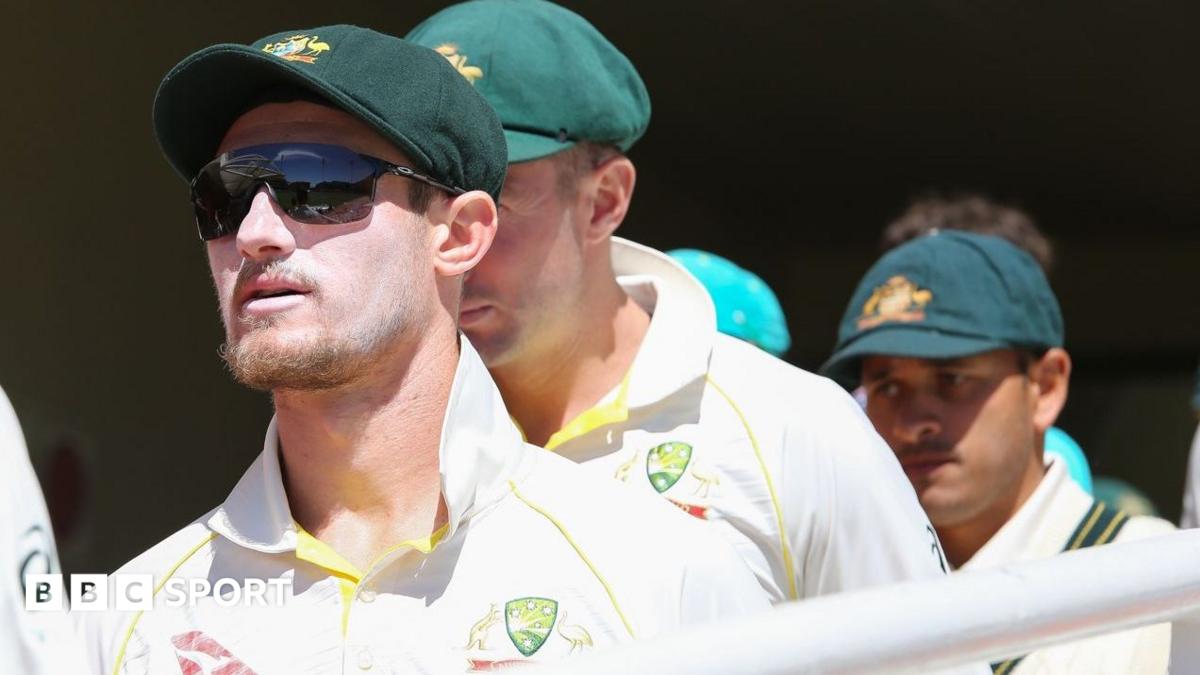
Nearly eight years after one of the most seismic cheating controversies in Test cricket history — the 2018 Cape Town sandpaper ball-tampering incident — a wave of new, detailed testimonies from directly involved players and staff has reignited public scrutiny, casting fresh doubt on the original 2018 Cricket Australia (CA) investigation and piling unprecedented pressure on current men’s Test captain Pat Cummins, former head coach Darren Lehmann, and the sport’s national governing body. The scandal first erupted on live television during Australia’s 2018 Test series in South Africa, when Cameron Bancroft, a young batter on his eighth international appearance, was caught on camera using a fragment of sandpaper to scuff the match ball, a deliberate violation of ICC rules designed to alter the ball’s swing and reverse-swing properties to gain unfair competitive advantage. The original 2018 CA inquiry handed three strict penalties: Bancroft, then-captain Steve Smith, and vice-captain David Warner all received 12-month international bans, with the report concluding Warner had devised the tampering plan and instructed Bancroft to execute it, while clearing all other squad members and coaching staff of prior knowledge of the scheme. But the carefully curated narrative of three rogue actors acting alone began to unravel in late 2026, when recently retired top-order batter Usman Khawaja laid out explosive claims in his published autobiography, stating that every single player and support staff member present on the 2018 South Africa tour was fully aware of the premeditated tampering plot, not just the three sanctioned men. Khawaja, who featured in all four Tests of that 2018 series, explained he had waited nearly a decade to speak out because he had assumed the full truth would have emerged long before now, and had pushed for the entire squad to take collective responsibility for the incident in the immediate aftermath of Bancroft being caught on the field. Khawaja’s account received immediate public backing from David Warner, who publicly confirmed Khawaja’s version of events was 100% accurate and went a step further to accuse Cricket Australia of orchestrating a deliberate cover-up. Warner alleged the 2018 investigation was rushed, botched, and fundamentally incomplete, noting that star bowlers Josh Hazlewood, Mitchell Starc, and Nathan Lyon were never even interviewed by the inquiry — a critical oversight that made the governing body’s official claim that the bowling unit had no knowledge of the scheme impossible to verify. Just days after Warner’s remarks, Bancroft published a 4,000-word first-person account in *The West Australian* newspaper that provided granular, never-before-revealed details of the plot, claiming the sandpaper tampering had begun as early as the second Test of the series in Port Elizabeth, a full match before he was caught in Cape Town. Bancroft alleged the entire playing group celebrated when the scuffed ball began to produce the desired reverse swing, that he received regular feedback from all the team’s seam bowlers on whether his sandpaper work was sufficient, that discussions about the tampering plan were held in official team meetings ahead of day three of the Cape Town Test, and that both then-head coach Darren Lehmann and bowling coach David Saker were present for those initial planning conversations. He added that he was even instructed at one point to stop scuffing the ball for fear umpires and broadcast cameras would notice his actions. Bancroft stated his decision to speak out was triggered by Cummins’ extraordinary 68-minute live televised press conference in Sydney the prior week, where the current Test captain had forcefully rejected Khawaja’s claims as “100% wrong” and “utter nonsense”, insisting he had no prior knowledge of any tampering plan and had only learned of the incident when footage of Bancroft appeared on the stadium’s big screen. Cummins also stated he had no memory of the post-match team meeting Khawaja had referenced where players were urged to take collective accountability. Bancroft said watching Cummins’ denial left him feeling angry, betrayed, and completely isolated. In the weeks since these new allegations broke, a string of other players and staff from the 2018 tour have come forward with conflicting, often contradictory accounts. Chadd Sayers, who earned his single and only Test cap for Australia in the final match of the 2018 South Africa series after the scandal broke, corroborated Khawaja’s story, stating he personally removed a piece of sandpaper from the field during the second Test in Port Elizabeth and confirmed the full squad held a 60 to 90 minute closed meeting after Bancroft was caught to discuss the incident. Former spinner Jon Holland, a back-up bowler on that tour, also confirmed a post-incident team meeting at the team hotel where players debated who would take the blame, adding he found it deeply upsetting to watch only three teammates be publicly scapegoated when the full group had awareness of the scheme. However, other key figures have pushed back against these new claims. Former wicketkeeper Tim Paine, who was appointed Australia’s Test captain after Smith’s ban, wrote in his own autobiography that the idea the entire dressing room knew of the plot was “rubbish”, and that every player in the ground was genuinely stunned when they saw footage of Bancroft on the stadium screen. Star fast bowler Mitchell Starc reaffirmed his longstanding denial of any prior knowledge, noting his recollection of events had not shifted from the public statement he and fellow bowlers Cummins, Hazlewood, and Lyon released in 2021, where the four world-class bowlers stated they first learned of the tampering when the broadcast footage appeared. Neither Hazlewood nor Lyon have made any public comments since the latest wave of allegations emerged. Former head coach Darren Lehmann, who resigned from his post in the immediate aftermath of the 2018 scandal, acknowledged he had heard the new claims but stated he needed time to process Bancroft’s full 4,000-word account before making any formal response, adding he had “nothing to hide” after CA announced it would host an open, informal forum for anyone involved in the tour to share their experiences. Former bowling coach David Saker, who most recently worked with England’s men’s cricket team on their tour of Pakistan just last month, noted in a prior 2021 interview that the incident was a monumental, collective mistake that the team failed to stop, and that the controversy would never fully fade from public memory. Other figures including current limited-overs captain Mitchell Marsh, 12th man on the day of the incident Marcus Handscomb, and former Australia backroom staff member Graeme Hick have all declined to corroborate the new claims, with Marsh stating he had moved on from the 2018 episode and did not wish to revisit it during his team’s recent ODI series against England. In response to the cascading conflicting testimonies, Cricket Australia has announced it will launch a “safe space” forum that allows any player or staff member from the 2018 tour to share their full, unfiltered experiences of the scandal without fear of public backlash or disciplinary action, in an attempt to finally resolve the lingering, decades-long dispute over one of cricket’s most infamous modern controversies.