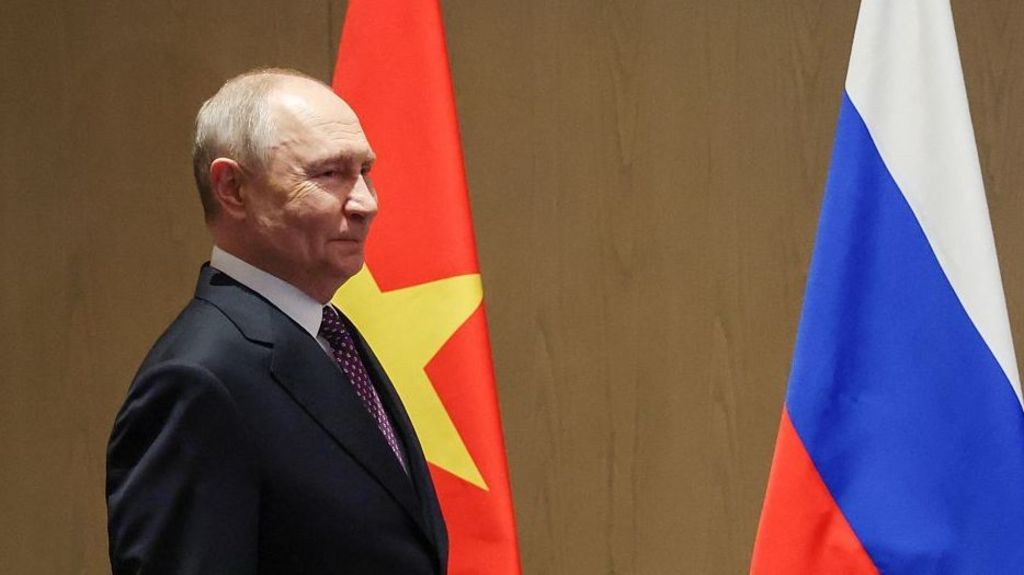
Almost half a decade after Russia launched its full-scale military incursion into Ukraine in 2022, a period that saw Vladimir Putin branded an international outcast and subjected to sweeping Western efforts to politically and economically isolate Moscow, the Russian president is poised for a landmark diplomatic breakthrough on the global stage. Scheduled to unfold in Shenzhen in 2026, the unprecedented closed-door trilateral summit bringing together Putin, U.S. President Donald Trump and Chinese President Xi Jinping represents the first time in modern history that the heads of state of the world’s three largest nuclear and economic powers will convene for exclusive three-party talks. Even before a single formal discussion begins, the event already stands as a significant public relations and diplomatic win for the Kremlin, regardless of what concrete policy outcomes are ultimately negotiated. For Putin, the summit delivers exactly the long-sought status he has spent years pursuing: a seat at the highest echelons of global governance, positioned as an equal peer alongside the leaders of the two other dominant global powers, a position that directly undermines the years-long Western campaign to shut Russia out of elite diplomatic circles. The Russian president has already repeatedly framed the upcoming gathering as definitive proof that unprecedented Western sanctions regimes and isolation strategies targeting Moscow have collapsed, a narrative he explicitly highlighted during a recent address at an Asia-Pacific Economic Cooperation (APEC) business forum, where he cited the high-level engagement as tangible evidence that attempts to marginalize Russia had failed. The Kremlin has openly described the planned three-way meeting as the unmissable “showstopper” centerpiece of its Shenzhen diplomatic itinerary, even as Russian military forces continue to carry out sustained bombardments of populated Ukrainian urban centers and Moscow continues to reject any proposal for an immediate, unconditional, full ceasefire to end the nearly five-year conflict. While a single short closed-door discussion is unlikely to fundamentally rewrite the global geopolitical order, the symbolic optics of the event carry far greater immediate weight than any potential policy communique: the historic photo opportunity of three world leaders representing over a third of the global population and combined global economic output gathered to deliberate on pressing international issues will effectively function as a public diplomatic declaration from Putin to the rest of the world, broadcasting that Russia has reclaimed its status as an unavoidable central player in global statecraft, rather than the isolated rogue state Western capitals sought to frame it as in 2022. The landmark gathering has sparked deep anxiety among excluded European allies and, most acutely, in Kyiv, where officials fear the closed-door summit could produce far more than a symbolic photo op, with outcomes that run directly counter to Ukrainian national security interests. U.S. President Donald Trump has already publicly stated that his top priority for the Shenzhen meeting is addressing the ongoing war in Ukraine, a development that the Kremlin is eager to leverage, as it would give Moscow an unchallenged platform to advance its own framing of the conflict directly to Trump and Xi, with no Ukrainian or European representatives present to offer counterarguments or advocate for Kyiv’s positions. Just last month, Ukrainian President Volodymyr Zelensky voiced explicit alarm that the closed three-way talks risk replicating the 1945 Yalta Conference, where the leaders of the Allied powers carved out spheres of influence across post-WWII Europe without input from the affected nations, warning publicly that his government would categorically reject any “Yalta 2, 3, 4” style backroom deal that redivides regional influence without Ukrainian representation. For its part, Beijing has offered no public indication that it intends to place the Ukraine war at the top of the summit agenda, with all official Chinese statements framing the trilateral gathering as a broader forum for advancing shared goals of upholding global peace and bolstering cross-power strategic stability. Even as the Shenzhen summit hands Putin a massive symbolic diplomatic victory, the win remains entirely separate from tangible progress on Russia’s stalled military campaign in Ukraine, which has inflicted catastrophic, unsustainable personnel and equipment losses on Russian forces over the past five years. Just days before the summit was set to commence, Ukrainian forces carried out a high-profile strike on the strategically critical Kerch Strait road bridge connecting the Russian mainland to the illegally annexed Crimean Peninsula, a multi-billion dollar infrastructure project Moscow built after its 2014 seizure of Crimea. The strike inflicted severe structural damage on the crossing, creating major logistical bottlenecks for Russian military supply lines running into occupied southern Ukraine and delivering a humiliating blow to the Kremlin’s carefully curated narrative of unchallenged control over occupied territories. The high-profile attack serves as a stark, immediate reminder that nearly five years after the launch of the so-called “special military operation”, the Kremlin’s invasion of Ukraine has failed to meet any of its original core objectives, and the flash of the Shenzhen summit cameras will not automatically translate to the military victory Putin has spent years pursuing.