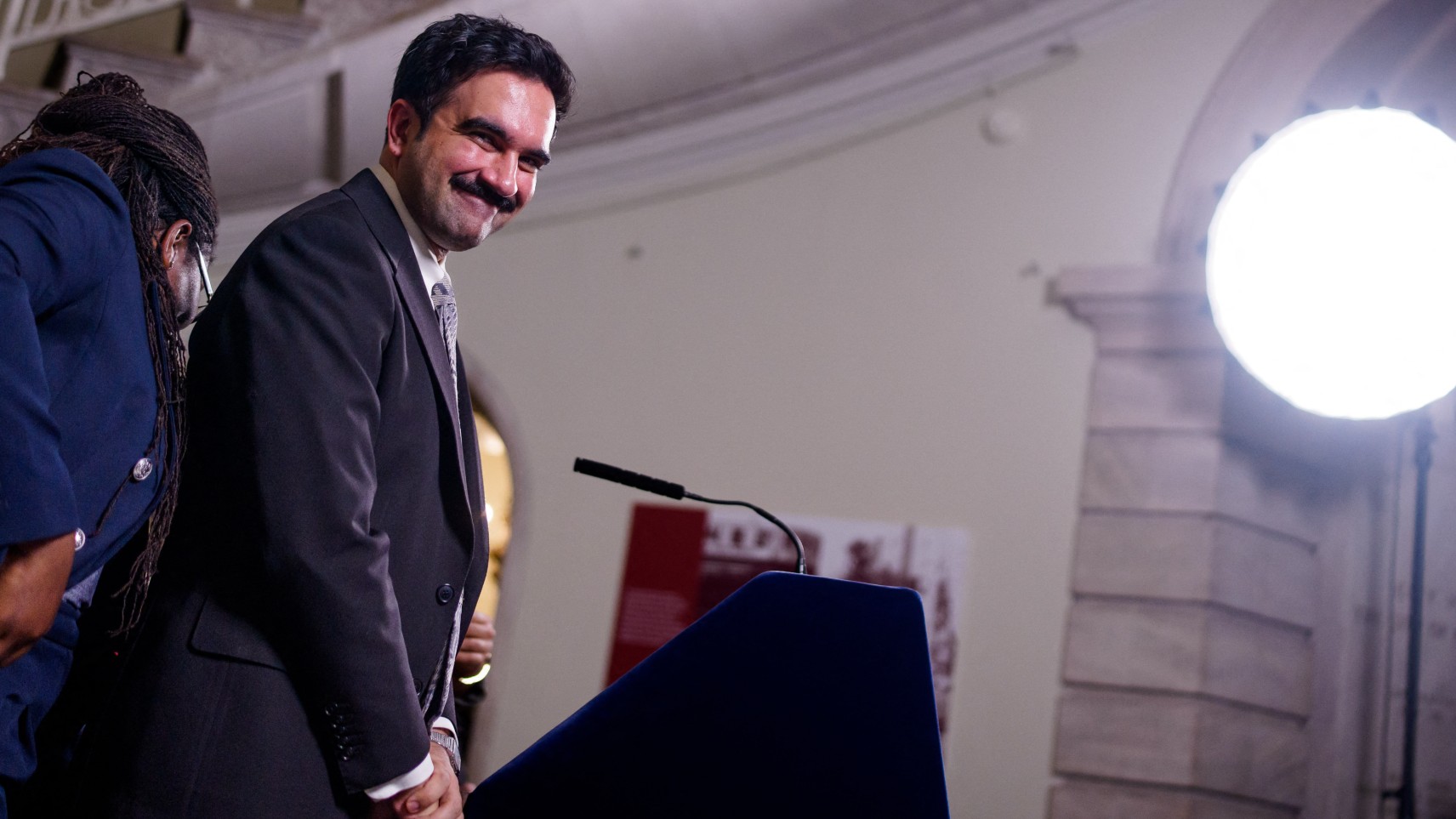
New York City Mayor Zohran Mamdani formalized a long-standing campaign pledge on Monday, unveiling a sweeping restructuring of the New York Police Department’s widely criticized Strategic Response Group (SRG) that will fully disband the specialized tactical unit and replace it with a community-centered framework focused on de-escalation and upholding First Amendment rights.
The SRG, a 500-officer heavily armored tactical squad, has faced years of public backlash over its aggressive crowd control protocols, which drew widespread condemnation for mass arrests and the deployment of batons, tear gas, and pepper spray against demonstrators. The unit came under intensified public and legislative scrutiny during the 2024 wave of pro-Palestine demonstrations across the city, as well as the campus protest movement that originated at Columbia University, where footage of SRG officers clashing with student participants circulated widely across local and national media.
The New York Civil Liberties Union (NYCLU) has been a leading voice in campaigns to reform NYPD protest policing for more than a decade, and executive director Donna Lieberman hailed the announcement as a landmark shift. “These critical, long-overdue changes will create far safer conditions for peaceful assembly, and remove the barriers that have stopped thousands of New Yorkers from exercising their right to make their voices heard on issues that matter to them,” Lieberman stated in a public reaction.
The announcement has also exposed a notable rift between the mayor’s administration and NYPD leadership over the scope of the coming reforms. Speaking to local outlet ABC7 shortly after Mamdani’s press conference, Police Commissioner Jessica Tisch insisted that the public would see no meaningful shift in how the department responds to large gatherings. “New Yorkers can expect in crowd control type situations to see the very same response that they are accustomed to. Nothing would change about the way that the NYPD responds to crowd control conditions,” Tisch told reporters.
That framing stands in direct contrast to the official policy blueprint outlined in the mayor’s formal press release, which frames the overhaul as a fundamental transformation of city protest response protocols. “This overhaul will transform how the City prepares for and responds to protests, placing communication, de-escalation and civilian coordination at the center of our approach, while protecting New Yorkers’ constitutional right to protest,” the mayor’s office statement affirmed.
Under the new structure, the disbanded SRG will be replaced by the Community Dialogue and De-escalation Division, a unit housed within the mayor’s Office of Safety and Community and led primarily by civilian community stakeholders, rather than ranking NYPD command staff. A core component of this new division will be the First Amendment Support Team, a 30-person cohort of carefully vetted uniformed officers who will complete specialized, extended training in conflict mediation, de-escalation, and First Amendment legal compliance before being deployed to protest events. A separate, smaller Patrol Support Division will also be established, made up of additional rigorously screened officers who will only be authorized to carry out arrests during demonstrations in rare, carefully documented instances where imminent public harm is identified.
The accompanying regulatory framework formalized as part of the announcement implements sweeping restrictions on previously common NYPD crowd control tactics: it explicitly bans the use of kettling, mass deployment of tear gas and pepper spray during demonstrations, and all long guns at protest events, while capping the maximum volume of long-range acoustic devices used during crowd management operations at 90 decibels. A binding public transparency mandate will also require the NYPD to publish detailed quarterly reports disclosing the full deployment of all protest-related tactical units, the tactics used at each event, and data on arrests and interactions with demonstrators.
Mamdani also used the Monday announcement to formally endorse the CURB Act — short for Communities United to Reject Police Brutality — the landmark state legislation authored by New York State Assemblyman Chi Osse that is designed to codify stronger state-level protections for demonstrators by restricting the aggressive policing tactics that the former SRG was known for deploying. “New Yorkers exercising their constitutional right to protest should not be met with the same police response as a terrorism threat. We are establishing a new, civilian-led approach that prioritizes dialogue, engagement and de-escalation. These reforms accomplish the key changes called for by Councilmember Chi Ossé’s CURB Act – a bill I am proud to support. Protecting New Yorkers’ rights and keeping our communities safe go hand in hand,” Mamdani stated in his official remarks.
The policy shift marks one of the most significant overhauls of protest policing in New York City in more than two decades, following years of community organizing against heavy-handed police responses to social justice demonstrations spanning racial justice, climate action, and human rights advocacy.