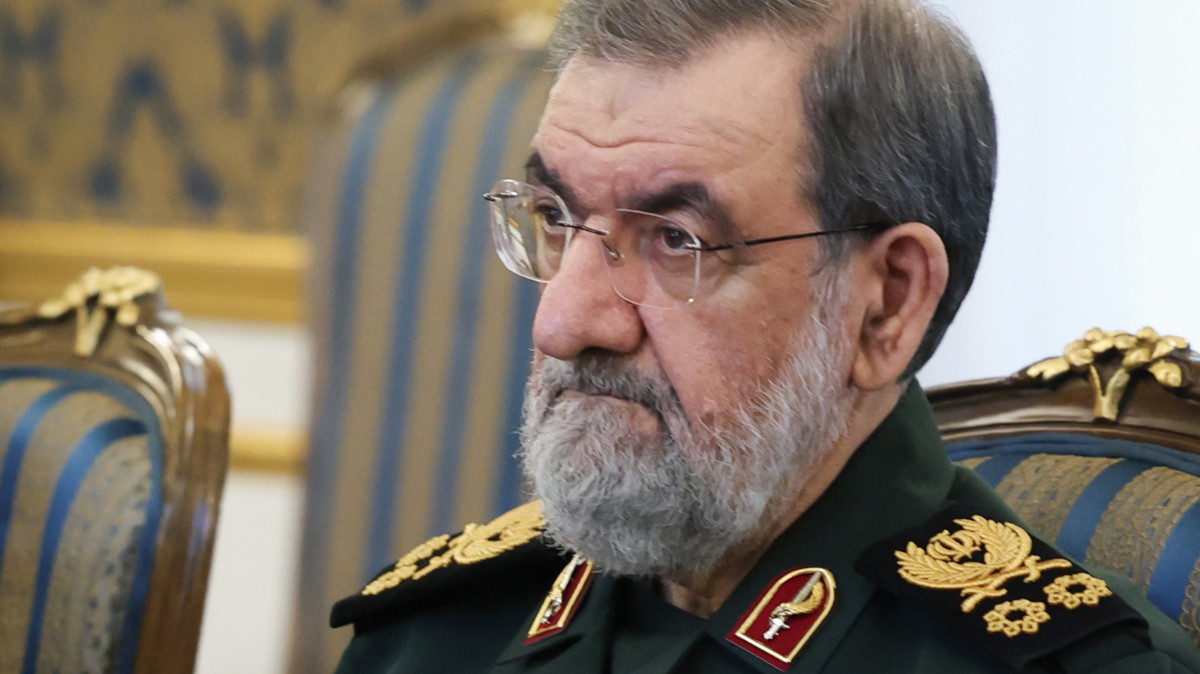
On Wednesday, Iran’s top security official Mohsen Rezaei issued a firm, uncompromising public stance rejecting longstanding U.S. demands to surrender the country’s stockpiles of enriched nuclear material, framing the assets as critical to Tehran’s domestic program to develop nuclear-powered submarines. In a wide-ranging interview with Lebanon-based Al Mayadeen television network, Rezaei, who has emerged as one of Iran’s most visible public spokespeople for its negotiation positions in recent months, emphasized that not a single particle of enriched uranium would ever be permitted to leave Iranian territory. He confirmed that Iranian authorities had already formally notified Moscow of this non-negotiable position, noting that Tehran intended to process and deploy all of its domestically enriched nuclear material for its own national maritime propulsion projects. The defiant remarks landed just 24 hours after newly appointed U.S. Secretary of State Marco Rubio dismissed Iran’s preconditions for a diplomatic political settlement as “absurd,” while asserting that the Trump administration’s ongoing maritime blockade of Iranian territorial waters and shipping lanes had granted Washington overwhelming leverage at the negotiating table. Rezaei went on to outline explicit, expanded deterrence protocols for any future U.S. military aggression against Iran, stating that if American combat aircraft launched bombing runs on Iranian targets from any U.S. military base located in Europe or other distant global regions, Iranian forces would retaliate directly against those originating bases. He further warned that any renewed U.S. strikes on Iranian soil would trigger retaliatory attacks on U.S. military installations that Tehran had not previously targeted, including remote island outposts that U.S. military planners had long assumed were entirely out of range of Iranian missile capabilities. Regional security analysts widely interpreted that reference to be directed at Diego Garcia, the remote Indian Ocean atoll that hosts a major U.S. military airbase, a facility that the U.S. military is confirmed to have used to launch large-scale strikes on Iranian targets during the February 2026 opening of the U.S.-Israeli military campaign against Tehran. The public exchange of tough rhetoric unfolds against a shifting U.S. domestic political backdrop: the Trump administration has adopted far more de-escalatory public language on the Iran conflict since the Republican Party suffered a crushing, unexpected defeat in the November 3 U.S. midterm elections, where Democratic candidates ran successful campaigns centered on opposition to the costly ongoing war and the skyrocketing global energy prices it had triggered. While former U.S. President Donald Trump has publicly claimed the Iran war was “effectively over” and that there was positive momentum to reach a permanent ceasefire deal, the two opposing sides remain deeply divided on every core negotiation point: Iranian domestic uranium enrichment rights, full or partial relief of sweeping U.S. economic sanctions, and shared or unilateral control over the strategically vital Strait of Hormuz chokepoint. Even as the Trump administration has attempted to frame Iran as a defeated adversary following months of sustained U.S. and Israeli airstrikes, Tehran has made steady progress rebuilding its military industrial capacity: a Tuesday report from Bloomberg News confirmed that Iran has restored its ballistic missile production output to roughly 50 units per month, representing half of its full pre-war manufacturing capacity, enough to build a massive, sustained arsenal if hostilities resume. On the same day Rezaei gave his interview, Iran’s official Tasnim News Agency announced that the country had formally unveiled a new, heavily fortified underground “missile city” facility designed to house and protect large stockpiles of both ballistic and cruise missiles from aerial detection and strikes. The ongoing conflict has already inflicted catastrophic economic harm on U.S. Gulf ally states: the United Arab Emirates, Qatar, Bahrain, and Kuwait have endured thousands of Iranian missile and drone strikes during the active phase of fighting, even as direct overt attacks on their territory have ceased. Iran has continued to target commercial shipping vessels transiting the Strait of Hormuz as part of its ongoing campaign to compete with the U.S. for operational control of the critical waterway, while Iran-aligned Houthi militant forces in Yemen have continued to launch strikes on Saudi Arabian territory as they push to expand their territorial control across northern Yemen. In a new economic impact assessment published Wednesday, global insurance giant Allianz Trade calculated that total physical damage and broader economic losses across Gulf Cooperation Council states from the ongoing conflict have already exceeded $200 billion, with the vast majority of damage concentrated in energy infrastructure located in nations bordering the Strait of Hormuz. The insurer’s report warned that total cumulative losses could surge to as high as $800 billion by 2030 if the conflict remains unresolved and periodic skirmishes continue to disrupt regional trade and energy production.
Iran refuses to surrender enriched uranium, threatens to strike US bases in Europe if attacked