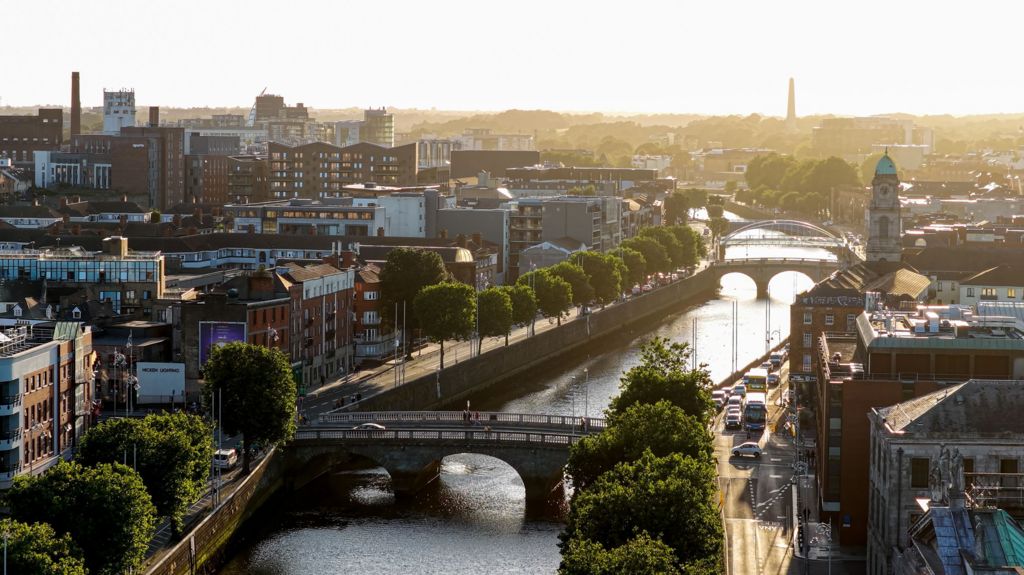
As Ireland’s six-month rotating presidency of the Council of the European Union, which commenced on July 1 and runs through December 31, enters its final stretch, Dublin is set to welcome two landmark EU diplomatic gatherings on November 12 and 13, triggering the largest domestic security operation in the history of the Irish state, local law enforcement has confirmed. An Garda Síochána, Ireland’s national police service, revealed that the multi-agency security deployment for the dual events — the European Political Community (EPC) summit and the informal meeting of the European Council — will exceed the scale of operations staged for any prior U.S. presidential visit to the country. Superintendent Liam Geraghty noted that months of intensive, cross-stakeholder planning have been carried out in collaboration with municipal authorities, public transport operators, local business associations, and residents in high-impact zones to minimize unnecessary disruption while safeguarding attending dignitaries. The first of the two high-profile gatherings, the EPC summit, will draw approximately 50 international leaders to the Convention Centre Dublin, followed by an official formal state dinner hosted at the National Gallery of Ireland on Thursday evening. The following day, leaders from all 27 EU member states plus additional invited international dignitaries will reconvene at the Convention Centre Dublin for the informal European Council session. Dignitary arrivals and departures will be routed through two key locations: Dublin’s main international airport and Casement Aerodrome, the Irish Defence Forces’ military airbase in Baldonnel. The phased security operation will roll out incrementally starting on Tuesday, November 10, with temporary traffic restrictions gradually expanded across the greater Dublin metropolitan area to accommodate secured motorcycle escort convoys shuttling leaders between the two arrival points and the city centre. Pre-defined peak disruption windows have been published for public awareness: for routes connecting airports to the city centre, restrictions will run from 13:00 to 23:00 on Wednesday November 11, and 07:00 to 11:00 on Thursday November 12; city centre-wide restrictions will be in place 15:00 to 23:00 on Thursday, 07:00 to 11:00 on Friday, followed by outbound convoy routes back to the airports active 13:00 to 20:00 on Friday. Transport officials confirmed that the M50 orbital motorway and Dublin Port Tunnel will remain fully operational with no direct disruptions. Dublin Airport will maintain all normal terminal operations, with access roads for Terminals 1 and 2 unaffected, though regular commercial passengers are strongly advised to add extra buffer time to their travel plans during peak arrival and departure windows. Minor local restrictions will be enforced on a stretch of the R108 between the R108 and R122 junctions, alongside enhanced police patrols on all airport perimeter roads including Naul Road, R108, R132 and Old Airport Road, with public access to aircraft viewing stands on these routes temporarily suspended. Over at Casement Aerodrome, perimeter roads will see additional patrols and full no-stopping, no-parking rules enforced across the same peak disruption windows as the main airport. Adding a layer of complexity to the city’s transport arrangements, former One Direction star Niall Horan is scheduled to perform four consecutive sold-out headline shows at Dublin’s 3Arena on November 9, 10, 12 and 13. While the 3Arena sits outside the formal diplomatic event security cordon, east-west traffic on North Wall Quay will be fully closed from November 10 through 13, with venue access maintained via Seville Place, Sherriff Street Upper, East Wall Road and the Tom Clarke Toll Bridge. Luas light rail services will run normally on November 10, but direct trams to the 3Arena will be suspended on November 12 and 13, with only limited special post-concert return services deployed for attendees, and full pedestrian access along North Wall Quay restricted on those two dates. Additional layered security measures will be rolled out across the city centre: a full security cordon with barriers and no-parking rules will be erected around the Convention Centre Dublin starting at 07:00 on Tuesday, with an expanded extended cordon taking effect from 20:00 on Wednesday and remaining in place through Friday evening, including the full closure of Samuel Beckett Bridge to all vehicular traffic with diversions routed to adjacent crossings. A separate cordon around the National Gallery of Ireland will be installed from 07:00 on Wednesday, with additional targeted traffic and parking restrictions implemented across the vicinity of associated dignitary hotels spanning both north and south Dublin city centre from early Thursday through late Friday morning. Restricted traffic zones will be enforced in the Docklands area bounded by Amiens Street, Seville Place/Sheriff Street Upper, East Wall Road and North Wall Quay, as well as the Merrion Square district around the National Gallery bounded by Baggot Street, Fitzwilliam Street, Merrion Square North, Clare Street and Kildare Street. Local authorities confirmed that all residents and businesses within these restricted zones will retain controlled access, with mandatory security checks in place for entry.