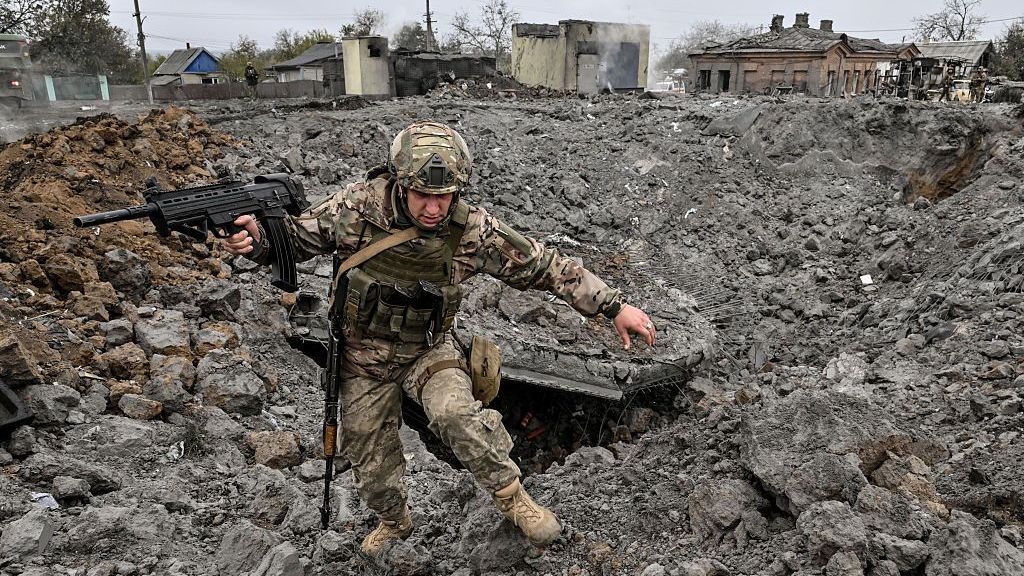
As Ukraine grapples with the aftermath of a catastrophic Russian missile strike that killed no fewer than 40 civilians in a Zaporizhzhia village last week, senior diplomatic delegations from Moscow, Kyiv and Washington convene in Abu Dhabi for the first round of trilateral Ukraine peace negotiations since a deadlocked Geneva summit back in February, timed to fall just ahead of the fifth anniversary of Russia’s full-scale 2022 invasion of its neighbor.
Unnamed U.S. officials revealed on the eve of the gathering that both Russian and Ukrainian negotiators have exhibited small but notable private flexibility over long-disputed arrangements for governing Ukraine’s eastern territories in a postwar settlement, even as their public stances remain sharply polarized. The U.S. delegation is led by veteran peace envoy Steve Witkoff alongside Jared Kushner, senior advisor and son-in-law to U.S. President Donald Trump, who framed the summit as a critical first step to push all parties to engage in deliberate planning for post-conflict security arrangements that address core concerns for both Russia and Ukraine.
The most intractable outstanding point of contention centers on the eastern Donetsk region, the vast majority of which is currently under Russian military occupation. Moscow has publicly demanded that Ukraine cede all remaining pockets of Donetsk under its control, while Kyiv has insisted on freezing the current front contact line to retain sovereignty over those territories it views as non-negotiable for its long-term national security. U.S. officials emphasized that neither side will be able to reach a final resolution on territorial claims until a shared, binding postwar security architecture is fully defined, as the two sets of agreements are deeply interdependent.
The proposed security framework under discussion includes joint crisis consultation mechanisms, dedicated high-level emergency communication hotlines, and reciprocal de-escalation commitments between the two warring nations, alongside a proposal to reactivate the NATO-Russia Council, a diplomatic body that has been effectively suspended since the outbreak of full-scale hostilities in 2022.
The prior Geneva trilateral talks in February yielded no tangible breakthroughs, and subsequent regional escalations involving U.S. engagements in the Middle East diverted Washington’s policy focus away from Ukraine for months, halting all formal negotiations. European leaders, who have been almost entirely excluded from prior peace deliberations, have mounted a coordinated push for a seat at the table, arguing that decisions shaping the continent’s long-term security cannot be finalized without EU and NATO input. European Commission President Ursula von der Leyen publicly called earlier this week for all NATO allies and EU member states to be included in any substantive talks on Europe’s future security architecture, a position that Ukrainian President Volodymyr Zelensky has repeatedly echoed. U.S. negotiators confirmed they intend to propose an expansion to a multilateral negotiating format that brings European stakeholders on board, though they acknowledged Russian leadership holds deep, longstanding misgivings about engaging with European officials.
Since taking office for his second term, U.S. President Trump, who famously claimed he could resolve the Ukraine war within 24 hours, has spearheaded a series of diplomatic outreach efforts to end the conflict, though none have produced a lasting ceasefire to date. His increasingly conciliatory posture toward the Kremlin has sparked widespread anxiety across both Kyiv and the European Union. Following a recent White House meeting with top Kremlin envoy Kirill Dmitriev, Trump teased a forthcoming “big, beautiful agreement” to end the Ukraine war that would involve all European nations, a claim that has been met with widespread skepticism in Ukrainian political circles.
Oleksandr Merezhko, head of Ukraine’s parliamentary foreign affairs committee, told the BBC that he fears the Trump administration is pushing for a hasty deal that sacrifices Ukrainian national interests, a outcome Kyiv will categorically reject. Merezhko argued that the only way to compel Russian President Vladimir Putin to enter genuine good-faith negotiations is to ramp up international sanctions and support deep defensive strikes on Russian military assets, adding that recent U.S. policy shifts such as a reported deal to purchase Russian diesel only remove incentives for Moscow to end its offensive.
The official Russian delegation in Abu Dhabi includes top Kremlin aide Vladimir Medinsky, Deputy Foreign Ministers Sergei Ryabkov and Mikhail Galuzin, domestic intelligence chief Igor Kostyukov, and senior military commander Yury Zhigarlovsky. Ukraine’s team draws on seasoned veterans of prior negotiation rounds, including Foreign Intelligence Service head Rustem Umerov, Zelensky’s chief of staff Kyrylo Budanov, and leading lawmaker Davyd Arakhamiya.
Even as diplomatic talks proceed in the Emirati capital, Russian forces continue to launch relentless, deadly bombardments across Ukraine, with repeated targeted strikes on critical energy infrastructure that Kyiv views as a deliberate campaign to coerce its population into accepting a settlement dictated entirely on Moscow’s terms. Kushner struck a measured, cautious tone ahead of the talks, noting that the Abu Dhabi summit’s most realistic goal is to build constructive momentum for subsequent phases of negotiation, acknowledging that the conflict remains an extraordinarily complex, intractable challenge that U.S. officials are approaching with equal parts determination and pragmatic realism.
Ukraine peace talks resume with ‘some flexibility’ by warring sides, US officials say