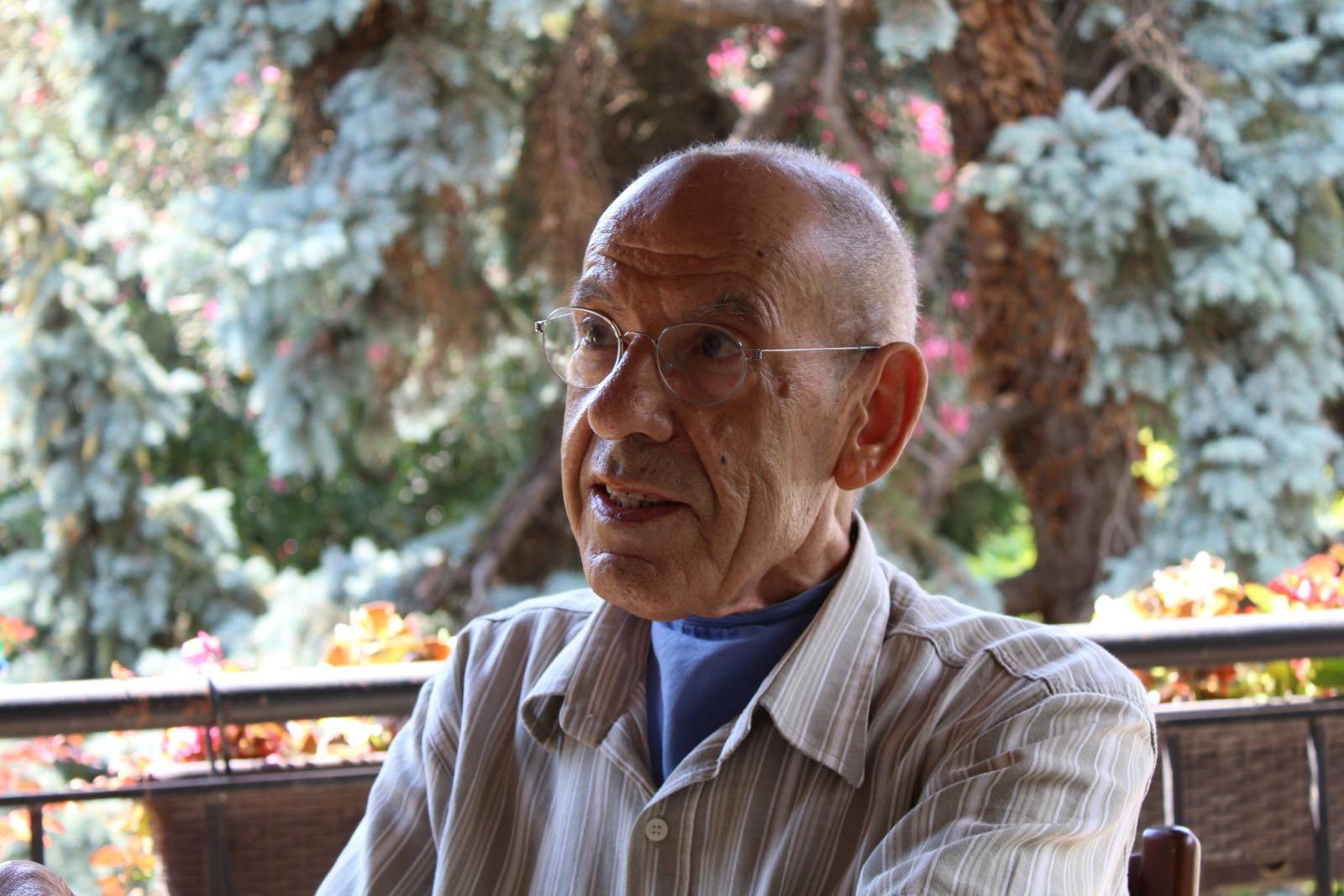
One of the most towering and influential figures in global Ottoman historical studies, Professor Engin Deniz Akarli, breathed his last at his Istanbul residence on a Sunday, at the age of 81. Akarli’s decades-long academic career was dedicated to unpacking the understudied legal, political, and economic frameworks of the late Ottoman Empire and the broader modern Middle East, carving out new pathways of inquiry that had long been overlooked by mainstream scholarship.
His landmark 1993 work *The Long Peace: Ottoman Lebanon, 1861-1920*, published by the University of California Press, stands as a defining intervention that dismantled long-dominant Eurocentric narratives framing 19th-century state-building in the Levant as a project driven almost entirely by Western intervention. Through granular, on-the-ground research of the Mount Lebanon Mutassarifiya administrative period that followed the 1860 civil conflict, Akarli empirically demonstrated that locally led self-governance institutions, cross-confessional reconciliation efforts, and homegrown administrative structures laid the foundational groundwork for Lebanon’s later secular democratic system, progress that was actively undermined by subsequent European meddling in the region.
Born in the northwestern Turkish city of Eskisehir, Akarli completed his primary and secondary education at Eskisehir Maarif College before graduating in 1968 from the Business Administration and Economics Department of Istanbul’s historic Robert College, the predecessor institution to today’s Bogazici University. He then pursued advanced studies in the United States, earning his master’s degree at the University of Wisconsin before completing his doctorate at Princeton University.
His teaching trajectory spanned three continents and some of the world’s most prestigious higher education institutions. After finishing his PhD, he returned to Turkey to serve as one of the founding faculty members of Bogazici University’s newly established history department. The 1980 Turkish military coup forced him into temporary exile, and he spent several years teaching at Jordan’s Yarmouk University before relocating back to the U.S. in the 1990s, where he took up the post of Joukowsky Family Distinguished Professor of Modern Middle Eastern History at Brown University. Over the course of his career, he also held visiting and tenured positions at Princeton University, Washington University in St. Louis, and Harvard University. He moved back to Turkey in 2012 to join Istanbul Sehir University, where he served as the Dean of the Faculty of Humanities and Social Sciences until the institution was controversially closed via presidential decree in 2020. In 2014, his lifelong contributions to historical research were honored with Turkey’s Presidential Grand Prize for Culture and Arts in the field of history.
Colleagues and former students have flooded social media with heartfelt tributes celebrating not just his transformative scholarship, but his extraordinary personal character: renowned for his deep humility, endless generosity with his time and expertise, and gentle, respectful treatment of everyone around him. One former student shared a story of Akarli going out of his way to fast-track administrative paperwork that would have otherwise taken days to process, then inviting the young scholar to speak to his florist to check in on his plants, noting he nurtured his students with the same tender care he tended to his flowers. Another alumna recalled that even after taking only one introductory class with Akarli as a first-year student, he remembered her name and checked in on her well-being every time they crossed paths across her entire four-year degree. A graduate of Istanbul Sehir University also shared a beloved anecdote that Akarli always carried flower seeds in his pockets, stopping to scatter them in any bare, empty patch of ground he encountered on his daily walk to campus. A final social media post from colleague Özgür Kavak shared that Akarli spent his final night working meticulously on an academic paper until the early hours of the morning, with a note on his desk listing a long-awaited reply to a pending email as a task for the day of his passing. His funeral service will be held on November 10 at Istanbul’s Sakirin Mosque in the Uskudar district following midday prayers, after which he will be interred at the historic Karacaahmet Cemetery.
Eminent Ottoman historian Engin Deniz Akarli dies aged 81