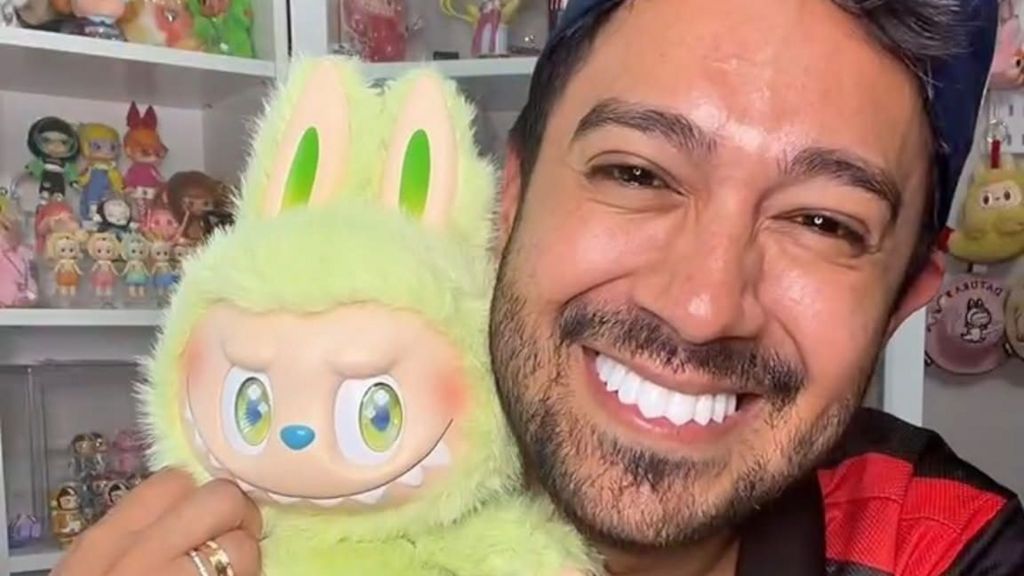
For years, Pop Mart’s whimsical, monster-themed Labubu figurines dominated the global blind box collectibles market, sparking widespread mania that pushed the Beijing-based toy giant’s valuation past the combined worth of legacy US toy leaders Hasbro and Mattel. Enthusiasts of all ages eagerly snapped up sealed $15+ blind boxes, often paying steep markups on secondary resale platforms to secure rare, sought-after characters. The fervor was so intense that North Carolina-based super fan Ensito walked away from a full-time tech role in 2024 to produce Labubu-focused content exclusively, traveling as far as Italy and Spain to chase limited-edition drops. Over his years of collecting, Ensito has amassed more than 400 Labubu dolls at a total cost exceeding $50,000, a sum he admits he is embarrassed to share publicly, even going so far as to have a dentist craft custom jagged, Labubu-style teeth to wear at fan events.
In recent months, however, the once-unstoppable hype has rapidly faded. Ensito’s Labubu-focused social media content, which previously racked up 10,000 views in a matter of hours, now struggles to hit that benchmark, and he has shifted his creative focus to competing viral trends including Hello Kitty merchandise and squishy stress toys. This anecdotal shift among core fans lines up with Pop Mart’s latest quarterly financial disclosures, which reveal global sales plummeted by as much as 50% year-over-year in the three months ending September, with overseas markets seeing far steeper declines: US revenue alone dropped by at least 70%.
Though Pop Mart did not invent the blind box retail format, its Labubu line, launched in 2019, turned the mystery unboxing experience into a global cultural phenomenon. The brand’s quirky characters became bona fide fashion statements, spotted in the hands of A-list celebrities ranging from Kim Kardashian to Blackpink’s Lisa, drawing massive queues outside retail locations, and even prompting Pop Mart to temporarily pull Labubu stock from UK stores after violent scuffles broke out between customers fighting for limited units. One ultra-wealthy collector even paid more than $150,000 for a life-sized, human-scale Labubu figurine. As marketing specialist and Labubu collector Katelynn Carlson explains, the blind box format tapped into deep nostalgic impulses, recapturing the giddy thrill of unwrapping an unexpected childhood gift, and her first rare Labubu figurine made that feeling even more memorable. Samer El Hajjar, a marketing lecturer at the National University of Singapore, notes that intentional scarcity of rare variants drove many fans to purchase dozens of blind boxes in hopes of landing their most desired character.
At its peak, Pop Mart operated 500 physical stores across more than 30 countries alongside 2,000 automated vending machines worldwide, and after its 2020 Hong Kong IPO, it reached a peak valuation of nearly $24 billion, making it one of the world’s most valuable toymakers. Even after its share price fell more than 50% from last year’s highs, it retains a massive market capitalization, but investors are increasingly anxious that its global Labubu boom was a fleeting viral moment rather than the start of sustainable, loyalty-driven long-term growth.
Many long-time fans point out that the magic of Labubu’s exclusivity has evaporated, as Pop Mart dramatically ramped up production to meet peak demand. “Now it doesn’t feel that way at all,” Ensito says. “I walk into a Pop Mart store and entire full series of Labubus are just sitting fully stocked on the shelves.” Ashley Dudarenok, a China consumer analyst at research firm ChoZan, confirms that the deliberate sense of rarity that fueled the craze vanished the moment the brand scaled output to keep up with sky-high orders.
Pop Mart has declined to comment on its sliding share price and did not respond to media queries regarding its sharp sales downturn. The brand now faces intensifying competition from a flood of rival blind box collectible lines, including the wildly popular Sonny Angel cherub figurines, glow-in-the-dark Smiski miniatures, and licensed lines featuring My Little Pony and K-pop Demon Hunters characters. Guangzhou-headquartered retail giant Miniso, which operates more than 8,000 global stores selling licensed blind box lines featuring Disney and Marvel characters, has captured significant market share, with executive Vincent Huang noting earlier this year that modern consumers care far more about the unboxing experience, fun design, and value for money than they do about a brand’s country of origin.
Industry analysts point to Pop Mart’s biggest long-term flaw: it has not yet proven capable of building enduring, story-driven intellectual property the way legacy toy and entertainment giants have. As one analyst Boustani notes, Japanese character brand Sanrio — home to Hello Kitty, which posted record earnings in the fiscal year ending March — has mastered the art of cultivating decades-long emotional connections with fans, a superpower Pop Mart has yet to replicate. To reverse its slump, Pop Mart has poured resources into ambitious expansion projects, including a new theme park in Beijing and a previously announced Labubu feature film, moves that some observers frame as an attempt to mimic the successful franchising playbook used by Disney and Lego. But as Dudarenok points out, Pop Mart’s model works in the exact opposite order of Disney’s: Disney sells a rich, immersive narrative first, then releases toys tied to that story, while Pop Mart built toy popularity through viral social media and celebrity endorsements without a foundational story backbone. “The real test for next year is whether Pop Mart can make people fall in love with a character without a celebrity holding it,” she says.
Many casual fans are now far more selective about their purchases. Melbourne-based content creator Lawrence Yu, who spent roughly $1,400 building a 50-piece Labubu collection and once saw his unboxing videos draw up to a million views, no longer makes Labubu content regularly, noting that the frenzy has clearly fizzled out. Canadian collector Clara Barbero describes Labubu as a “dead trend,” and says she now carefully curates her collection, only purchasing characters she expects to enjoy for years rather than grabbing every new released series on impulse.
Still, a dedicated core of diehard fans remains unwavering in their affection for the line. Liverpool-based collector Hedy Khaled, who owns 70 Pop Mart figurines, argues that there is a clear distinction between trend-chasing casual buyers and genuine long-term fans, meaning falling overall sales do not signal that Labubu has lost all meaningful appeal. Katelynn Carlson echoes that sentiment, noting that it is the simple joy the figurines bring, not the viral hype, that keeps her collecting, and she remains excited for new releases like the recent cat-themed Labubu line that has quickly become one of her favorites. “There’s something special about embracing our inner child and enjoying things simply because they make us happy,” she says. For many former super fans, though, the cooling of the Labubu craze has sparked broader reflection on the fleeting nature of collectible toy trends. As Ensito puts it, “There’s always going to be a new trend every year. There’s always going to be something that blows up for a little while, and then fades away.”