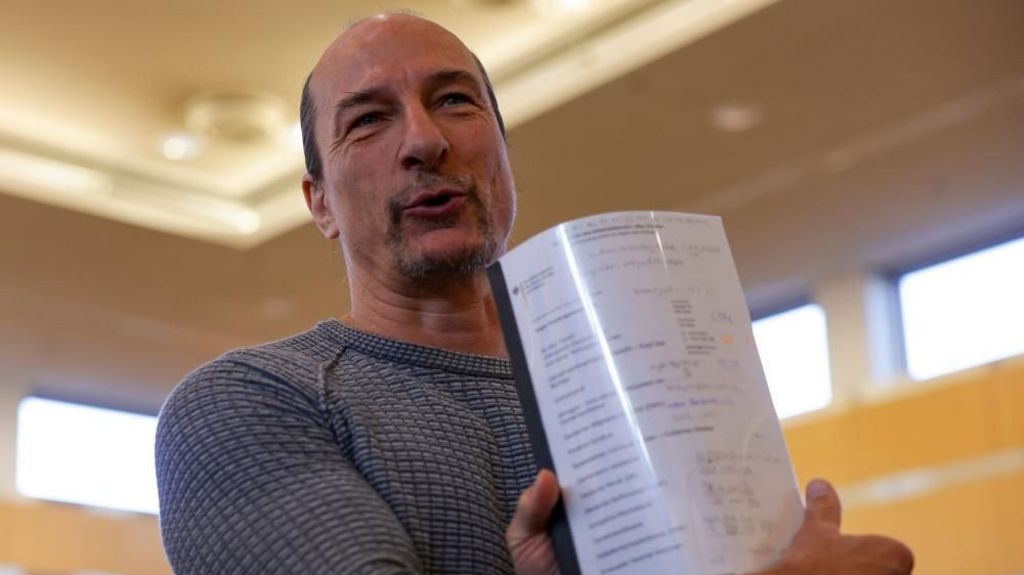
A high-profile legal proceedings kicked off in Düsseldorf, Germany, as self-anointed monarch Peter Fitzek – who styles himself Peter the First – and three of his top associates faced formal charges for heading a criminal conspiracy to dismantle and replace the modern Federal Republic of Germany. All four defendants are affiliated with the extremist Reichsbürger (Citizens of the Reich) movement, a network of conspiracy theorists that German domestic intelligence agencies explicitly classify as anti-state actors who reject the entire legal and political legitimacy of post-WWII German democratic institutions. The core of the prosecution’s case alleges that Fitzek and his co-defendants, identified publicly only as Benjamin M, Mathias B and Martin S, spent more than a decade building a fully functional parallel state infrastructure under the banner of their self-declared ‘Kingdom of Germany’ (KRD), a project Fitzek launched after a flamboyant 2012 coronation ceremony. A former chef and karate instructor, Fitzek crowned himself the ‘supreme sovereign’ of the KRD wearing traditional ermine royal robes and carrying a medieval sword, before systematically purchasing properties across Germany to serve as operational hubs for his movement. At its peak, the KRD counted roughly 6,000 registered followers, making it the largest single faction within Germany’s broader Reichsbürger ecosystem. Prosecutors have laid out a sweeping set of charges against the four men, which carry a maximum combined prison sentence of 10 years each. The indictment details that the group built and operated unlicensed parallel banking and insurance services with physical branches in Dresden, Ulm, Menden and Lutherstadt Wittenberg, ran a fake government registration office that issued counterfeit identity documents, and minted its own unofficial currency separate from the euro. Additional counts include organised document forgery and large-scale tax evasion, with investigators calculating the group generated approximately €10 million in revenue between 2020 and 2025 through unauthorised financial services, member donations, gifts, and paid seminars. None of these revenues were reported to German tax authorities, and the group failed to remit required income tax payments or social security contributions for its staff, prosecutors allege. The KRD also ran targeted recruitment campaigns targeting small businesses, promising participating firms full exemption from all national taxes and statutory duties if they pledged loyalty to the alternative ‘kingdom’. German Interior Minister Alexander Dobrindt formally issued a nationwide ban on the KRD organisation in 2025, immediately after which law enforcement officers took Fitzek and his three co-defendants into pre-trial custody. Fitzek has repeatedly denied all criminal wrongdoing, and his legal defence team confirmed ahead of the trial that the self-proclaimed monarch intends to deliver a lengthy, detailed public statement to the court to defend his actions. In a 2022 interview with the BBC, Fitzek claimed his movement had no violent intentions, but publicly dismissed the legitimate German federal government as ‘destructive and sick’. German domestic intelligence data estimates that roughly 26,000 people across the country are affiliated with various Reichsbürger factions, which span a wide spectrum of ideological positions, though officials warn that a small but dangerous subset of these groups hold violent far-right extremist views. The high-profile Fitzek trial comes on the heels of a separate major 2022 law enforcement operation, in which dozens of Reichsbürger-affiliated suspects were arrested for plotting a violent armed coup against the German federal government in Berlin. That alleged plot included plans to kidnap the federal health minister and orchestrate widespread civil unrest to trigger civil war conditions, with the explicit goal of toppling German liberal democracy. Five of the conspirators in that 2022 coup plot were handed prison sentences in 2024.