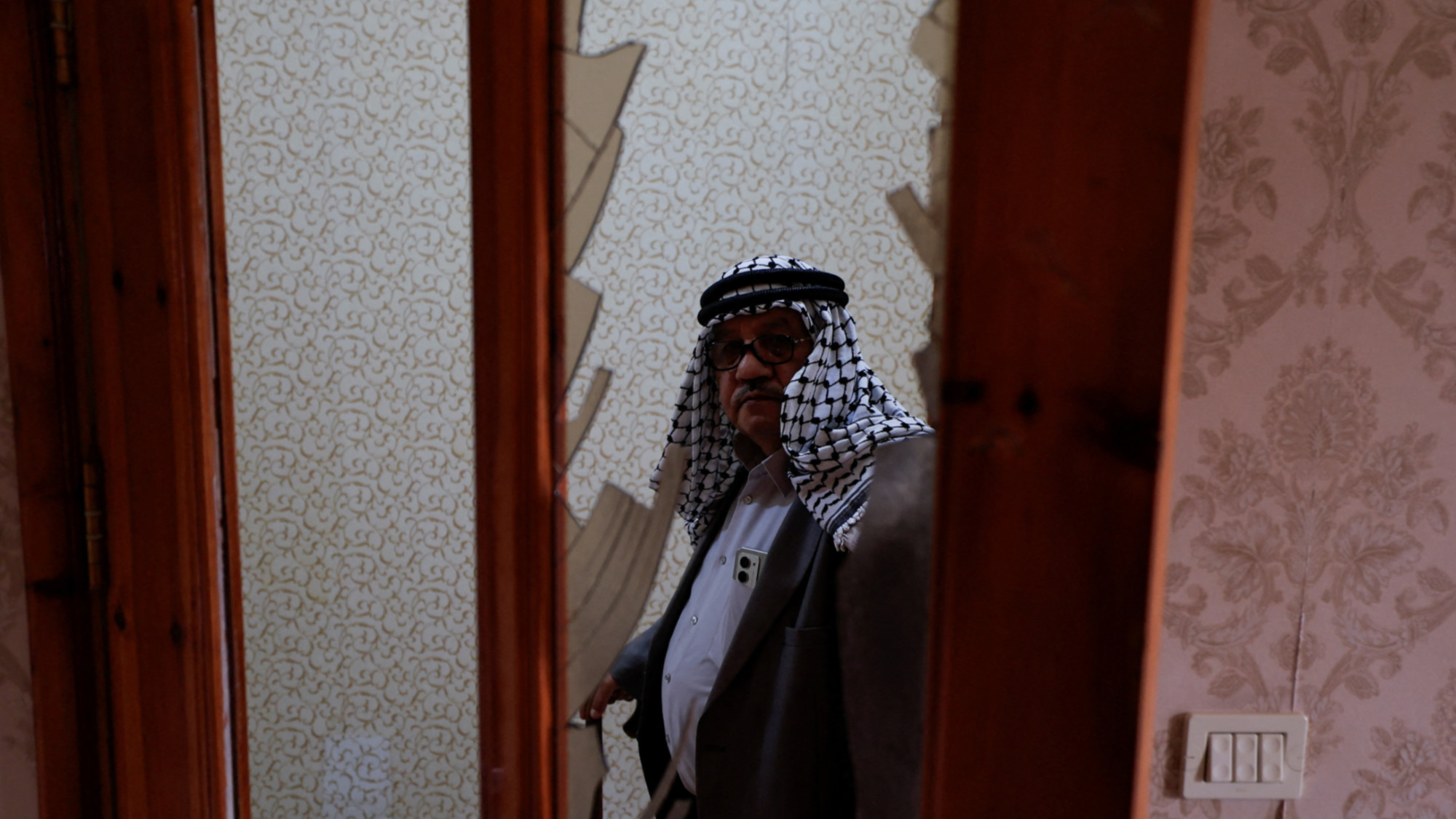
For 11 consecutive days, Abbas Mujahid clung to the quiet, unsteady hope that he and his seven-member family would one day be allowed to return to their home in Hebron’s al-Jalda neighbourhood, never knowing when that long-awaited moment might arrive. The family was among hundreds of Palestinian residents forced out of their residences by Israeli forces last month, ahead of a sweeping military offensive launched on 23 October that formally concluded only earlier this week. The operation was triggered by a shooting in Hebron carried out by two Palestinian assailants that killed two Israeli soldiers, before both attackers were fatally wounded in the subsequent exchange of fire. What followed was a total, city-wide lockdown: all major thoroughfares were sealed off, every entry point to Hebron was blocked, and Israeli troops carried out raids on commercial storefronts, while industrial sites were systematically vandalised or razed to the ground. The scale of the devastation touched every corner of daily life across the occupied West Bank city. When Mujahid and his family were finally permitted to re-enter their home, they were met with a scene of utter ruin: every wooden interior door and the heavy iron main entrance had been ripped clean off their hinges, ornate gypsum wall detailing was smashed to fragments, light fixtures were shattered, and the family’s clothing and personal effects were strewn haphazardly across every room. Worse still, Mujahid reported that Israeli soldiers had left human excrement scattered throughout the property, and window frames had been wrenched out in clear acts of deliberate, gratuitous destruction. He had tried to prepare his children for the possibility of severe damage to their shared home, especially their private bedrooms, but no amount of advance warning could soften the visceral shock of witnessing the wreckage in person. Even so, Mujahid remains determined to move forward: he has already hired construction workers to begin repairs, a project projected to cost tens of thousands of shekels, and notes that the simple fact of his family’s return outweighs the grief of their lost possessions. The economic fallout of the 11-day incursion has been catastrophic. Official data from the Hebron Chamber of Commerce and Industry calculates that direct economic losses topped 12 million shekels (roughly $3.8 million) per day over the course of the operation, with 327 separate commercial and economic entities forced to shut down, 15 industrial facilities completely destroyed, and approximately 1,350 local residents losing their primary source of income. One of the most prominent affected business owners is Iyad al-Qawasmi, who ran a used auto parts enterprise spread across three dunums of land in the Farsh al-Hawa district, an area where dozens of factories and retail shops were demolished on the first day of the military operation. Israeli troops raided his property, which housed 600 used vehicles, and gave him just 60 minutes to evacuate before bulldozers moved in. When al-Qawasmi requested a formal written demolition order rather than the verbal instruction he had received, soldiers claimed an Israeli court had already signed off on the decision and that he had no choice but to comply, despite the fact he had never been issued any prior demolition notice in the eight years he had operated the site, save for a single 2022 incident where surveillance cameras were confiscated. He rushed to bring in his own bulldozer to salvage as much equipment as possible in the narrow window he was given, but a fleet of Israeli military and settler-owned bulldozers soon arrived on site. The crews seized at least 400 of his stored vehicles, alongside all of his heavy equipment, and days later returned to level the entire facility to rubble. The destruction was so complete that the previously obscured mountain range of Halhul is now fully visible through the empty plot where his business once stood. Al-Qawasmi is still barred from accessing his own land, leaving him no way to retrieve any remaining assets, and his total losses exceed 2.5 million shekels (around $790,000). His business employed 10 local workers who supported a combined 70 Palestinian family members, all of whom have now lost their sole source of income. “My only ‘guilt’, the only reason my facility was demolished, is that I am Palestinian. The facility is not even located near the site of the shooting incident,” al-Qawasmi stated in an interview. Humanitarian impacts are equally staggering: a 30 October report from UNICEF, citing official Hebron Municipality records, confirmed that 483 families totalling 4,304 people, including 1,845 children, were displaced by the military operations and movement restrictions imposed on the city. Multiple human rights groups have since accused Israeli authorities of imposing collective punishment on the civilian population of Hebron, a violation of international humanitarian law, via the mass displacement, widespread property destruction and sweeping restrictions put in place in response to the initial shooting attack. At least 15 separate residential and commercial structures were formally demolished during the operation, including three private homes, two of which belonged to the two Palestinian perpetrators of the fatal shooting. Hebron Mayor Yousef al-Jabari confirmed that local authorities are still in the process of documenting the full scope of the damage, with reports from residents detailing not just structural ruin, but widespread theft of gold jewellery, cash and other high-value personal items from abandoned homes. A cross-government assessment committee has been deployed to dispatch engineers to every affected property to log losses accurately, and preliminary estimates peg the damage to municipal public facilities and utility networks alone at roughly 6 million shekels ($1.9 million), including wrecked streets, broken pavements, fractured water and electricity lines, and destroyed municipal heavy equipment. While the city’s emergency response committee managed to sustain basic minimal services throughout the 11-day siege, al-Jabari noted that full restoration of normal daily life and full repairs to all damaged infrastructure will require a minimum of one month of concentrated work, alongside substantial financial and material resources. A Reuters photo dated 3 November 2026 captures local residents surveying the wreckage of a newly demolished Palestinian building on the outskirts of Hebron, a visual testament to the widespread ruin left in the wake of the military incursion.
Israeli army ends 11-day Hebron raid after looting and vandalising Palestinian homes