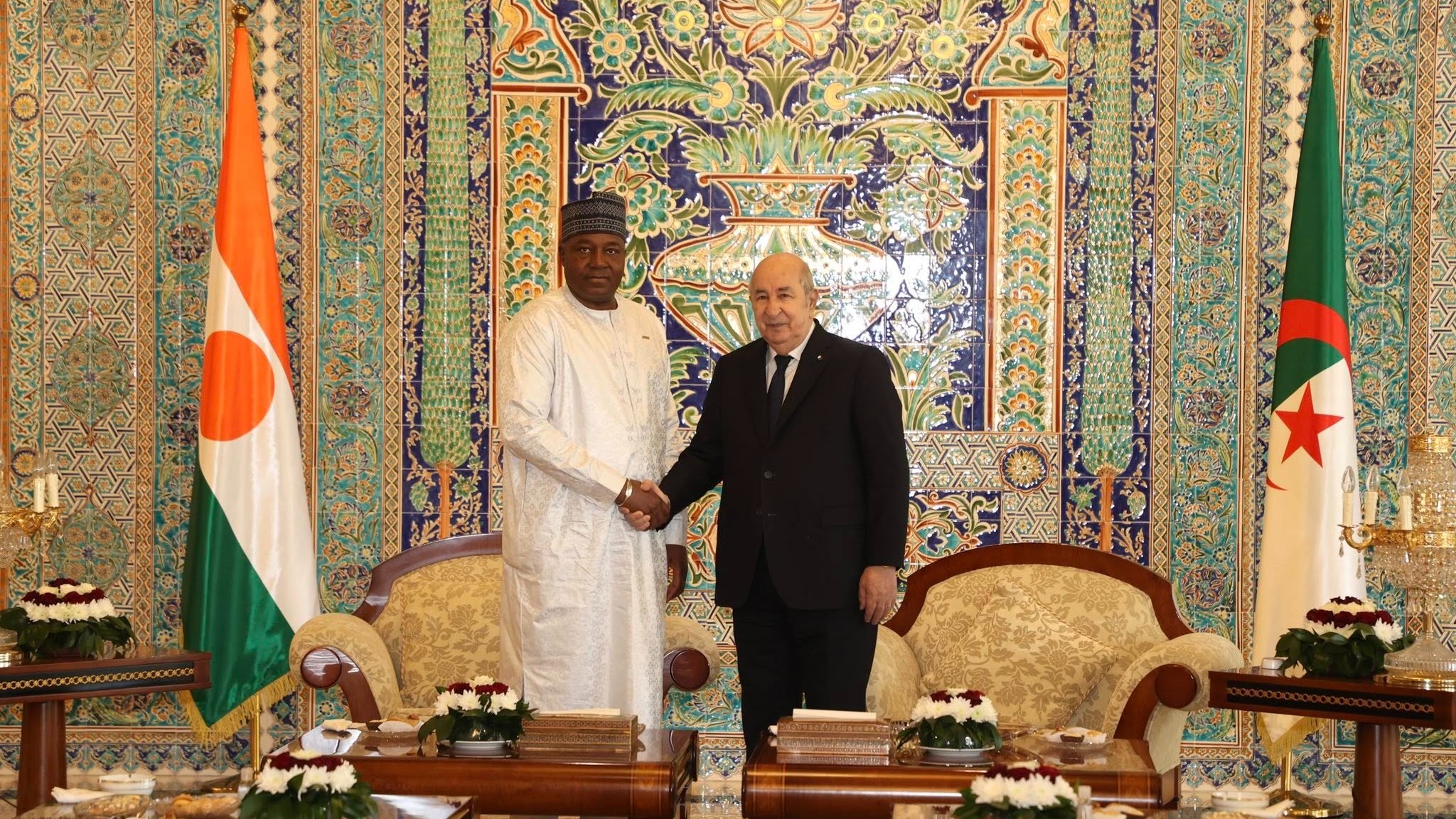
Last Friday, an Algerian military convoy crossed into Niger, marking the North African nation’s first overseas force deployment in 52 years, dating back to 1973 when Algeria dispatched troops to back Egypt during its conflict against Israeli occupation of the Sinai Peninsula. This move represents a landmark break from Algiers’ decades-old foundational policy of non-interference in other sovereign nations’ internal affairs. The deployment follows a late August decision to send four fighter jets to Niger to block an attempted coup targeting the country’s de facto leader Abdourahamane Tiani, even though Algeria had publicly opposed the 2023 military coup that originally brought Tiani to power. The deployment was formally requested by Tiani’s administration, with Algerian Senator Belkacem Boulghiti clarifying in a Sunday public statement that the deployed forces will not engage in offensive combat operations, but will instead focus on safeguarding critical economic infrastructure and oil facilities operated by Algerian state-owned enterprises. The shift in Algeria’s long-held foreign policy posture is rooted in mounting concerns over spiraling instability across the Sahel region, which senior retired Algerian diplomat Amar Belani detailed in an October published analysis. Belani framed growing unrest in Niger and neighboring Sahel states as the product of a coordinated destabilization campaign backed by the United Arab Emirates, Morocco, Israel, and aligned French proxy actors, warning that prolonged chaos in Niger would directly erode Algerian national interests, most notably jeopardizing the landmark Nigeria-Niger-Algeria Trans-Saharan Gas Pipeline project. Zine Ghebouli, a visiting fellow at the European Council on Foreign Relations, explained that evolving regional geopolitics have imposed urgent new security priorities on Algiers, forcing the government to take concrete steps to shield its high-stakes energy sector interests. Tensions between Algeria and the UAE boiled over in September, when Algiers formally severed all diplomatic ties after officials stated they had exhausted every diplomatic channel to resolve disputes over Abu Dhabi’s alleged hostile regional actions. The Algerian foreign ministry issued a public statement noting that repeated formal warnings to the UAE over its destabilizing behavior had been ignored, and that Abu Dhabi’s persistent interference in regional sovereign nations’ internal affairs had crossed a threshold that could no longer go unanswered. Ghebouli emphasized that the decision to fully cut diplomatic relations demonstrated that Algerian leadership viewed Emirati regional maneuvers as fundamentally explosive and incompatible with peaceful bilateral coexistence. The UAE’s pattern of interventionist policies across the Middle East and Africa has drawn widespread condemnation from other regional governments in recent years: Sudan severed ties with Abu Dhabi over well-documented evidence that the Emirati state funded and fueled Sudan’s brutal ongoing civil war, while Somalia, Libya, and Yemen have all publicly accused the UAE of undermining their territorial integrity by arming and financing rival armed factions and separatist movements. Ghebouli added that Algerian officials view Emirati financial, diplomatic, and military backing for disparate armed groups across the region from Libya to the Sahel as a deliberate strategy to foment division, and that Abu Dhabi’s aggressive lobbying to expand the US-brokered Abraham Accords normalization deals between Israel and Arab states – including Morocco – further deepened rifts with Algiers. Over the past few years, the UAE has steadily built deep ties with ruling military regimes across the Sahel through high-level diplomatic outreach, gold trading partnerships, and targeted investment, with Emirati minister Sheikh Shakhboot bin Nahyan holding a summit with the leaders of Mali, Burkina Faso, and Niger in May 2025 to discuss cooperation spanning economic development, energy, and security sectors. Analysts note that Algeria has long viewed the entire Sahel as a natural extension of its own national security perimeter, and that the government is now moving decisively to defend that space. Ghebouli added that longstanding Algerian taboos against overt military deployments abroad have been discarded amid intensifying geopolitical rivalries and foreign intervention in the region, as Algiers now uses visible military presence to clearly mark its non-negotiable national security redlines. Another key source of Algerian concern is the influence of UAE-backed eastern Libyan strongman Khalifa Haftar, whose Libyan Arab Armed Forces have been expanding military control toward the border corridors linking Libya and Niger, raising alarms about growing Emirati sway along Algeria’s entire southern national border. Libya analyst Jalel Harchaoui, affiliated with the Royal United Services Institute, noted that Algeria has maintained frosty relations with the Haftar family for years, with tensions flaring during the August 2025 Niger coup attempt, as Haftar’s son Saddam openly backed Mahamoud Sallah, a leading political opponent of Niger’s Tiani. Harchaoui clarified that the current Algerian military mission is limited to Niger’s borders, and there is no evidence to suggest Algiers is planning direct intervention in Libya at this stage. Recent diplomatic shifts, including Turkey’s October rapprochement with Haftar, may create new opportunities for Algeria to shore up its position in the Sahel, as Ankara and Algiers share close bilateral ties and aligned interests in stabilizing Libya and Sudan. Reports also indicate that Morocco has recently pursued outreach to the Haftar clan, with Khalifa Haftar’s son and eastern Libyan forces chief of staff Khaled Haftar making an official state visit to Morocco in the previous month. Complementing these geopolitical priorities are Algeria’s high-stakes economic and energy interests in Niger. Algerian state energy giant Sonatrach, alongside the Nigerian National Petroleum Corporation and the Nigerien government, is leading development of a 4,000-kilometer Trans-Saharan Gas Pipeline designed to transport Nigerian natural gas through Niger and Algeria to export markets in Europe. Dr. Fatiha Dazi-Heni, a senior political scientist specializing in Arabian Peninsula affairs at Paris-based research institute Irsem and Sciences Po Lille, confirmed that the deployed Algerian troops are explicitly tasked with protecting Sonatrach’s energy projects and the planned route of the Trans-Saharan pipeline. The project faces direct commercial competition from a rival Nigeria-Morocco Atlantic coastal gas pipeline that would draw on the exact same Nigerian gas reserves to supply European markets, with the UAE committing to provide full financial and technical backing to the Moroccan-led project. Dazi-Heni noted that Niger is geographically impossible for the overland Trans-Saharan pipeline route to bypass, meaning that by securing stability in Niger, Algeria is actively defending its core strategic asset against the competing Morocco-UAE alliance – a dynamic where Israel also holds indirect stakes via its formal normalization partnership with Morocco. Dazi-Heni added that this unprecedented military deployment reflects a major evolution in Algeria’s traditionally cautious, low-profile strategic culture, as policymakers adjust to the harsh new geopolitical constraints reshaping the entire North and West African region.