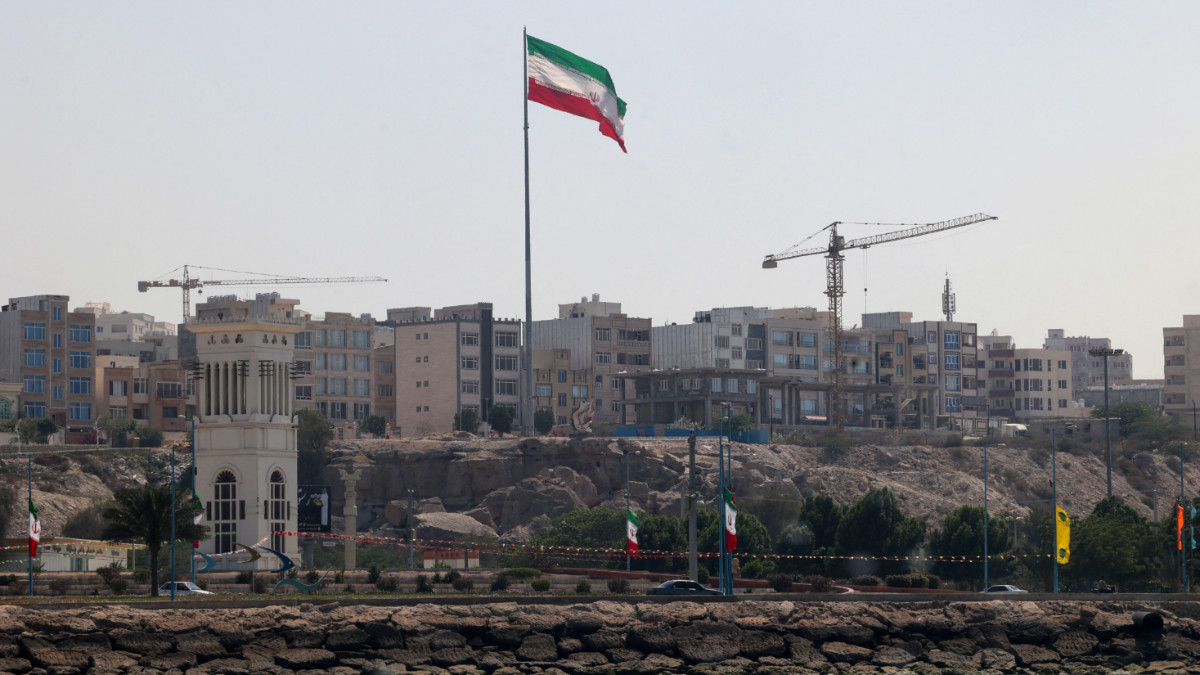
Tensions between the United States and Iran escalated sharply on Tuesday, as senior Iranian officials publicly cast deep doubt on the viability of a mutually acceptable diplomatic deal, hours after U.S. forces conducted targeted air strikes on Iran’s strategic Qeshm Island in the Strait of Hormuz. The wave of strikes, carried out late Monday, unfolded against a fragile diplomatic backdrop: just days prior, U.S. President Donald Trump had stated he had no intention of launching offensive operations against Iran following recent U.S. midterm elections, and had expressed cautious optimism that a negotiated de-escalation framework could be reached. Even in the immediate aftermath of the first strike reports, Iranian President Masoud Pezeshkian had initially signaled openness to a path forward, noting that his government held formal authorization to extend an existing temporary truce between the two nations.
That tentative glimmer of diplomatic progress was effectively shattered on Tuesday, when Major General Mohsen Rezaei, head of Iran’s Supreme National Security Council, formally rejected a compromise proposal that had been relayed to Tehran by Qatari mediators, who have long acted as a neutral intermediary in U.S.-Iran backchannel talks. In a public post on social media platform X, Rezaei stated that Washington’s latest counteroffer failed to meet the core demands of the Iranian people, emphasizing that the United States must fully and explicitly satisfy all seven of Iran’s preconditions before Tehran would agree to reopen the Strait of Hormuz, the chokepoint through which roughly 20% of global oil supplies transit.
The first public details of the Qeshm Island strikes were broken by the Wall Street Journal, which reported that U.S. military and diplomatic leadership had intentionally kept the operations under wraps to minimize the risk of a catastrophic spiral into full-scale regional war, a scenario that regional officials and independent analysts have repeatedly warned is now a tangible possibility. A U.S. defense official speaking to the publication characterized the strikes as strictly defensive, noting that the first round of fire was triggered when Iran’s Islamic Revolutionary Guard Corps launched a surface-to-air missile at a patrolling U.S. military aircraft, which returned fire in self-defense. A second separate strike was authorized after U.S. forces intercepted an anti-ship missile fired from Qeshm Island targeting a civilian commercial vessel transiting international waters.
Ratcheting up tensions further, Iranian military authorities announced on Tuesday that they had shot down one U.S. MQ-9 Reaper surveillance drone and two additional Lucas drones operating in airspace near the Strait of Hormuz. Iranian parliament speaker Mohammad Bagher Ghalibaf emphasized that the onus for de-escalation now rested entirely with Washington, noting that Tehran had already delivered a firm, rational formal response to the Qatari-mediated proposal. “The United States is delusional if it believes it can coerce the Iranian nation into submission through threats and military aggression,” Ghalibaf stated publicly. “Iran will never surrender to external pressure.”
As laid out publicly on Monday by Iranian foreign ministry spokesperson Esmaeil Baghaei, Tehran’s seven-point diplomatic roadmap is designed to be fully executable within a 48-hour window, with clear sequential steps: first, the U.S. must lift its naval blockade on Iranian ports, followed by Iran reopening full navigation access to the Strait of Hormuz, the U.S. issuing formal waivers to restore unimpeded Iranian oil sales, Washington cancelling all newly imposed unilateral sanctions on Iranian entities and individuals, and subsequent follow-on negotiations focused exclusively on Iran’s civilian nuclear program. The current diplomatic impasse follows a tentative spring 2024 ceasefire agreement between the two nations, paired with a 14-point memorandum of understanding that was ultimately never ratified or implemented, after talks collapsed largely due to U.S. refusal to concede to Iranian demands for full authority over maritime traffic flows through the Strait of Hormuz.