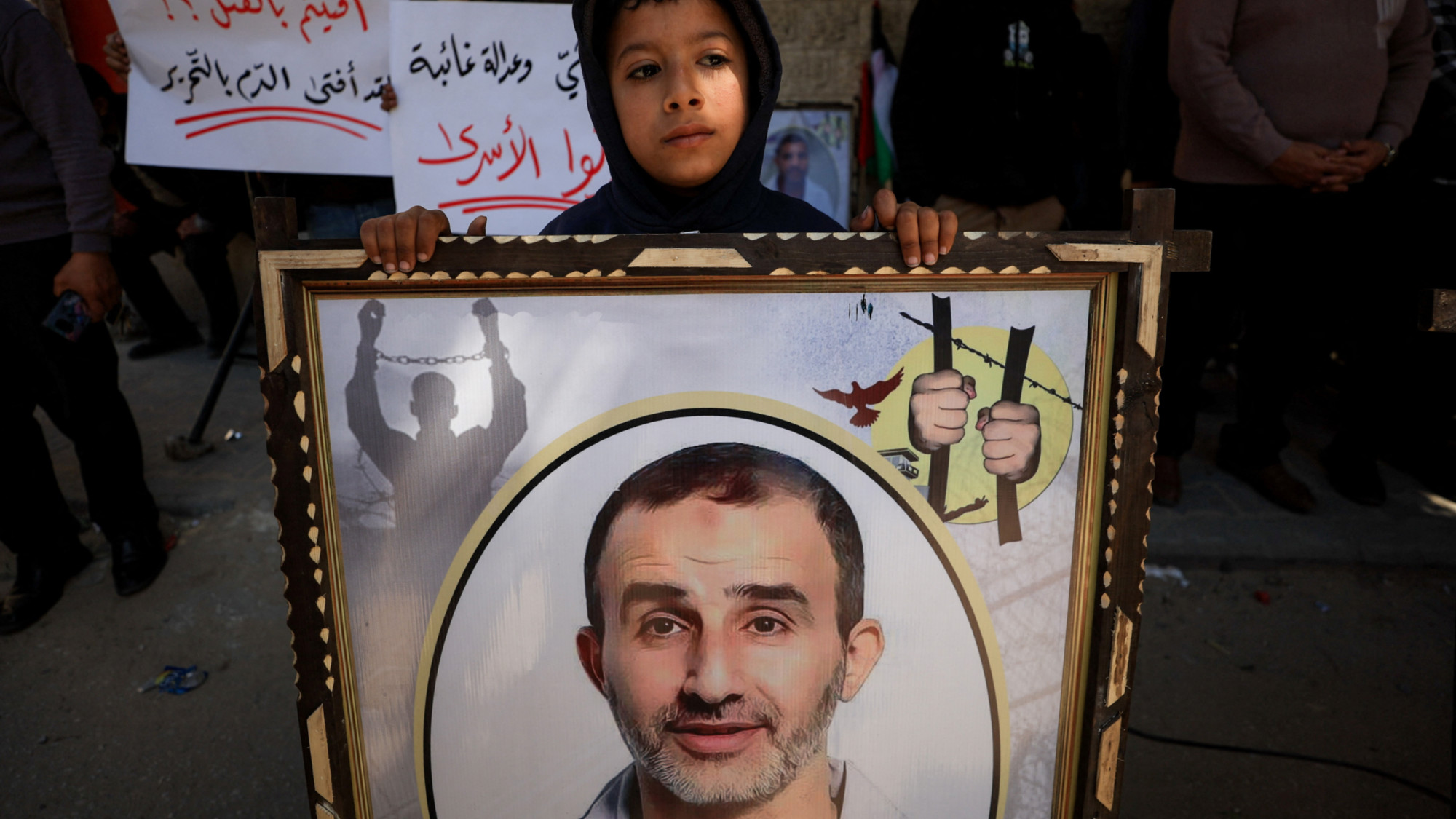
Disturbing new testimonies from a Palestinian prisoners’ advocacy group and the fiancée of high-profile long-term detainee Hassan Salameh have confirmed that the 55-year-old was shot nine times by Israeli prison guards in a violent assault last month, weeks after far-right Israeli National Security Minister Itamar Ben Gvir filmed himself inside Salameh’s cell openly threatening to execute him. The Palestinian Prisoners’ Society (PPS), a leading independent monitor of detention conditions for Palestinian individuals held in Israeli facilities, verified details of the attack during a legal visit to Salameh conducted by one of its lawyers on Monday. Cross-referenced accounts from the legal team and Salameh’s fiancée Ghufran Zamel confirm the detainee was subjected to brutal, sustained physical beatings both before and after Ben Gvir’s unauthorised cell incursion, with Israeli security forces first storming the unit to assault Salameh repeatedly, including targeted blows to his face, before firing nine rounds at him at close range. Three full days after the violent incident, Salameh was briefly removed from his cell only for officials to document his injuries via photography, before being returned to his cell with no formal medical care administered, provided only basic over-the-counter painkillers despite the severity of his gunshot and blunt-force wounds. The recent legal visit confirmed Salameh remains in visibly poor health, severely exhausted and still suffering lingering, untreated effects of the assault, with critical details about the type of ammunition used in the shooting and the full sequence of events that triggered the attack still unaccounted for. PPS representatives noted that sweeping Israeli restrictions on legal and family prison visits have blocked access to additional corroborating evidence, deepening widespread alarm over Salameh’s safety. The organisation stressed the incident is not an isolated case, but part of an escalating, deliberate campaign targeting high-profile Palestinian detainees that far exceeds standard punitive measures, putting the lives of long-imprisoned prisoner leaders in immediate, mortal danger. These targeted figures face coordinated physical and psychological torture, systematic crackdowns, and repeated public death threats directly from Ben Gvir, who in September posted a viral video filmed inside Salameh’s cell surrounded by armed guards, stating he intended to execute the detainee and vowing to push for the death penalty for prisoners like Salameh if he is appointed defence minister. A native of the Khan Younis refugee camp in southern Gaza, Salameh became active in Palestinian resistance against Israeli occupation following the 1987 outbreak of the First Intifada, later rising to a senior leadership position in the al-Qassam Brigades, Hamas’ armed wing. He was handed 48 consecutive life sentences in 1996 after an Israeli court convicted him of orchestrating a series of bombings that killed and wounded dozens of Israeli civilians; Salameh has repeatedly stated the attacks were carried out in direct retaliation for Israel’s targeted assassination of prominent Hamas engineer Yahya Ayyash earlier that same year. Over the 30 years he has spent in Israeli custody, Salameh has already endured 14 cumulative years in prolonged solitary confinement. Reports of systemic abuse of Palestinian detainees held in Israeli facilities have surged dramatically since the outbreak of the Gaza conflict in October 2023, with dozens of human rights organisations documenting widespread patterns of torture, unprovoked physical assault, sexual violence, deliberate starvation, medical neglect, and public humiliation of prisoners across all Israeli detention centres. Two leading Israeli human rights groups, Physicians for Human Rights Israel and the Public Committee Against Torture in Israel, released a joint report last month compiling 21 separate first-hand testimonies confirming a rapidly spreading dangerous practice where Israeli prison guards fire rubber-coated steel bullets at prisoners from point-blank range inside their cells, causing catastrophic, often permanent injuries. One documented case details a Palestinian detainee whose right testicle was completely crushed by a close-range rubber bullet shot, requiring full surgical amputation. PPS warned that the ongoing implementation of these brutal policies, paired with sweeping bans on independent oversight and restricted access for legal representatives and medical personnel, creates a permissive environment that will inevitably lead to further fatal violations, stripping Palestinian detainees of even the most basic internationally recognised protections for incarcerated people.