The UK government is set to mount a full defence of its controversial proscription of pro-Palestinian direct action network Palestine Action at a landmark two-day Supreme Court hearing kicking off Wednesday, a high-stakes legal showdown that is redefining the intersection of Britain’s counterterror legislation, fundamental free expression guarantees, and the statutory right to public protest.
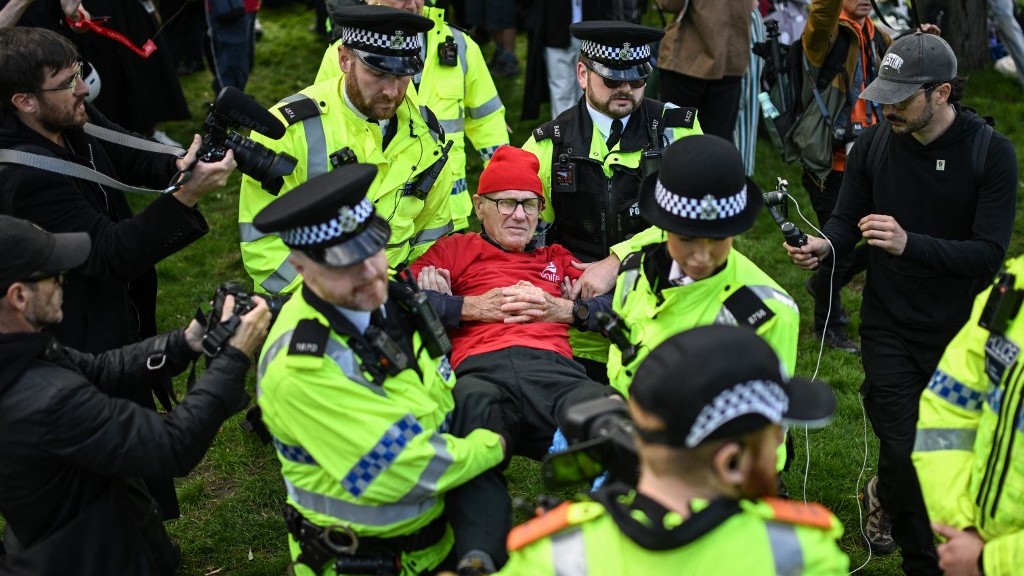
A segment of the proceedings will be held behind closed doors, court administrators confirmed, to accommodate classified evidence tied to national security considerations that cannot be disclosed in open court. The appeal unfolds against a backdrop of escalating civil unrest across the nation, as law enforcement has ramped up crackdowns on demonstrators voicing solidarity with the group. Over the most recent weekend alone, hundreds of peaceful protesters were taken into custody outside the US Embassy in central London and in the Scottish capital of Edinburgh, simply for carrying placards bearing the six-word slogan: “I oppose genocide, I support Palestine Action.”
Since the UK government formally banned Palestine Action under the Terrorism Act in July 2025, that very six-word phrase has evolved into a widespread rallying cry for pro-Palestine campaigners, resulting in more than 4,000 people being targeted for arrest under counterterror statutes. The affected groups include human rights legal practitioners, elderly long-time peace activists, and even Holocaust survivors, sparking widespread public outcry over the scope of the legislation. The proscription also ignited high-profile cultural controversy earlier this year, when celebrated Irish novelist Sally Rooney saw her works pulled from UK retail shelves after she publicly voiced her backing for Palestine Action, amplifying global concerns that the ban represents a sweeping overreach that violates core free speech protections.
The legal battle that has landed the case before the UK’s highest judicial body was initiated by Palestine Action co-founder Huda Ammori, who has navigated a winding, back-and-forth path through the British court system over the past 13 months. Shortly after the 2025 proscription, which criminalised both formal membership in Palestine Action and any public expression of support for the organisation, campaigners mounted an immediate legal challenge. In February 2026, the High Court handed Palestine Action a resounding victory, ruling that the government’s proscription was unlawful and constituted a disproportionate, unjustified infringement on basic human rights. That ruling was later overturned by the Court of Appeal in June 2026, which reinstated the group’s official terrorist designation. The Supreme Court formally granted Ammori permission to file a final, binding appeal in August 2026.
Representing Ammori in the upcoming hearing, leading human rights barrister Raza Husain KC will argue that classifying a grassroots direct action group that primarily targets arms manufacturing and supply firms under counterterror laws sets an extraordinarily dangerous precedent that opens the door to criminalising legitimate political dissent across the UK. In pre-filed written submissions to the Supreme Court, Ammori’s legal team highlighted internal Home Office assessments that found less than 1% of Palestine Action’s documented direct action protest activities over a five-year period met the legal definition of terrorism. Husain further clarified that of 385 total actions staged by the group across that five-year span, only three were ever assessed to fall under the Terrorism Act’s terrorism classification. He emphasised that the proscription had resulted in “the total destruction of a protest group which enjoyed widespread support from across civil society.”
Dozens of independent human rights organisations and international oversight bodies, including multiple United Nations special rapporteurs, have filed amicus curiae statements with the court, warning that upholding the ban will trigger a severe chilling effect across the entire UK civil society sector, discouraging legitimate grassroots advocacy on a wide range of social and foreign policy issues.
For its part, the UK government will argue that the Court of Appeal’s ruling that restored the proscription was fully consistent with long-standing, established legal principles, and contained no errors of law. Leading government counsel James Eadie KC noted in his written submissions that the lower appellate court’s factual conclusions were fully justified by the evidence presented to it. Two major UK Jewish representative bodies, the Community Security Trust and the Jewish Leadership Council, have also submitted supporting evidence to the court, arguing that maintaining Palestine Action’s proscription is necessary to protect the safety and security of Britain’s Jewish community.
The highly charged public debate around the ban has even drawn public comment from senior cabinet officials, including UK Foreign Secretary Ed Miliband, who acknowledged earlier this year that the proscription had produced unforeseen, absurd outcomes that saw “grannies and vicars” arrested on terror-related charges. “I don’t think anyone’s intent was to have those people criminalised,” Miliband told LBC News in a public interview, adding that the Supreme Court’s deliberations would be critical to resolving the dispute, and that the government would keep the policy under active ongoing review.