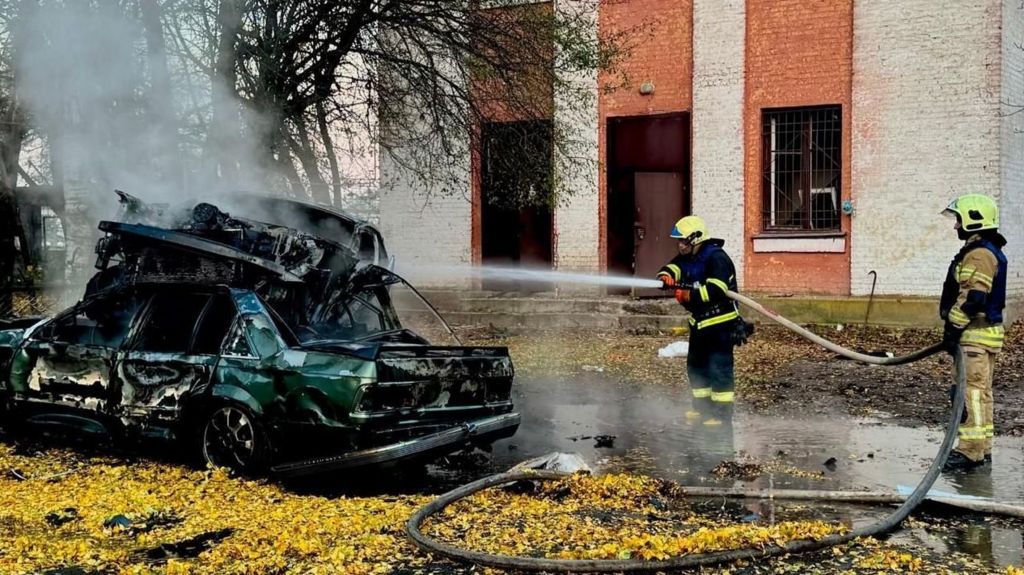
The rare, localized humanitarian ceasefire brokered for Ukraine’s Kherson region, which opened a critical escape route for civilians trapped in the Russian-occupied city of Oleshky, is set to expire at 22:59 local Ukrainian time on Sunday, after holding without major violation since its launch the prior Tuesday. Negotiated with facilitation from U.S. First Lady Melania Trump and Pope Leo, the temporary truce was initially restricted to Oleshky – a settlement seized by Russian forces in the earliest days of the February 2022 full-scale invasion – before being expanded to cover a broader swathe of the frontline region. For nearly two years, Oleshky residents were trapped between the Dnipro River and occupying Russian troops, with all outbound routes heavily mined and targeted by regular drone attacks. Cut off from basic supplies, many surviving civilians were forced to boil wild garden weeds for sustenance amid catastrophic shortages of food, safe drinking water and electricity. Over the course of the ceasefire, hundreds of residents have been able to flee the besieged city: the evacuation route required displaced civilians to transit through Russian-held territory, fly to Belarus, then travel overland across Ukraine’s northern border to safety. The cohort of evacuees ranges in age from a 1-year-old infant to a 94-year-old elder, according to Dmytro Lubinets, Ukraine’s human rights ombudsman, with many tearful, long-awaited family reunions unfolding across the country over the weekend as separated loved ones met for the first time in years. While the Kherson ceasefire has held, widespread hostilities have continued unabated across other parts of the conflict zone. Overnight on Saturday, Russian forces launched coordinated strikes on energy infrastructure spanning four Ukrainian regions, leaving hundreds of thousands of households disconnected from the power grid. A separate deadly aerial attack hit residential areas in the Vinnytsia region, claiming the lives of two civilians, including a 13-year-old girl, according to official statements from Ukraine’s State Emergency Service. In retaliatory action, Ukrainian forces targeted a major missile fuel production facility in Russia’s Rostov region, igniting a large-scale fire that damaged four separate production units, President Volodymyr Zelensky confirmed. Across Ukraine, emergency repair crews have worked around the clock to restore power to affected communities. By early evening Sunday, most households in the Dnipropetrovsk region had their electricity reconnected, though more than 60,000 residents remained without grid access. Systematic, repeated attacks on national energy infrastructure have forced authorities to implement rolling emergency blackouts nationwide; even in the capital city of Kyiv, most residents face multi-hour power outages throughout the day, with cascading disruptions to municipal water supplies. In a public social media address, President Zelensky noted that the intensity of Russian offensive strikes over the past week had reached “extremely high” levels, emphasizing that Moscow is deliberately exploiting Ukraine’s current shortage of ballistic missile interceptor systems to maximize damage. He confirmed that Kyiv is in daily communication with the United States, European Union member states and other allied partners to request accelerated deliveries of Patriot air defence systems – the only verified weapon platform capable of reliably neutralizing Russia’s advanced ballistic missiles. While expressing gratitude for existing military support and long-term aid commitments from international partners, Zelensky issued a renewed urgent call for immediate additional air defence assets to protect critical civilian infrastructure and population centres.