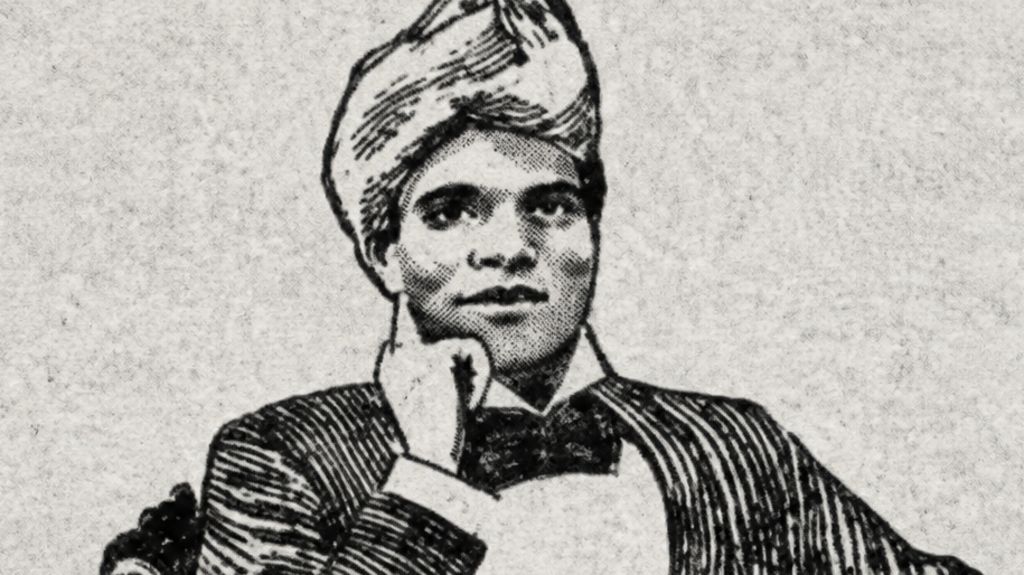
Long before Indian curries, masala dosas and spiced biryanis became ubiquitous staples across American dining landscapes, a mysterious, endlessly inventive Indian chef named Ranji Smile etched his name into the unlikeliest chapters of US food history. Exactly 125 years ago, in 1901, Smile launched what historians now widely recognize as the very first full Indian restaurant on American soil, a milestone that would set the stage for the billion-dollar South Asian food industry that thrives across the country today. Almost nothing concrete is documented about Smile’s origins, not even his birth name. His adopted first name “Ranji” was almost certainly a playful tribute to KS Ranjitsinhji, the legendary Indian cricketer who was a household name across British Test cricket circuits at the turn of the 20th century, while his surname “Smile” is believed to be an anglicized rendering of the common South Asian name Ismail. When he arrived at Ellis Island in the summer of 1899 after sailing from London, where he had previously worked as a curry chef at the iconic Cecil and Savoy hotels, he added a new all-American first name to his persona: Joe. The newly minted Joe Ranji Smile was handpicked by Louis Sherry, owner of New York’s ultra-luxurious Sherry’s Restaurant on Fifth Avenue, a Gilded Age fine-dining institution that rivaled the legendary Delmonico’s as the go-to dining spot for Manhattan’s wealthiest plutocrats, including the powerful Astor family. At the time, New Yorkers had barely any exposure to South Asian spices, but widespread cultural fascination with India — stoked by the wildly popular speaking tours of spiritual leader Swami Vivekananda, and a steady trickle of Indian students, sailors and professionals settling in the city — made Sherry eager to add a dedicated Indian curry chef to his star-studded kitchen team. A natural showman who thrived amid Sherry’s over-the-top, theatrical dining events (which once included a party where guests dined while seated on horseback in the restaurant’s ballroom), Smile turned every cooking and serving interaction into a performance. Draped in a lustrous satin coat and vibrant blue silk turban, he would greet diners with a traditional salaam, asking them “Will you have the curry hot or mild, sahib?” before serving up exotic delicacies including Bombay duck, a pungent dried lizardfish from India’s western coast, and his own signature creation “Lettuce Ceylon.” His fame exploded across local media, with one newspaper headline famously declaring “New York women go wild over him.” Buoyed by his massive popularity, Smile left Sherry’s in 1901 to launch his own standalone Indian restaurant, securing financial backing from prominent financier and early motorhome inventor Roland R Conklin. Named Omar Khayyam, the lavish eatery opened on prime Fifth Avenue real estate just one block away from the original Waldorf-Astoria Hotel (the site where the Empire State Building would later be constructed 29 years later), decorated with rich Indian draperies, hanging lanterns, a staff of turbaned Indian waiters and a live troupe of Indian musicians. But the ambitious venture quickly flopped: New York diners dismissed Indian food as a fleeting novelty, and the restaurant shuttered within 12 months. As his public stardom faded, Smile’s flair for theatrical reinvention curdled into a series of elaborate deceptions. He began claiming he was the son of the Emir of Baluchistan, a completely fabricated royal title, and during a 1901 trip to Bombay he told locals he was a personal guest at King Edward VII’s upcoming coronation, recruiting a large retinue of valets, a dancing girl and elephant handlers to bring back to New York to staff his restaurant. This act landed him in federal court on charges of illegally trafficking foreign workers into the US, and while Smile narrowly avoided deportation, many of the staff he recruited were forcibly removed from the country. Over the following decades, Smile continued to churn out increasingly outlandish personas — at one point claiming he was the brother of the fictional “Great Beglerberg of Baluchistan” — while touring the US to host public Indian cooking demonstrations, marrying a string of young American women, and marketing South Asian food as a secret beauty elixir that could “make the eye grow lustrous and the complexion lovely.” A string of subsequent legal troubles, ranging from allegations of unlawfully confining his dancing girl performer to refusing to pay a Manhattan Italian restaurant bill, pushed him out of the public spotlight by the 1920s, when he abandoned cooking entirely to list his occupation as a general merchant. The last confirmed public record of Smile dates to 1937, when his fourth or fifth wife filed for an annulment at the New York Supreme Court after he vanished without a trace, pulling off one final, mysterious act of self-reinvention. Though his own career ended in infamy and obscurity, Smile’s trailblazing efforts laid critical groundwork for the future of Indian food in the US. A string of subsequent immigrant restaurateurs built on his early experiments, most notably KY Kira, a Sri Lankan performer who opened the long-running Ceylon India Inn in 1913, a wildly popular establishment that operated until the late 1980s and catered to Broadway and Hollywood celebrities. Today, more than 125 years after the short-lived Omar Khayyam first opened its doors, Smile’s little-remembered legacy lives on in the more than 5,000 thriving Indian restaurants spread across every corner of the United States.