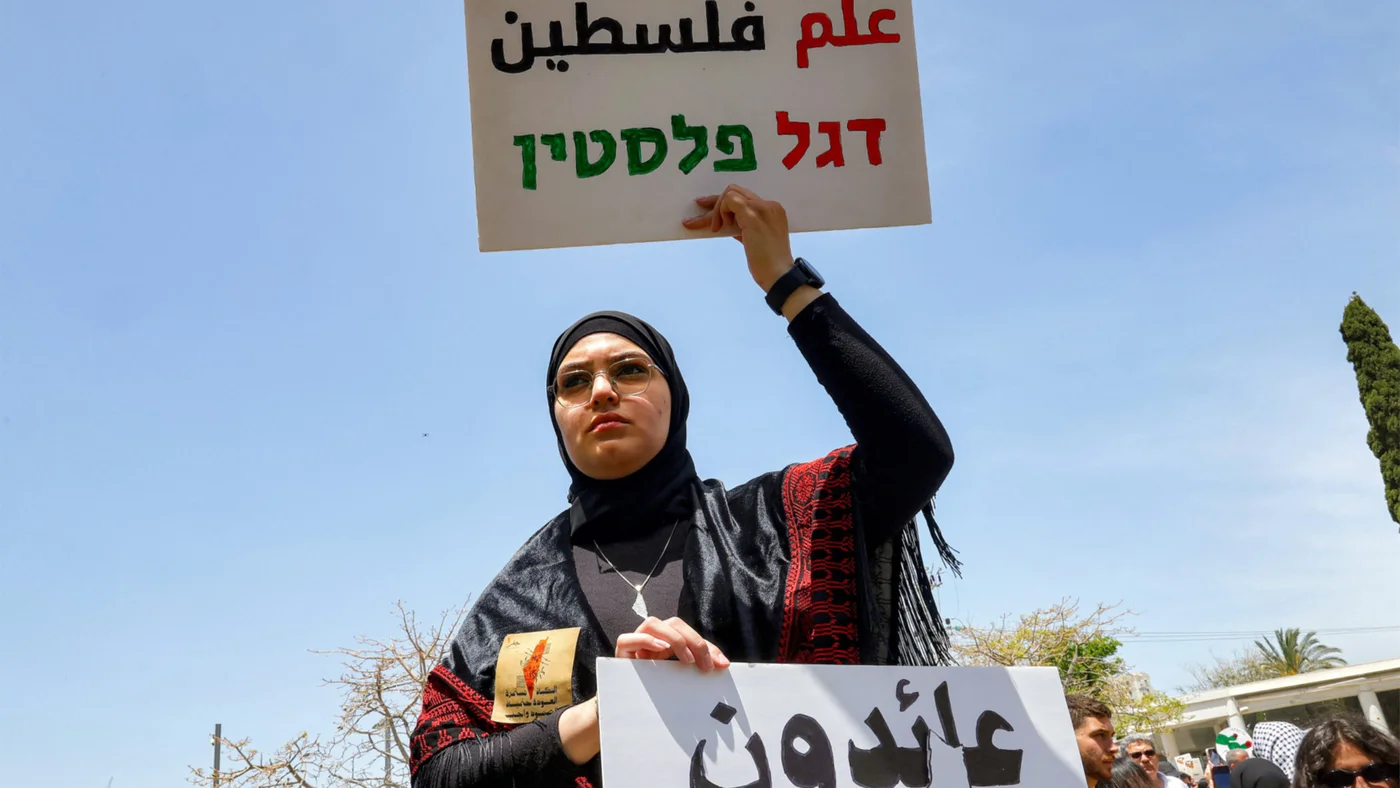
Often overlooked in mainstream narratives of the Israeli-Palestinian conflict, the roughly 2 million Palestinian citizens of Israel represent a distinct, historically rooted community that makes up one-fifth of Israel’s total population. These are the descendants of the 150,000 Palestinian people who avoided expulsion during the 1948 Nakba – the deliberate, campaign of ethnic cleansing carried out by Zionist militias and later Israeli state forces that displaced 80% of historic Palestine’s majority Arab population, destroyed hundreds of villages, and cleared the way for the formal establishment of the Israeli state. Many of those who remained were internally displaced, barred from returning to their homes even as their abandoned land and property was seized by state authorities, turning a once-majority indigenous population into a marginalized minority on their own ancestral land overnight.
For nearly two decades after 1948, this community lived under a harsh, exclusive military regime that imposed movement restrictions, arbitrary curfews, and sweeping bans on political organizing, while Jewish Israeli citizens operated under civilian legal frameworks. One of the most devastating atrocities of this era was the 1956 Kafr Qasim massacre, where Israeli troops acting on secret orders to shoot curfew violators killed 49 unsuspecting Palestinian villagers, including women and children, who were returning home from work unaware the curfew had been moved several hours earlier. Even after military rule was lifted in 1966, state repression persisted: 1976’s Land Day protests against mass state land confiscations in the Galilee saw six Palestinian citizens shot dead by police, a moment that remains a core annual commemoration of the community’s fight for land rights. During the 2000 Second Intifada, 13 Palestinian citizen demonstrators were killed by Israeli security forces during rallies in solidarity with besieged populations in the occupied West Bank and Gaza Strip.
Systemic discrimination has been codified into law over decades of successive Israeli governments, with Haifa-based Palestinian rights legal center Adalah documenting more than 65 statutes that explicitly or implicitly target Palestinian citizens for unequal treatment. These range from the 1950 Absentees’ Property Law, which seized the assets of displaced Palestinians even for some who held Israeli citizenship, to the 2003 family reunification ban that blocks Palestinian citizens from gaining residency for spouses from the occupied territories, the 2011 community town admissions law that allows majority-Jewish localities to reject Palestinian applicants on grounds of “compatibility with Zionist-Jewish character”, and the 2018 Nation-State Basic Law that enshrines exclusive Jewish national self-determination in Israel, downgrades Arabic from its longstanding official language status, and prioritizes state support for Jewish settlement.
Compounding state and legal discrimination, Palestinian communities are in the grip of a spiraling violent crime crisis that local civil society group the Abraham Initiatives attributes to decades of deliberate under-policing. Though Palestinian citizens make up only 20% of Israel’s population, 50% of the country’s total violent crime impacts their communities, with Israeli police failing to crack down on widespread illegal arms trafficking that community leaders say authorities have long allowed to operate with impunity. The homicide clearance rate for Palestinian victim cases sits at less than 15%, compared to a 65% clearance rate for Jewish Israeli homicide victims, and the death toll has surged from 116 in 2022 to a record 252 in 2025, with most of the victims having no ties to criminal networks.
Across generations, Palestinian citizens have built robust political and grassroots movements to push for full equal rights. Early organizing was severely constrained by military rule, but by the 1970s, parties including Hadash, Balad, Ta’al, and Ra’am had emerged as leading political voices, alongside the cross-partisan High Follow-Up Committee that serves as the community’s extra-parliamentary representative body. For decades, Palestinian-led parties were treated as untouchable political partners by mainstream Jewish Israeli factions, but that longstanding taboo was broken in 2021 when Ra’am joined a national governing coalition, using its four Knesset seats to end Benjamin Netanyahu’s 12-year run as prime minister. Ahead of the 2026 general elections, the reunited Joint List alliance and the separate Ra’am party are projected to win a combined 18 to 20 Knesset seats, a haul that could give the Palestinian citizen community unprecedented kingmaker leverage over coalition formation, and the potential to translate decades of grassroots struggle into tangible policy changes to address historic inequalities. For first-time Palestinian voter Asia Egbaria, that possibility carries profound personal weight: “I want change. I don’t want to be treated like a second- or third-class citizen anymore. That’s all.”
Who are the Palestinian citizens of Israel?