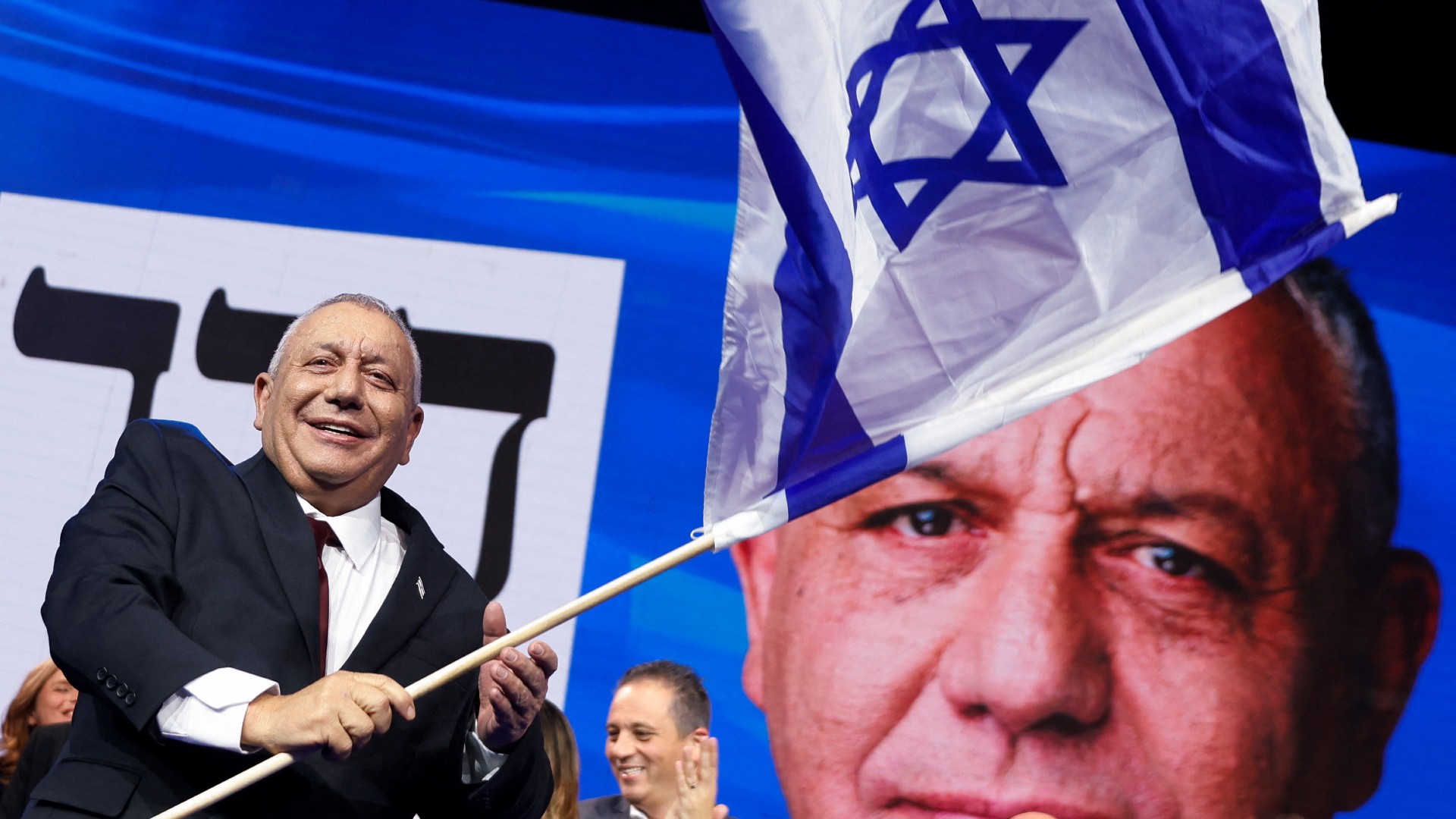
Israel’s Tuesday parliamentary election drew the highest voter turnout the nation has recorded since 2001, defying predictions of widespread apathy after years of repeated political deadlock. Yet as vote counting crossed the 85% threshold by Wednesday afternoon, neither incumbent Prime Minister Benjamin Netanyahu nor his centrist and right-leaning challengers held a clear, unobstructed path to securing the 61 Knesset seats required for a governing majority in the 120-seat legislative body. The most disruptive variable in the post-election calculus comes from two political slates representing Palestinian citizens of Israel: the Joint List and Ra’am, whose unexpected, surging gains delivered them a combined 19 seats. Nearly every established Israeli Jewish political faction has publicly committed to excluding both Arab parties from formal governing coalitions, a red line that complicates every possible path to a 61-seat majority. Early exit polls broadcast at 10pm on election night initially showed former military chief Gadi Eisenkot’s opposition bloc edging ahead of Netanyahu’s longstanding allied faction, leading many political commentators to prematurely declare the end of Netanyahu’s decades-long political career. But as ballots were tallied through the night, it emerged that Netanyahu’s Likud party had emerged as the single largest faction in the Knesset with a projected 26 seats, putting his full allied bloc at 53 total seats, while Eisenkot’s centrist-right opposition coalition stood at just 48. Under Israeli constitutional procedure, Netanyahu will remain in caretaker prime minister until a new governing coalition is formally sworn in, and President Isaac Herzog is widely expected to first task Netanyahu with the 28-day window to assemble a majority, extended by a maximum of 14 additional days if requested, due to Likud’s status as the largest single party. Netanyahu has two plausible, though high-risk, routes to hit the 61-seat threshold. The first relies on luring defectors from far-right factions currently aligned with the opposition, many of whose sitting members are current or former West Bank settlers who have historically aligned with hardline policy priorities Netanyahu has supported. But this path would require a substantial number of opposition MPs to abandon their election promises, a move that carries severe backlash risks for their personal political brands. The second option is forming a national unity government with key opposition figures including Eisenkot’s Yashar faction and Naftali Bennett’s MPs from the Together slate, an outcome that both US President Donald Trump — who formally endorsed Netanyahu ahead of the election — and President Herzog have publicly signaled they prefer. But this unity government scenario would force Netanyahu to oust his most controversial far-right allies: Finance Minister Bezalel Smotrich and National Security Minister Itamar Ben Gvir, whose radical factions have been core partners in his previous governments, as well as his longstanding ultra-Orthodox allies in the Shas and United Torah Judaism parties. The opposition has campaigned aggressively on enforcing mandatory military conscription for Haredi youth, a policy the ultra-Orthodox parties have spent decades opposing, making their inclusion in any unity government functionally impossible. The unity path faces massive public and political barriers, as Netanyahu’s personal legal scandals and polarizing public image are deeply toxic to most opposition voters; former military chief Benny Gantz infamously destroyed his own political credibility after joining a short-lived unity government with Netanyahu in 2020, a mistake no current opposition leader is eager to repeat. As Assaf David, a leading political analyst at Israel’s Vanleer Institute think tank, explained to Middle East Eye: “If final results confirm Netanyahu’s bloc is in the lead, some opposition factions may calculate that a Netanyahu-led government stripped of Smotrich and Ben Gvir is a better outcome than heading to a new round of elections, where the right-wing bloc will be far more organized and the opposition far less coordinated.” For Eisenkot’s anti-Netanyahu camp, the raw math is even more fraught. While his natural Jewish allies fall well short of a majority, the combined total of all anti-Netanyahu MPs — including the 19 seats held by the two Palestinian slates — adds up to nearly 70 seats. This opens a narrow, high-stakes path for Eisenkot to form a minority government that relies on outside, informal support from the Joint List and Ra’am, without requiring the Arab parties to take formal cabinet positions. But nearly all leading Jewish opposition figures, from Naftali Bennett to Avigdor Lieberman, have publicly ruled out any formal or informal cooperation with the Arab parties, and David warns the scenario carries catastrophic security risks. “Netanyahu will immediately frame this as a hostile takeover of the Israeli government by Arab voters and a tiny minority of Jewish MPs,” David cautioned. “He will incite his most radical supporters to acts of political violence, and I cannot rule out the real risk of an assassination attempt against Eisenkot.” The current deadlock echoes the 2019 political crisis, when two consecutive elections failed to produce a viable 61-seat majority for any faction, forcing repeated trips to the polls. A new round of elections would play heavily to Netanyahu’s advantage, as he would retain his caretaker prime minister status for months of campaigning. Analysts note the opposition’s historic high turnout advantage this cycle is unlikely to be replicated in a re-run: an estimated 67,000 Israeli expats returned home specifically to vote against Netanyahu, and few are expected to make that costly, time-consuming journey a second time. Most notably, Palestinian citizen voter turnout surged to 80% this election, up from just 54% in 2022, with many first-time voters casting ballots to push back against rising state discrimination, the ongoing war in Gaza, and escalating settler violence in the occupied West Bank. David emphasizes this unprecedented mobilization of Arab voters, paired with the expat turnout, is a one-off window for the anti-Netanyahu camp: “Everyone in the opposition bloc knows this is their only shot. Those two turnout boosts will not materialize again in a new election, where the right-wing base will be fully energized to suppress Arab voter turnout. They have no choice but to seize this moment and work with the Arab parties’ outside support to oust Netanyahu.”