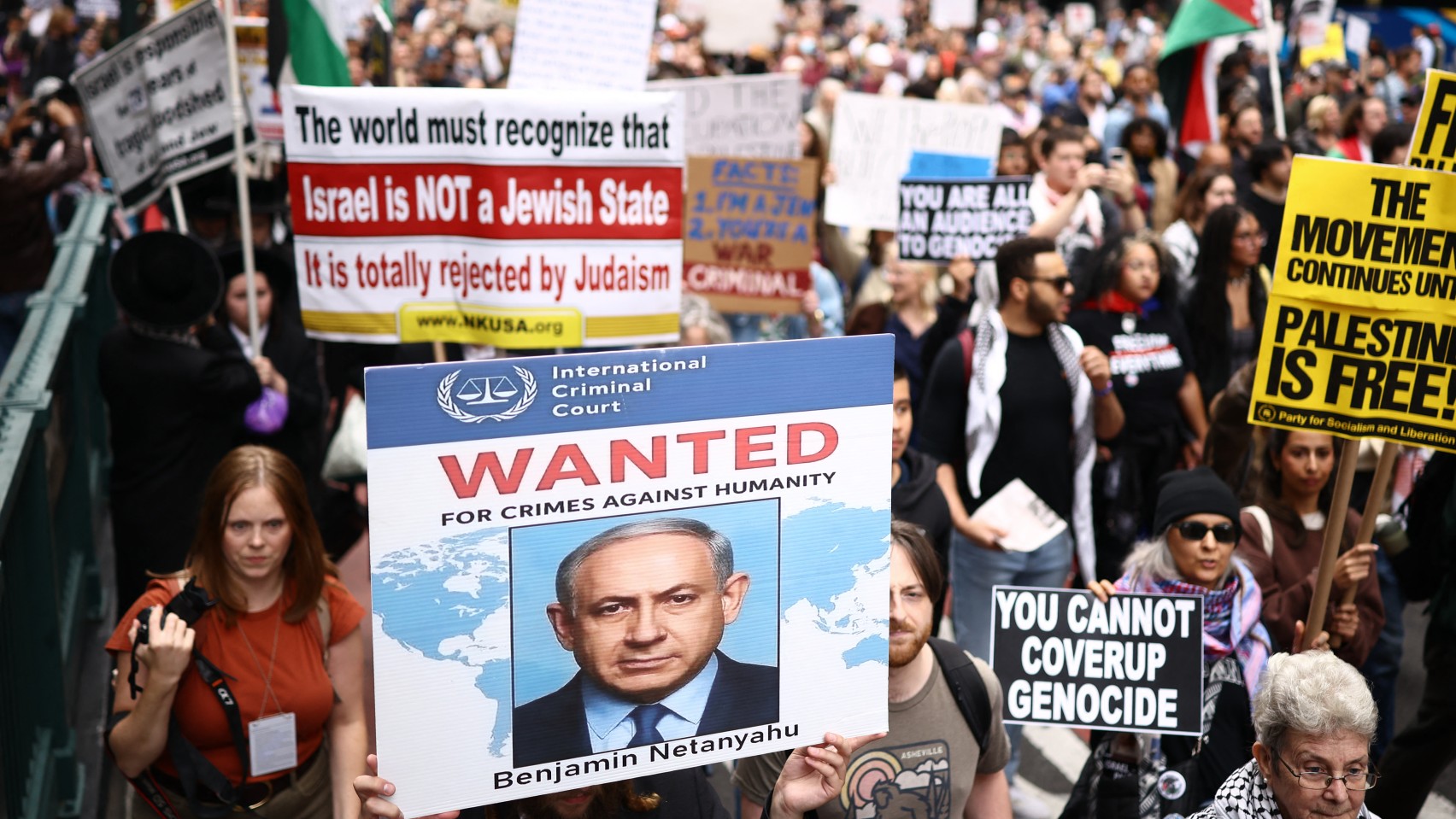
The recent Israeli parliamentary elections have plunged Benjamin Netanyahu’s 15-year-long premiership into unprecedented uncertainty, with fragile coalition negotiations raising tangible prospects that the long-serving leader could step down from the prime minister’s post. Contrary to assumptions that a shift in domestic political power would erase his outstanding legal liabilities, international legal frameworks confirm that all ongoing cross-border proceedings against Netanyahu would remain fully active even after he leaves public office.
The most high-profile outstanding legal action is the November 2024 International Criminal Court (ICC) arrest warrant targeting Netanyahu and former Israeli Defence Minister Yoav Gallant, issued over verified allegations of war crimes and crimes against humanity committed in the Gaza Strip. The charges include deliberate starvation of civilian populations as a method of warfare, targeted murder of non-combatants, and systematic persecution of Palestinian communities. Separate from the ICC proceedings, Netanyahu is also subject to an in-absentia arrest warrant and ongoing criminal trial in Turkey, where prosecutors have levelled charges of torture and crimes against humanity tied to Israel’s 2025 interception of a Gaza-bound humanitarian aid flotilla. Additionally, South Africa’s landmark genocide case against Israel at the International Court of Justice (ICJ), first filed in December 2023, will continue unimpeded regardless of changes to Israel’s top leadership.
A core legal reality underpinning these cases is that Netanyahu’s potential departure from office will strip him of the temporary personal head-of-government immunity that a number of ICC member states have previously invoked to avoid executing the arrest warrant against him. This immunity, a longstanding norm in international law, applies exclusively to sitting heads of state, heads of government, and foreign ministers, shielding them from arrest and prosecution in foreign national courts for all conduct during their tenure, and expires immediately upon leaving office. While a secondary layer of functional immunity, which covers actions undertaken in an official governmental capacity, technically extends to former leaders, leading international legal scholars have repeatedly confirmed that widely accepted carve-outs for core international crimes including war crimes, genocide, and crimes against humanity render this protection largely unenforceable for Netanyahu’s alleged conduct.
The ICC’s own legal framework explicitly rejects any immunity claims for individuals facing prosecution under the Rome Statute, per Article 27 of the founding treaty, which states that official governmental status cannot be used to bar criminal proceedings. This rule has been consistently enforced against leaders from non-ICC member states in past precedent: in 2019, the ICC Appeals Chamber ruled that Jordan was legally obligated to arrest then-Sudanese president Omar al-Bashir despite Sudan not being a Rome Statute signatory, and in 2024 the court found Mongolia in breach of its cooperation obligations for failing to arrest Russian President Vladimir Putin during an official visit. While Israel continues to contest the ICC’s jurisdiction over its territory on the grounds that it never ratified the Rome Statute, the ICC Appeals Chamber ordered in April 2025 that the Pre-Trial Chamber review Israel’s jurisdictional challenge without suspending the active arrest warrants, and two pending Israeli appeals on the matter have not altered the warrants’ legal standing. ICC Deputy Prosecutor Nazhat Shameem Khan confirmed in September 2025 that the office has taken no steps to initiate withdrawal of the arrest warrants, which remain valid indefinitely under Article 58(4) of the Rome Statute unless explicitly terminated by a formal court order.
In recent months, a handful of ICC member states including France, Italy, and Hungary have attempted to invoke immunity provisions to avoid executing the Netanyahu arrest warrant during official visits, with Hungary even raising a formal Article 98 procedural objection during Netanyahu’s April 2025 trip, a move that later resulted in the ICC formally finding Hungary in breach of its statutory cooperation obligations. Once Netanyahu is no longer serving as prime minister, these immunity justifications will no longer hold legal weight, exposing him to arrest in all 123 ICC member states that recognise the court’s universal jurisdiction, as well as in dozens of other countries that have incorporated universal jurisdiction statutes into their national legal systems to prosecute war crimes committed anywhere in the world, even with no direct territorial or national connection to the offences.
Historical precedent reinforces this legal pathway: in 1998, former Chilean dictator Augusto Pinochet was arrested in London under a Spanish universal jurisdiction warrant, with the UK House of Lords ruling that he could not claim immunity for counts of systemic torture. Most recently, in July 2025, France’s highest court annulled an arrest warrant against sitting Syrian president Bashar al-Assad on immunity grounds, but explicitly ruled that a new warrant could be immediately issued as soon as he leaves office, confirming that functional immunity does not extend to former leaders accused of genocide, crimes against humanity, or war crimes.
Practical barriers to Netanyahu’s arrest will remain significant, however. The ICC operates no independent police force, and is fully reliant on national law enforcement agencies across member states to execute its warrants. A future Israeli government would face immense domestic political pressure to refuse to surrender Netanyahu to the ICC, and the former leader is widely expected to sharply restrict or eliminate all international travel to countries that could detain him. Even so, national courts operating under universal jurisdiction rules will retain the authority to issue additional domestic arrest warrants against him for alleged international crimes, without requiring his physical presence on their territory to open formal proceedings.
The parallel ICJ case launched by South Africa operates on a distinct legal track, focused exclusively on state responsibility for alleged genocide in Gaza rather than individual criminal liability. Even after Netanyahu leaves office, his public statements and formal government decisions during his premiership will remain central to the prosecution’s evidence of genocidal intent on the part of the Israeli state. Israel submitted its full counter-memorial raising jurisdictional objections to the case in March 2026, with the court scheduling South Africa’s final reply for 22 November 2027 and Israel’s subsequent rejoinder for 22 May 2029, meaning a final binding ruling on the genocide allegations will not be issued for several more years.
Separately, Netanyahu’s long-running domestic corruption trial in Israel, ongoing since 2020 on charges of bribery, fraud, and breach of trust across three distinct cases, will also proceed unimpeded regardless of his political status. The former prime minister, who has consistently denied all wrongdoing, submitted a formal pardon request to Israeli President Isaac Herzog in November 2025 without admitting to any of the alleged offences. Herzog’s office has since stated that the two parties will first pursue a negotiated out-of-court settlement before the president rules on the pardon application, while opposition leader Yair Lapid has publicly asserted that Herzog has no legal authority to grant a pardon unless Netanyahu formally admits guilt and permanently withdraws from political life.