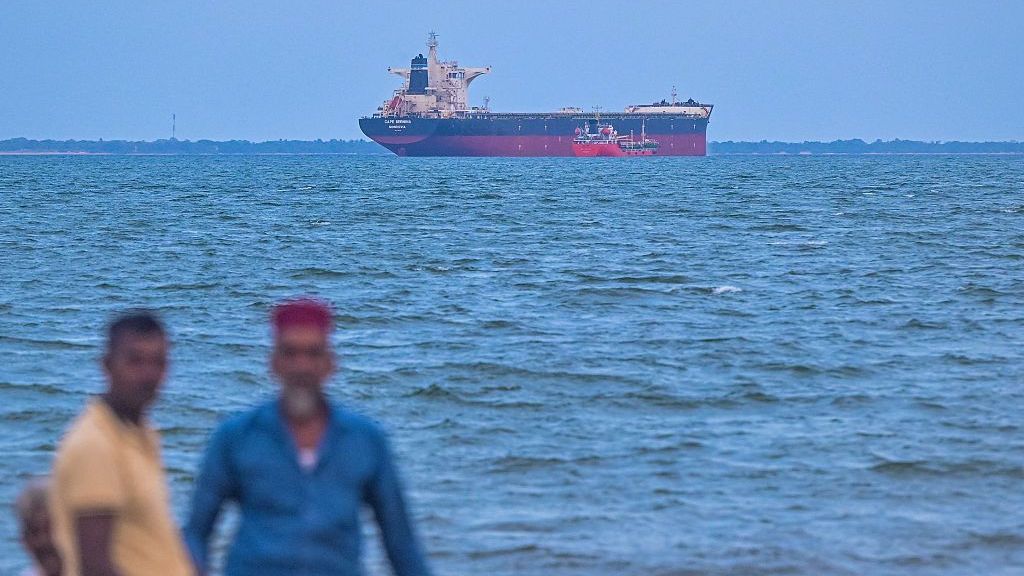
Colombo, Sri Lanka – Sri Lanka’s Ministry of Foreign Affairs has overseen a coordinated multi-agency operation to deliver emergency medical care and full repatriation for 40 Iranian sailors facing unspecified life-threatening medical crises aboard multiple vessels stranded in international waters off the island nation’s southeastern coastline.
Speaking to BBC Sinhala, foreign ministry spokesperson Thushara Rodrigo confirmed that local authorities first received a formal distress call from the Iranian fleet on a recent Saturday, alerting responders to the urgent on-board medical emergencies. The entire mission was jointly planned in close partnership with the Iranian Embassy based in Colombo, with support from a network of local shipping operators and national maritime regulatory bodies.
The 40 affected sailors were deployed across a group of Iranian vessels that have been trapped at sea for weeks due to a sustained U.S. naval blockade enforced amid the ongoing regional conflict that erupted in February, when U.S. and Israeli forces launched large-scale coordinated strikes on Iranian territory. Tehran retaliated with targeted attacks on Israeli positions, U.S. military installations across the Gulf, and allied regional state assets, while effectively closing the strategic Strait of Hormuz – the world’s busiest maritime chokepoint for global energy and trade flows. Months of subsequent tit-for-tat attacks have continued without pause, after all diplomatic negotiation tracks between the warring parties collapsed earlier this year.
Sri Lanka, which has repeatedly positioned itself as a strictly neutral third party to the conflict, has repeatedly rejected competing military access requests from both U.S. and Iranian officials, and has publicly called on all belligerents to return to the negotiating table to de-escalate tensions. Rodrigo emphasized that the latest rescue operation was driven solely by binding international maritime law obligations and universal humanitarian norms, and does not signify any partisan support for the Iranian fleet or its operations.
“This does not mean that we will provide broader operational assistance to those ships,” Rodrigo clarified, noting that responding to legitimate maritime distress calls is a longstanding, universally accepted global practice. “We have dealt with identical cases before. This is a standard, recurring process that we continue to implement without deviation.”
Earlier last month, a BBC Sinhala field investigation documented no fewer than 21 Iranian vessels anchored in international waters within close proximity to Sri Lanka’s exclusive economic zone. Sri Lankan officials do not currently hold precise data on exactly how many separate ships the 40 recently rescued sailors were serving on at the time of their medical emergencies. All 40 personnel were safely transported to shore, transferred to specialized medical care facilities in Colombo for urgent treatment, and then flown back to Iran on a chartered repatriation flight the same Saturday evening the distress call was received.
The mission follows a string of prior humanitarian interventions Sri Lanka has carried out for Iranian seafarers caught in the crossfire of the regional conflict, including its March response to the sinking of the Iranian vessel Iris Dena, which was hit by a U.S. torpedo off Sri Lanka’s southern coast. That attack killed more than 80 crew members, with surviving injured seamen rushed to medical facilities at Galle Harbour. The day after that incident, Sri Lanka granted docking permission to another Iranian naval vessel, with President Anura Kumara Dissanayake stating publicly that the country would “never hesitate to protect humanity” when lives are at stake.
Just earlier this month, however, Sri Lankan officials told the Associated Press that they had no immediate plans to deliver fuel, food or fresh water aid to 19 nearby Iranian ships that reported critical supply shortages, noting that national interest priorities would guide any decisions on non-medical support for the stranded fleet.
Forty Iranian sailors rescued off Sri Lanka coast after medical emergencies