The British government is facing widespread accusations of double standards and hypocrisy after its top education official ruled out allowing Palestinian flags to be displayed in state schools, a stark reversal from the government’s years of open promotion of Ukrainian flag displays in educational settings amid the ongoing Russian invasion.
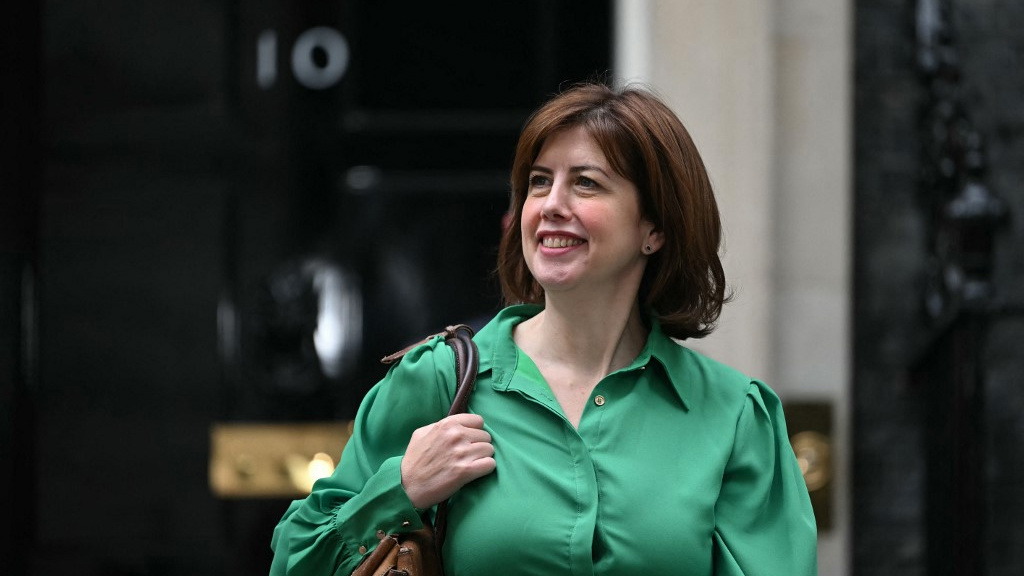
Appearing in an interview with Sky News on Wednesday, Education Secretary Lucy Powell argued that schools should remain neutral spaces and avoid becoming platforms for public protest over global geopolitical conflicts. When asked directly whether students should be permitted to display Palestinian symbols on school grounds, Powell replied that such displays run counter to expectations for impartiality in UK education.
This stance has immediately drawn public backlash for its inconsistency with the government’s own actions regarding the war in Ukraine. Records show that as recently as November last year, Powell’s predecessor Bridget Phillipson was filmed alongside students waving Ukrainian flags in a classroom. The footage was officially published by the Department for Education (DfE) to promote its national K-Ukraine schools partnership programme.
This pattern of official support for pro-Ukraine displays stretches back years. On Ukrainian Independence Day in August 2024, the DfE released an official statement celebrating Ukrainian democracy, sovereignty, and national identity. Back in March 2022, just weeks after Russia’s full-scale invasion, the department flew the Ukrainian flag above its London headquarters. Then-Conservative Education Secretary Nadhim Zahawi told a national school leaders conference in Birmingham at the time that the flag was a public declaration of the UK standing “shoulder to shoulder with all Ukrainians against the barbaric, criminal invasion of their sovereign, democratic country.”
The controversy comes as Powell formally responded to a newly released independent review into rising antisemitism in British schools, which found that three out of every five Jewish students have personally experienced antisemitic harassment or abuse on school campuses. The report, led by former schools inspectorate chief Sir David Bell, documents a sharp post-October 2023 surge in antisemitic incidents following the Hamas attack on southern Israel and the subsequent Israeli military campaign in Gaza. Bell has called for schools to formally recognize antisemitism as a unique category of harm requiring targeted intervention.
Powell confirmed Wednesday that the government will adopt all of the report’s recommendations in full, including a mandate requiring all state schools to implement the controversial International Holocaust Remembrance Alliance (IHRA) working definition of antisemitism. The definition, originally drafted in 2004 as a non-binding monitoring tool, includes an example that classifies describing the existence of the state of Israel as a racist endeavour as antisemitic. Critics across political and academic spaces have long argued that the vague language of the definition is frequently weaponized to suppress legitimate political criticism of Israeli policy and actions toward Palestinians. Even the original lead author of the definition, Kenneth Stern, has repeatedly warned against using it as a formal disciplinary or legal instrument, warning it risks chilling free speech and legitimate political debate. Leading human rights lawyer Geoffrey Robertson QC backed this criticism in a 2018 legal opinion, concluding that the definition “likely in practice to chill free speech” by enabling bad-faith complaints against critics of Israel.
The UK’s largest education union, the National Education Union (NEU), has rejected key recommendations from the Bell review, including the IHRA mandate. NEU General Secretary Daniel Kebede argued that forcing the definition on schools tightens an existing “chilling grip” that already stifles open classroom discussion of the humanitarian crisis in Gaza. Kebede added that schools need practical, targeted support to address antisemitism rather than a contested framework that risks shutting down legitimate political discourse. He also noted that existing rules requiring political impartiality in the classroom are already clear, and that UK teachers take this responsibility seriously, rejecting the report’s implicit questioning of educator professionalism.
Supporters of the report, however, have framed its recommendations as a necessary step to address a growing public safety crisis. Karen Newman, vice-president of the Board of Deputies of British Jews, said that the scale of antisemitism documented in the review is “sobering” and demands urgent, consistent action from policymakers. She added that framing antisemitism as an official safeguarding issue would create a clear legal and ethical duty for schools to address the harm, matching the approach taken to other threats to student safety and strengthening institutional accountability.
The review itself was commissioned by the government after a high-profile controversy in 2023: a planned visit to a school by Labour MP Damien Egan, vice-chair of the pro-Israel group Labour Friends of Israel, was cancelled after organizers learned of planned pro-Palestine protests outside the campus. Egan’s cancellation led to widespread accusations of antisemitism against the school trust that oversaw the institution, but an independent inquiry published in April 2024 found “no evidence of antisemitism” connected to the trust or its decision.
Since the start of Israel’s military campaign in Gaza in October 2023, UK authorities have recorded a sharp rise in the number of school-aged children referred to the UK government’s controversial Prevent counter-extremism programme for wearing pro-Palestine badges and displaying pro-Palestine symbols on school grounds.
Critics of the government’s new stance on flag displays have been quick to call out the perceived double standard on social media platform X. Political consultant Gary Spedding pointed out that the DfE itself has created and distributed official promotional material showing students waving the Ukrainian flag in classrooms. London-based journalist Barry Malone, who has volunteered as a reading support worker in UK state schools, noted that he personally saw Ukrainian flags on display in a London school during his volunteer work. “This policy has only come about because of one particular geopolitical event. People are smart enough to see through this stuff now,” Malone wrote. Dozens of other X users echoed the accusation of hypocrisy, drawing direct comparisons between the government’s acceptance of pro-Ukraine displays and its rejection of pro-Palestine expression.