For Fazal Mia, the agony of unknowing has turned into irreversible grief: clutching a faded photograph of his daughter Suety Akhter, the Bangladeshi father still struggles to comprehend that he was never notified of her impending execution in Saudi Arabia, where she had moved to work as a migrant laborer.
Akhter’s story follows a familiar, devastating arc for low-wage South Asian workers in the Gulf. For the first five months after her arrival, she sent regular remittances home to her family in Tangail, Bangladesh. Then, out of the blue, a single call revealed she had been imprisoned — and it was only through local news reports that the family learned she had been sentenced to death, alongside 22-year-old Nazrul Islam Abdul Basir, another Bangladeshi national from Brahmanbaria.
On October 14, just one day after Sri Lanka successfully secured the overturn of a death sentence for one of its citizens in Saudi Arabia, the kingdom carried out the executions of Akhter and Basir in Mecca. Both had worked as cleaners for Saudi firm Al-Majal company; Basir, the eldest of four siblings, left his family back in Bangladesh, while Akhter — the youngest of four daughters — left behind a four-year-old child of her own.
The Saudi Ministry of Interior confirmed the executions in an Arabic-only statement carried by the Saudi Press Agency, claiming the pair had committed an “indecent act” inside a mosque, but offering no further details on the alleged offense. Authorities stated the death sentences were classified as ta’zir, or discretionary punishments under Islamic jurisprudence, and had been approved following judicial review and a royal decree. Yet Saudi officials have refused to release basic procedural information: no specifics of the alleged crime, no date of the alleged offense, no clarity on whether the pair were granted access to qualified legal representation or translators during their trials.
Confidential diplomatic information leaked to Bangladesh’s *Daily Star* newspaper has cast doubt on the official narrative, revealing the two workers were arrested separately and charged with unrelated offenses. A prisoner list shared with Bangladesh’s consulate in Jeddah on September 30 shows Basir was detained in August 2023 under the kingdom’s strict cybercrime law, while Akhter was arrested the next day on allegations of adultery. Akhter told her family before contact was cut off that she had been framed by co-workers following an argument, and her family lost all communication with her for nearly a year. Both spent three years in prison before execution, and the September prisoner list made no mention of any death sentence having been handed down. The leaked memo also fails to connect the original 2023 charges to the “indecent mosque act” for which they were ultimately executed.
The Bangladeshi government claims it only learned of the executions after they were completed, but the leaked document confirms the country’s Jeddah consulate had received the full prisoner list that included both individuals weeks before the sentences were carried out. The government’s response has drawn fierce public and expert criticism, particularly after State Minister for Foreign Affairs Shama Obaed Islam publicly stated that Bangladeshi citizens must follow the laws of host countries, and that “when a law is violated there is not much I can do for a Bangladeshi citizen.”
Human rights advocates and policy analysts have highlighted two core failures in the Bangladeshi government’s handling of the case: first, a total lack of proactive engagement, with no official effort to obtain court records, clarify the charges against the pair, or provide legal support during their detention. Second, the government failed to uphold its basic consular obligations: while the Vienna Convention on Consular Relations requires host nations to notify foreign governments of detained citizens, it also requires sending nations to proactively monitor citizens facing severe criminal penalties.
The stark contrast between Bangladesh’s inaction and Sri Lanka’s coordinated response just days earlier has amplified these criticisms. The same week the executions took place, Sri Lanka moved quickly to save Anojan Sivarasa, a Sri Lankan migrant worker sentenced to death for a Facebook post ruled blasphemous. Shortly after the death sentence was issued in September, the Sri Lankan foreign ministry publicly confirmed its diplomatic engagement, dispatched its ambassador to Saudi Arabia to visit Sivarasa in prison, and sent a specialized legal team to handle his appeal. On October 13, just 24 hours before Akhter and Basir were executed, Saudi Arabia’s Supreme Court overturned Sivarasa’s death sentence.
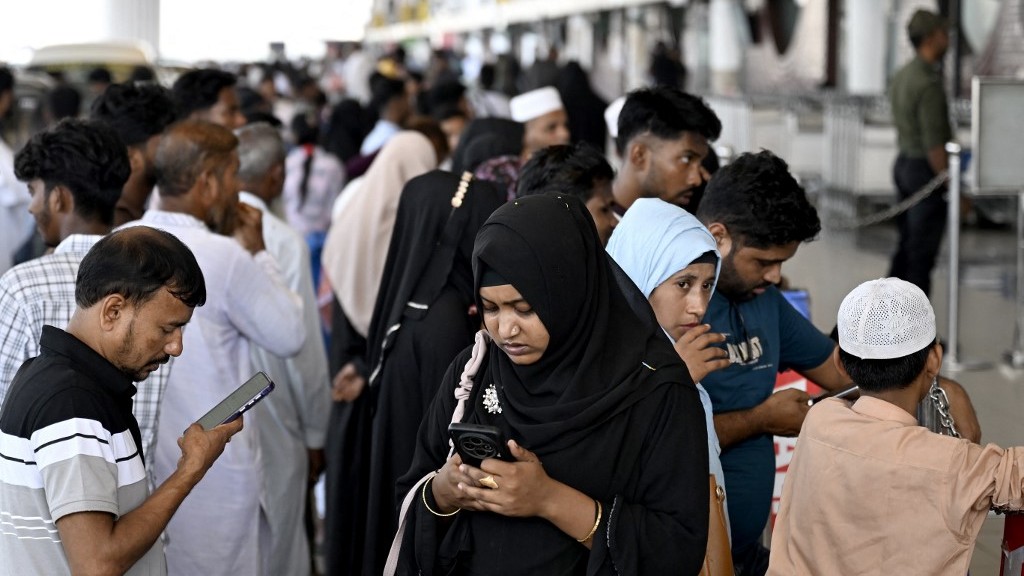
The case has cast a harsh light on the reality for more than three million Bangladeshi migrant workers residing in Saudi Arabia, who form the backbone of Bangladesh’s $27 billion remittance industry. World Bank and IMF data shows remittances make up roughly 7.4% of Bangladesh’s total annual GDP, with Saudi Arabia the single largest source of those earnings. For low-wage migrant workers, who often lack the resources to navigate opaque Gulf legal systems on their own, the executions underscore just how high the stakes are when their home governments fail to advocate for them.
The outcome of this case lays bare the systemic dangers facing vulnerable migrant workers in Gulf judicial systems, and reaffirms that active, proactive consular intervention is not just a diplomatic formality — it is a matter of life and death for thousands of migrant workers dependent on their home governments for protection.