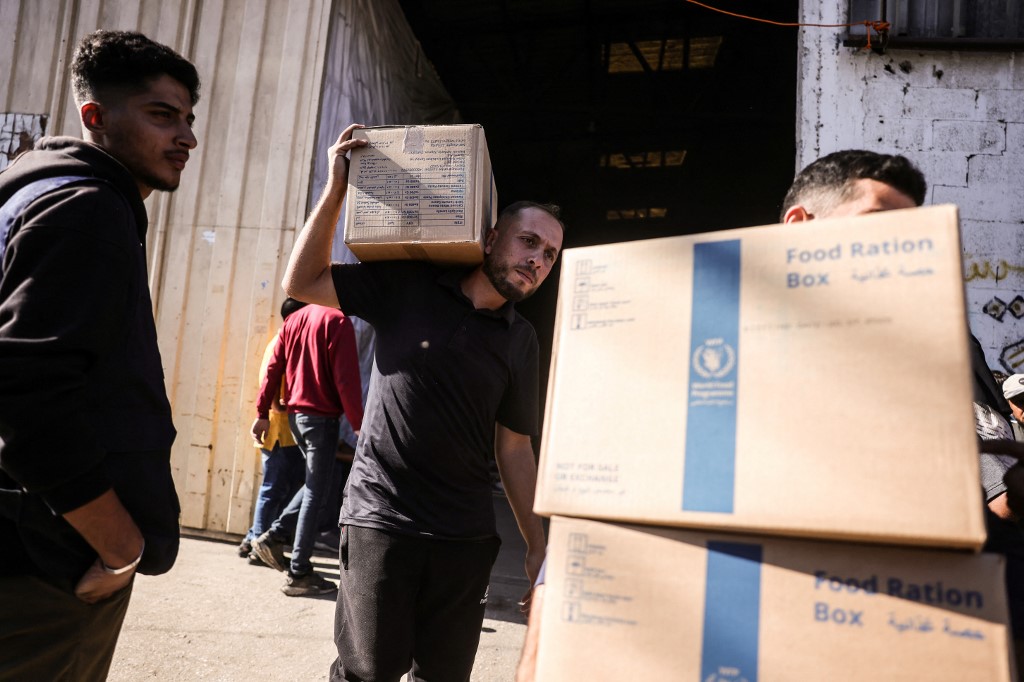
The United Nations World Food Programme (WFP) has delivered a devastating announcement: it is forced to terminate life-sustaining food assistance for more than 500,000 Palestinians in the besieged Gaza Strip, a decision driven entirely by a crippling shortage of funding. This dramatic cut to aid comes at a moment when nearly the entire population of Gaza already depends on outside humanitarian support to meet their most basic daily nutritional needs.
Shaun Hughes, WFP’s country director for Palestine, confirmed the reduction in an interview with Agence France-Presse, stating, “As of this month, we’re now cutting half a million people from the number of people that we’re assisting.” Following the cut, the total number of Palestinians receiving either in-kind food parcels or cash-based assistance from WFP will drop to 1.1 million, down from the previous 1.6 million people the organization supported before the funding shortfall.
The aid cut unfolds against a backdrop of unrelenting violence and collapsing living conditions in Gaza, where Israeli military operations have continued unabated despite the implementation of a widely brokered ceasefire. Gaza’s Ministry of Health released the latest casualty updates confirming that at least five people were killed in fresh Israeli attacks across the enclave in the 24-hour period preceding the announcement. Cumulative casualty figures now stand at no fewer than 74,480 Palestinians killed by Israeli actions in Gaza, with an additional 175,539 people wounded since the start of the current conflict. Even since the ceasefire agreement took effect, the ministry reports that at least 1,552 Palestinians have been killed and 5,421 more wounded in ongoing Israeli strikes. Emergency search and recovery teams have also recently recovered 839 additional bodies from the rubble of destroyed residential and civilian infrastructure across the territory.
Hughes painted a grim picture of daily life for displaced Gazans, emphasizing that security remains out of reach for the vast majority of the population. “People are not safe. Air strikes continue on a daily basis. People continue to be displaced,” he said. “Almost everybody remains without a permanent home to live in. And the humanitarian conditions are brutal.”
The current crisis of food insecurity in Gaza dates back to at least August 2023, when the United Nations Integrated Food Security Phase Classification officially confirmed that famine conditions were widespread across the enclave. That famine designation was lifted in December 2023, two months after a U.S.-brokered ceasefire was first announced. The partial ceasefire, which has been violated thousands of times by Israeli forces, did allow WFP to temporarily expand its operations, enabling the organization to reach between 1.5 million and 1.8 million vulnerable Gazans each month at its peak. The latest funding-driven cut reverses that hard-won progress and plunges hundreds of thousands more people into life-threatening food insecurity.