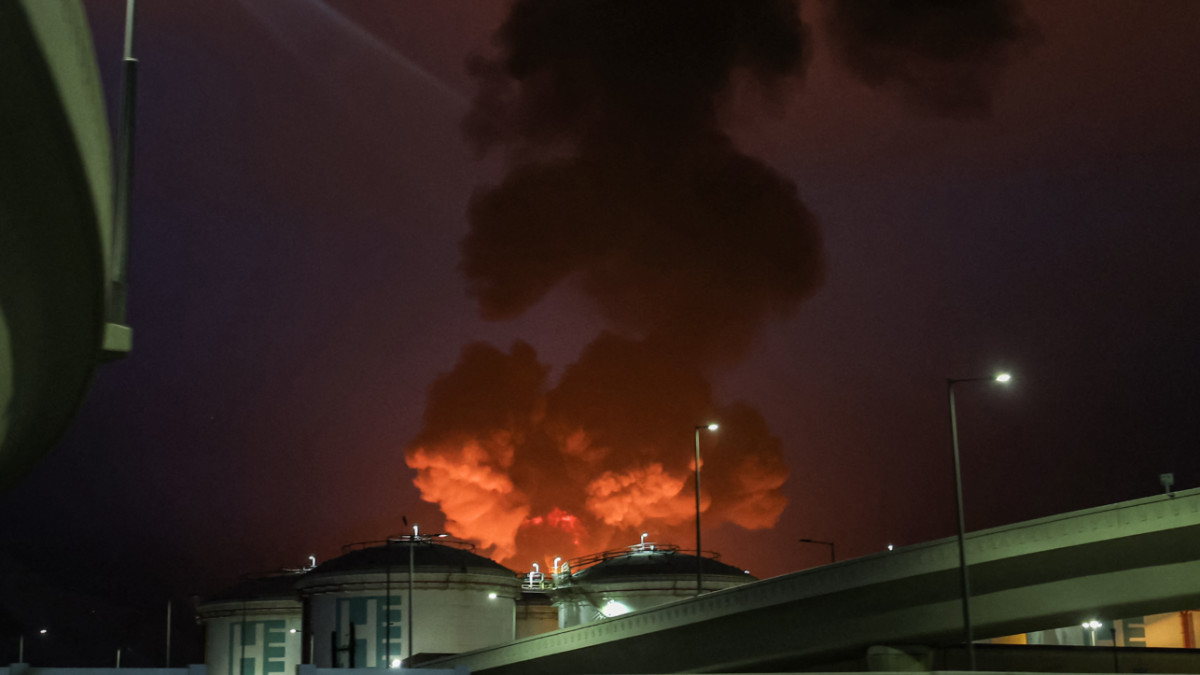
In a bombshell report published this week, news agency Reuters has uncovered widespread claims that Arab monarchies across the Arabian Gulf have deliberately hidden the true scale of infrastructure damage inflicted by a series of coordinated attacks attributed to Iran and its regional allied militias. The disclosure has thrown into sharp question the accuracy of official statements from Gulf governments about the security of their energy and strategic assets in the escalating regional conflict that followed a February 28 cross-border strike targeting Iran by the United States and Israel.
After that US-Israeli strike, Iran launched retaliatory missile and drone operations against multiple Gulf states including Qatar, the United Arab Emirates, Bahrain and Kuwait, while Yemen’s Houthi movement — an Iran-aligned group — has stepped up attacks on the world’s largest oil exporter, Saudi Arabia, in recent months. What makes the revelation more alarming is that the strikes deliberately targeted civilian and critical infrastructure, including energy processing facilities, oil and gas pipelines, and even a United Arab Emirates nuclear energy site, putting energy supplies and civilian lives at severe risk.
Reuters’ assessment highlights a consistent gap between official narratives and on-the-ground reality across all affected Gulf states. The most high-profile discrepancy involves Saudi Aramco’s headquarters in the eastern city of Dhahran. After a Houthi drone strike, Saudi Arabia’s energy ministry downplayed the incident, claiming only a “limited fire” had broken out at the site. But anonymous sources with direct knowledge of the damage told Reuters that the facility suffered “extensive damage”: the top three floors of the building, including the executive office of Aramco CEO Amin Nasser, sustained severe structural harm, with partial ceiling collapse and all windows and doors blown outward by the blast force.
The pattern of underreporting repeats across the region’s most strategic assets. At the UAE’s Barakah nuclear energy plant, a strike hit the roof of a critical electrical substation, forcing one of the plant’s four operational reactors to switch to backup emergency diesel generators to maintain safe operation. Two Gulf officials and one Iranian official confirmed to Reuters that Iranian operatives had detailed advance intelligence of the plant’s layout and the exact location of the substation, confirming the strike was a deliberate, precision targeting rather than an errant attack.
In Qatar, a strike on the Ras Laffan liquefied natural gas (LNG) export facility — one of the largest LNG production hubs on the globe that supplies a huge share of global energy demand — also showed sophisticated Iranian targeting. The strike hit specialized “cold boxes” that house the cryogenic cooling equipment required to convert natural gas into its liquid export form. Industry experts note that this custom equipment can take multiple months to manufacture and replace, making any damage to the facility a long-term disruption risk for global gas markets.
No site demonstrates the gap between official claims and actual damage more clearly than the UAE’s Fujairah Port, a vital chokepoint for global oil exports that handles millions of barrels of crude and refined products daily. According to Reuters’ investigation, based on satellite imagery and on-the-ground sources, Iran struck the port multiple times, even launching follow-up attacks after the UAE completed repairs to damaged infrastructure.
The first strike on Fujairah on March 3 left two large oil storage tanks burning for multiple consecutive days. A second strike targeted the port’s matrix manifold, a critical transfer system that connects 62 pipelines moving crude oil and refined petroleum products from onshore storage terminals to waiting shipping tankers. Emirati officials attempted to dismiss the damage from both strikes as nothing more than harm caused by falling debris from intercepted missiles or drones — but Reuters found this explanation directly contradicted independent damage assessments.
Ramanan Krishnamoorti, a professor of petroleum engineering at the University of Houston, described the damage to the manifold system as a critical blow to the port’s core function. “This is a wound to the brain and heart of the facility,” he told Reuters, noting that the official explanation of incidental debris damage was not credible given the nature and location of the strike.
Follow-up strikes in March damaged the port’s second intact matrix manifold, forcing the UAE to launch an urgent round of emergency repairs to restore full export capacity. While UAE officials announced the port was fully operational by the end of March, Iran launched another drone strike on the site in May, targeting the same pipeline network that had been damaged in the initial March attack. According to export data cited in the report, shipments of refined petroleum products from Fujairah did not return to pre-attack levels until September, more than six months after the first strike.
The report’s findings are expected to deepen concerns about regional security and the vulnerability of critical global energy infrastructure amid escalating tensions between Iran and Western-aligned regional states, while also raising new questions about transparency around security incidents that can have global economic impacts.