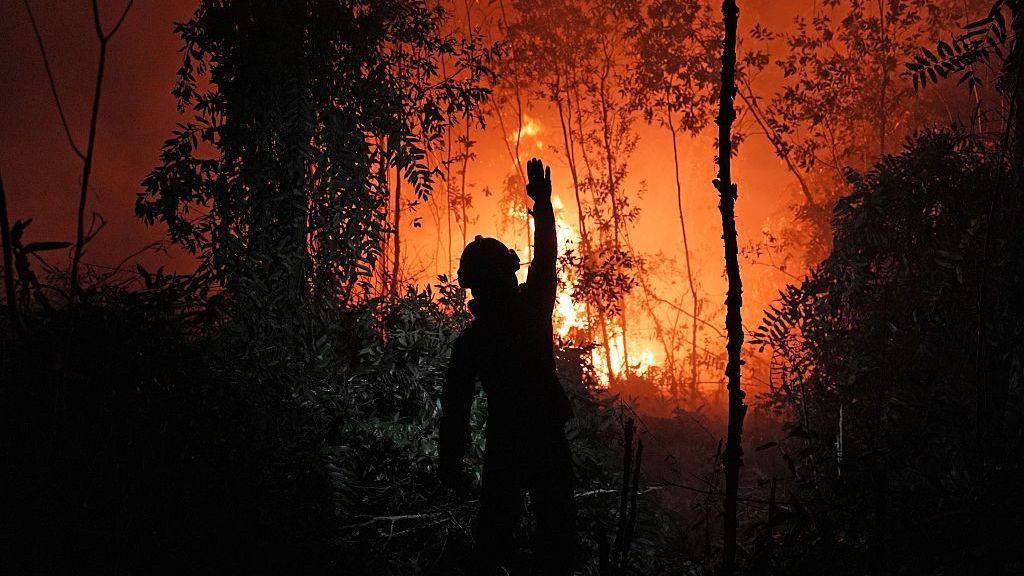
For weeks, uncontrollable wildfires have scorched vast swathes of land across Indonesia’s Kalimantan and Sumatra islands, kicking off what is already the country’s worst wildfire season in a decade. As flames eat away at forests and peatlands, a thick toxic haze has choked millions of local residents, turning the sky an ominous amber and pushing air quality well into hazardous levels. What’s more, the smog has drifted beyond Indonesia’s borders, triggering public health alarms in neighbouring Singapore and Malaysia, obscuring Singapore’s skyline and forcing temporary school closures across parts of Malaysia.
The intensity of this year’s wildfires has been amplified by an unusually strong El Niño event, the natural climate pattern that disrupts global weather systems and brings prolonged dry conditions to Southeast Asia. Data from independent forest monitoring group Nusantara Atlas shows that more than one million wildfire hotspots have been recorded across Indonesia, with an estimated 900,000 hectares of land already burned to the ground.
While small-scale slash-and-burn agriculture has long been used by local smallholder farmers to clear land for crops, the vast majority of this year’s large, unmanageable blazes have been linked to commercial agribusinesses, which critics say use fire as a low-cost method to clear large tracts of land for palm oil and other commercial plantations. Though slash-and-burn practices are formally illegal under Indonesian law, enforcement of the ban has historically been weak and inconsistent. This year, however, the unprecedented severity of the haze has pushed Indonesian authorities to crack down. President Prabowo Subianto has labelled slash-and-burn “ecological terrorism” and called for much harsher penalties for offenders. To date, authorities have suspended the operating licenses of 26 companies linked to the wildfires and launched criminal investigations into additional entities, with officials promising to take all culpable parties to court.
The controversy is not limited to Indonesian firms, however. A new report released this month by environmental advocacy group Greenpeace linked several Singaporean and Malaysian companies to concessions in Indonesia where active wildfires are burning. Among those named was Singapore-based palm oil producer First Resources, which Greenpeace says recorded more than 30 active fire sources on land managed by its two Indonesian subsidiaries between August and September. First Resources has rejected the allegations, stating in a comment to the BBC that it upholds a strict zero-burning policy across all operations and maintains robust fire prevention, monitoring and suppression measures. Greenpeace also named Malaysian plantation giant Kuala Lumpur Kepong, whose Indonesian subsidiary PT Menteng Jaya Sawit Perdana manages land with 19 recorded fire sources. Kuala Lumpur Kepong countered that most of the fires originated outside its concession area, all blazes on its land have been extinguished, and it does not allow open burning for any purpose across its operations.
Cross-border diplomatic tensions have flared up over the haze, echoing disputes from previous severe fire seasons. In 2014, Singapore passed the Transboundary Haze Pollution Act, which allows the government to prosecute local and foreign firms found to contribute to cross-border haze. When Singapore attempted to use this law to prosecute Indonesian firms after a severe haze event in 2015, Jakarta strongly condemned the move as a violation of Indonesian sovereignty, and refused to cooperate, effectively derailing the prosecutions. That same year, a controversial comment from then-Indonesian Vice President Jusuf Kalla stoked anger in Singapore, when he complained that Singaporeans enjoyed clean Indonesian air for 11 months of the year but complained after just one month of haze. Similar friction has re-emerged this year, after the head of Indonesia’s government communications agency, Syahganda Neering Goalan, said in a widely circulated social media video that the wildfires were beyond human control, and argued that neighbouring Singapore and Malaysia benefited from oxygen produced by Indonesian forests when there was no smoke. The comment drew widespread criticism and ridicule from residents of both affected countries. Despite these tensions, Indonesian officials have thanked Singapore and Malaysia for offers of assistance to fight the fires, though Indonesia has not yet made an official request for international support.
Within Indonesia, public anger has grown over the government’s slow response, with civil society groups taking legal action. In the West Kalimantan city of Pontianak, multiple advocacy groups have filed a class-action lawsuit against the Indonesian government and President Prabowo, accusing authorities of gross negligence in addressing the recurring haze crisis. The suit demands that the government declare the haze a national disaster, a designation that would unlock emergency response measures including coverage of public healthcare costs for those affected by smog-related illness. A similar lawsuit filed last year in South Sumatra was dismissed by the courts.
On the ground across Kalimantan and Sumatra, hazardous air quality has persisted for weeks, forcing millions of residents to continue breathing toxic air. Many Indonesians have no alternative but to leave their homes each day for work, enduring the harmful effects of the smog. “I’m short of breath and have a headache breathing this air, but I still have to go to work,” 63-year-old motorcycle taxi driver Imrayedi, based in the Sumatran city of Pekanbaru, told BBC Indonesian. “The government must think about ordinary people like us. Please take action to fix this haze problem immediately.”