On the day of his inauguration for a second five-year term as Prime Minister of Ethiopia, Abiy Ahmed has once again publicly committed to securing a permanent outlet to the Red Sea for his landlocked nation – a strategic goal that is already deepening rifts with neighboring countries, even as renewed fighting in Ethiopia’s northern Tigray region raises risks of wider regional conflict.
Abiy’s remarks came shortly after Ethiopian government-aligned forces retook Mekele, the capital of the Tigray region, following a fresh offensive launched by the Tigray People’s Liberation Front-led opposition alliance. “Based on the principle of give and take, we will work diligently to ensure that Ethiopia has an outlet to the sea,” Abiy stated during Monday’s swearing-in ceremony.
Ethiopia has been cut off from direct Red Sea access since 1993, when Eritrea gained independence from Ethiopia and inherited control of the strategic port of Assab, leaving the East African nation landlocked. For three decades, Ethiopia has relied almost exclusively on the neighboring port of Djibouti for the vast majority of its maritime trade, but it has actively pursued alternative access routes to reduce its economic and geopolitical dependence on a single entry point.
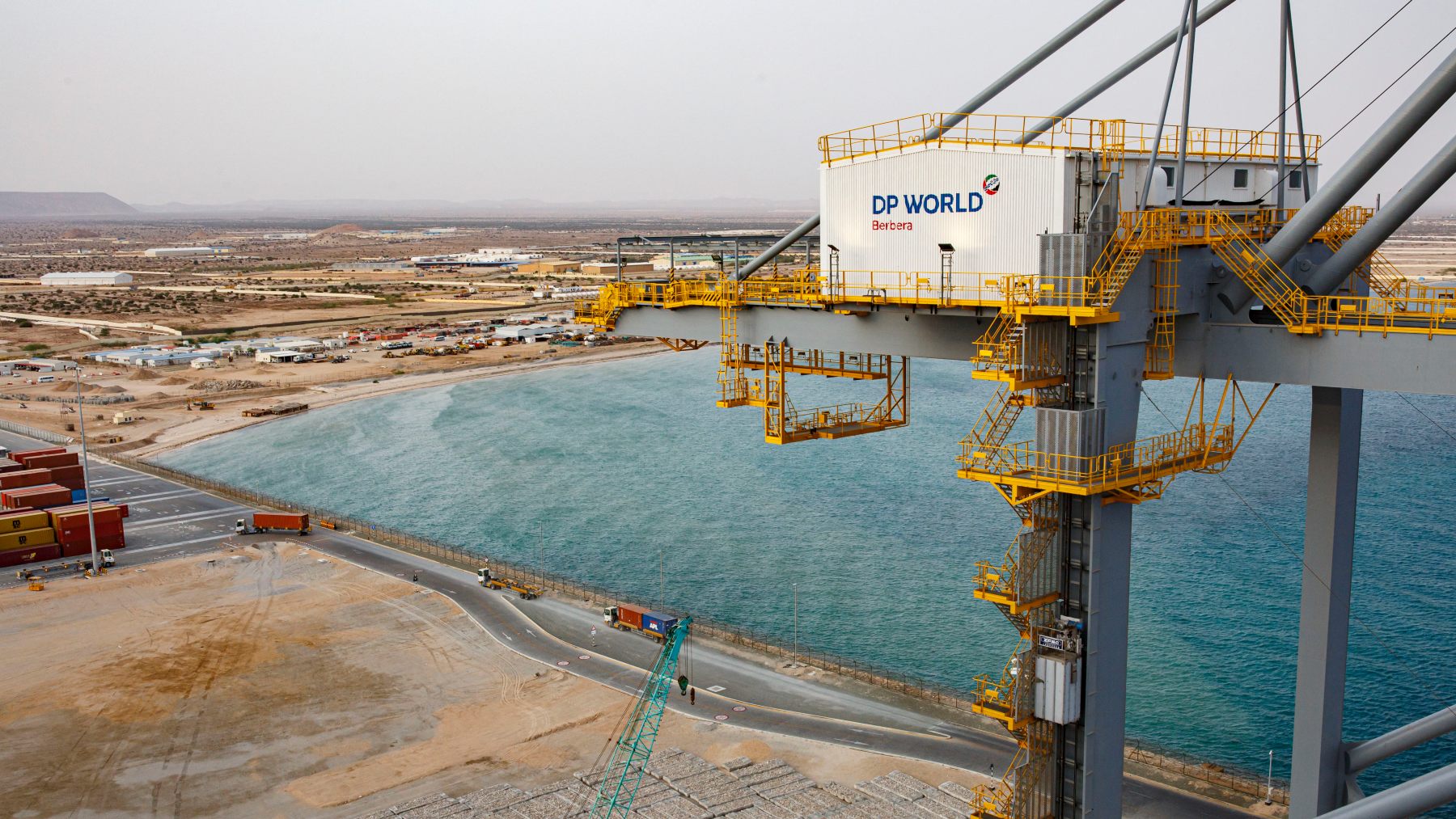
Earlier this year, a former senior Ethiopian government adviser disclosed to Middle East Eye that the United Arab Emirates, a key ally of Addis Ababa, holds major influence over Eritrea and any potential Ethiopian plans to retake Assab by force. In January 2024, Addis Ababa struck a controversial memorandum of understanding with Somaliland, a breakaway region of Somalia that is backed by both the UAE and Israel, gaining tentative access to coastal territory along the Red Sea and the right to potentially establish a naval presence there. The deal was immediately condemned by Somalia’s federal government as a violation of its national sovereignty, though diplomatic tensions between the two capitals have softened in recent weeks. In a social media post congratulating Abiy on his re-election, Somali President Hassan Sheikh Mohamud signaled openness to a negotiated solution, stating that Somalia does not oppose Ethiopia gaining sea access through Somali territory, adding “I look forward to working closely together to strengthen Somalia-Ethiopia relations & advance peace, stability & shared prosperity for our peoples & the Horn of Africa.”
Other regional neighbors have taken a far firmer stance against Ethiopia’s territorial and strategic ambitions. Just one day before Abiy’s inauguration, the leaders of Egypt, Eritrea, Sudan and Somalia gathered in New Alamein, Egypt, to issue a joint pushback against Addis Ababa’s plans. The joint declaration released after the summit affirmed the “principle of freedom of navigation” while stressing that “the governance of the Red Sea is the exclusive responsibility of the littoral states.” The gathering also addressed long-running tensions over the Nile River, calling for respect for international water governance frameworks and rejecting unilateral infrastructure projects that would alter existing water access for Egypt and Sudan, a clear reference to Ethiopia’s Grand Ethiopian Renaissance Dam (GERD) on the Blue Nile.
Bilateral relations between Ethiopia and Eritrea have collapsed entirely in recent days: Eritrea cut all diplomatic ties with Ethiopia last week after Addis Ababa ordered the closure of Eritrea’s embassy in Asmara and expelled 10 Eritrean diplomatic staff. Eritrea already controls the entire coastline that once belonged to Ethiopia, making it the primary neighbor in the crosshairs of Addis Ababa’s Red Sea ambitions. Meanwhile, reporting from Middle East Eye in April revealed that an Ethiopian military base has been used to support the UAE-aligned Rapid Support Forces in Sudan’s ongoing civil war, adding another layer of complexity to regional alliances.
While Addis Ababa frames its push for Red Sea access as a non-negotiable requirement for national economic security and geopolitical sovereignty, coastal neighboring states have uniformly asserted their exclusive jurisdiction over their territorial waters and coastlines. The renewed hostilities in Tigray have compounded these existing frictions, with the African Union calling for immediate de-escalation and dialogue, warning that the conflict could spiral into a broader regional confrontation if parties do not pursue a peaceful negotiated settlement.