In the cramped, winding pathways of Organic Market, an informal settlement tucked near Johannesburg’s Alexandra township, a small group of men gather on a dusty street outside a local tavern. Chairs are dragged into a rough circle, and as some sip cold bottled beer, the men turn their conversation to a crisis that has gripped South Africa for decades: the epidemic of violence against women and femicide.
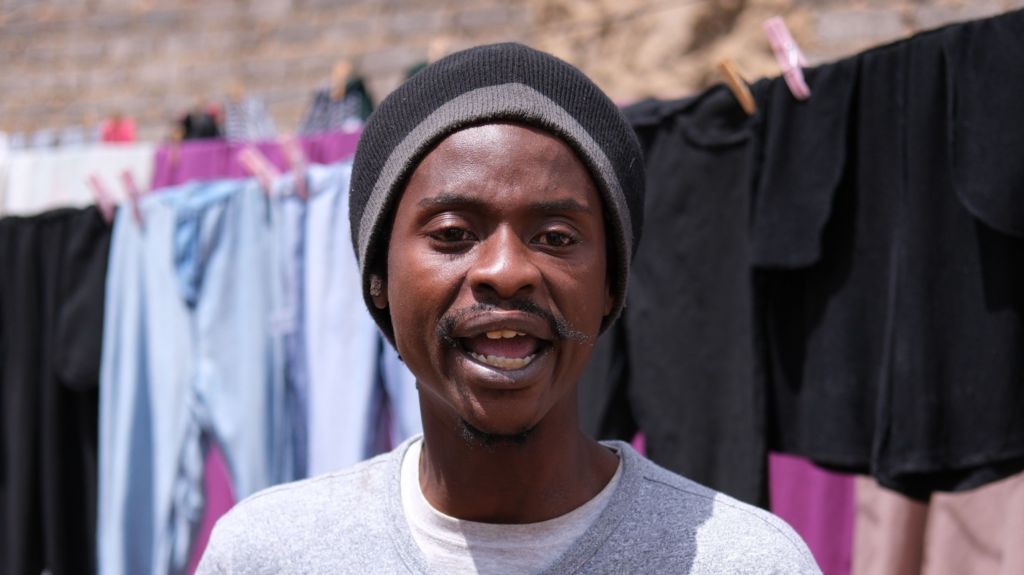
This gathering is organized by Father A Nation (FAN), a non-profit organization working to reframe masculinity across the country, targeting men and boys to encourage accountability and end gender-based harm. For 30-year-old Kgomotso Mathekga, attending his first meeting is a vulnerable act of confronting his own past. Speaking openly to the group, he admits he once physically assaulted his girlfriend during an argument, grabbing and slapping her. The relationship ended, he says, and he has been cut off from his child ever since. “Now I feel pain,” Mathekga shares. “I feel like I’ve contributed to the problems in South Africa, instead of being the gentleman that I know I am.” He adds that growing up without positive male role models has left a void that many local men fill with harmful, violent behavior, a trend he has witnessed repeatedly in his neighborhood, especially when alcohol is involved. “I see men hitting women all the time, especially when they are both drunk,” he says.
Leading the meeting is Itumeleng Stephen Tamaga, known to locals as Bra Steve, FAN’s on-the-ground organizer in Organic Market. Raising his fist, he opens the session with a rallying cry: “We are men!” The group responds with cheers and applause. “We must stand together to fight against gender-based violence and femicide,” Bra Steve tells the gathered men. For him, the solution starts with rebuilding a sense of dignity among local men, many of whom grew up without fathers or positive male guidance. “We are a lost generation,” he says. “We must restore dignity to the men around here.”
This grassroots push comes at a moment of renewed national fury over gender-based violence in South Africa. Over three months earlier this year, the bodies of 12 women were discovered in Ekurhuleni, a metropolitan area just east of Johannesburg. The discovery has reignited long-simmering questions about the scale of the crisis, which activists and survivors have long labeled a national emergency. Police have not confirmed a serial killer is behind the deaths, though they have not ruled out connections between some cases, and suspects in several deaths have already appeared in court. But the string of killings has pushed the issue back to the top of the national agenda, forcing both government and community leaders to confront the staggering statistics behind the violence.
Official data underscores the severity of the crisis. Between April and June 2026 alone, South Africa recorded 5,427 murders – one of the highest quarterly homicide rates in the world. Of those, 569 were women, an average of six women killed every day, according to the South African Human Rights Commission. A further 1,052 women survived murder attempts in that same period. A 2022 study from the Human Sciences Research Council found that more than 35% of South African women will face physical or sexual violence in their lifetime, most often at the hands of an intimate partner.
President Cyril Ramaphosa has acknowledged the government’s failure to adequately address the crisis, recently announcing a new package of measures aimed at improving women’s safety, including expanded street lighting in high-risk areas and a review of thousands of unsolved gender-based violence cases. But for FAN project coordinator Zizipho Mtwesi, these steps are too little, too late. “When I think about all of these recent murders in Johannesburg, I get angry,” Mtwesi says. “Why do we have to wait for this to happen for us to act?” FAN’s approach, he explains, is to intervene before violence occurs, reaching out to men to change their attitudes before harm is done.
Craig Wilkinson, FAN’s founder, outlines the organization’s two-pronged approach. “We get men to talk, to process their feelings,” he explains, standing at the center of the circle of men in Organic Market. “And as they do, this healing takes place. The second phase is teaching and training positive masculinity.” He tells the gathered men that they hold the power to end the crisis: “You as a man are a powerful force for good. You choose what kind of man you want to be. Women need to be safe.” Today, FAN operates across the country, running healthy masculinity training programs in dozens of South African schools and colleges, with the ultimate goal of eliminating gender-based violence entirely.
For women in Organic Market, the recent string of killings has only deepened a constant state of fear. As Linkie, a local resident, cleans clothes in a large metal bucket outside her shack, she says the anxiety never leaves. “We are not safe when we are outside our place,” she says. “We are afraid when we see a car behind us when we walk. We feel afraid. What if this guy’s going to kidnap me or do something to me?” Providence Maseko, a salon worker in the settlement, shares that feeling of distrust. “Safety here is very bad,” she tells Bra Steve when he stops to invite her to a community conversation. “Maybe you are the serial killer. How do I know who to trust?” Maseko says she now only uses e-hailing taxis for all trips, even short ones, in a desperate bid to stay safe. Bra Steve responds by inviting her to join future community meetings, saying open conversation between men and women is the only path to rebuilding trust.
As the men’s meeting wraps up on the dusty street outside the tavern, Mtwesi leaves the group with a clear message: every man has a role to play in ending violence. “If they wouldn’t allow these things to happen to their own daughters or own mothers, they mustn’t allow it to be done to someone else’s daughter, which is their wives or their girlfriends,” he says.
For Mathekga, the meeting has reinforced a new mission: to become the role model he never had growing up. “Many of our fathers and uncles are in prison,” he says. “We no longer have role models, so we must now become the role models ourselves and help make this country better.”