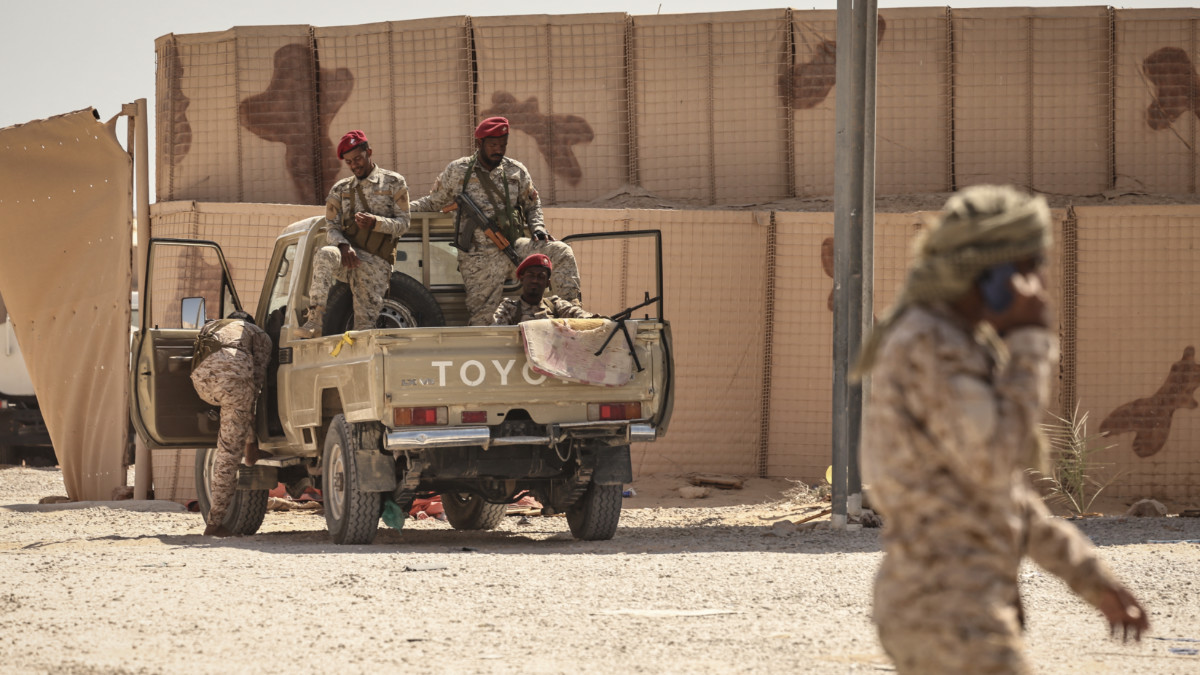
As Saudi Arabia races to reverse rapid territorial gains made by Houthi forces across Yemen, new details have emerged of Pakistan’s deepening involvement in the conflict, with four planeloads of military hardware dispatched to the internationally recognized Yemeni government in September.
The arms shipment, which arrived at the strategic port city of Aden, was first reported by Reuters on Friday, marking a clear shift away from Pakistan’s earlier neutral stance as Houthi fighters advanced. Citing a senior Pakistani government official, Reuters confirmed the cargo included critical military assets: air defense systems, light artillery pieces, surveillance drones, and specialized anti-drone technology designed to counter Houthi aerial attacks. Beyond weapons supplies, Pakistani military advisors are already operating on the ground alongside Saudi coalition forces to train and assist Yemeni government troops, according to the report.
Multiple Western and Arab diplomatic sources confirmed to Middle East Eye that Saudi Arabia is currently gearing up for a large-scale, high-intensity military campaign to push back the Houthi offensive that has already given the group full control over Yemen’s entire Red Sea coastline. In recent days, heavy clashes have intensified around the strategically vital city of Taiz, where Houthi fighters scored a key tactical victory this week by destroying a critical bridge connecting government-held areas surrounding Taiz to the southern port of Aden.
If Houthi forces succeed in seizing full control of Taiz from Yemeni government forces, they will effectively cut off Aden from northern government-held territories, severing the government’s primary overland supply routes and putting the seat of the Yemeni administration under increased strategic pressure.
In response to the rapid advance, Saudi Arabia has dramatically scaled up its air campaign against Houthi positions across the country. Houthi spokespersons reported Thursday that the Saudi-led coalition launched 94 separate air strikes within a 24-hour period. For its part, the Saudi military confirmed it carried out a targeted high-value operation in the Houthi-held capital Sanaa, struck 11 military sites in the Houthi stronghold of Saada, and conducted 27 air raids against what it described as an integrated Houthi military network in Taiz.
The fighting has spilled across the border into Saudi territory, with Houthi forces repeatedly targeting Saudi civilian infrastructure, including a recent attack on Riyadh’s international airport. On Thursday, Saudi authorities accused the group of launching a drone strike on an electricity distribution station in the holy city of Medina, which supplies power to the Prophet’s Mosque, one of Islam’s holiest sites. The Houthis have denied any involvement in the attack on the station.
Pakistan’s decision to step up military support for Saudi Arabia and the Yemeni government comes as the first major test of the Mecca Pact, a joint defense agreement signed by Pakistan, Turkey, and Saudi Arabia back in August. For weeks after the pact was signed, both Pakistan and Turkey remained on the sidelines as Houthi fighters swept along the Red Sea coast and imposed a shipping blockade on Saudi vessels transiting the vital waterway.
Regional security analysts note that both nations face a delicate balancing act, as they seek to maintain strong alliance ties with Saudi Arabia while managing their own distinct security priorities. Pakistan shares a long border with Iran, the key regional backer of the Houthi movement that has provided the group with arms, intelligence, and military advisory support for years.
While the United States remains Saudi Arabia’s most critical security partner, the Trump administration has so far avoided taking a public role in the latest campaign against the Houthis, even as it joins Pakistan in deploying military advisors and supplying advanced weapons systems to the coalition.
In a separate move to shore up its regional alliances ahead of the anticipated offensive, Saudi Arabia moved this week to repair strained relations with the United Arab Emirates, a fellow Gulf Cooperation Council member with which it had clashed over Yemen policy amid the UAE’s support for southern Yemeni secessionist movements. On Tuesday, Saudi Crown Prince Mohammed bin Salman welcomed UAE Vice President Mansour bin Zayed Al Nahyan for high-level talks in Riyadh, a public signal of mended ties ahead of the planned military push.