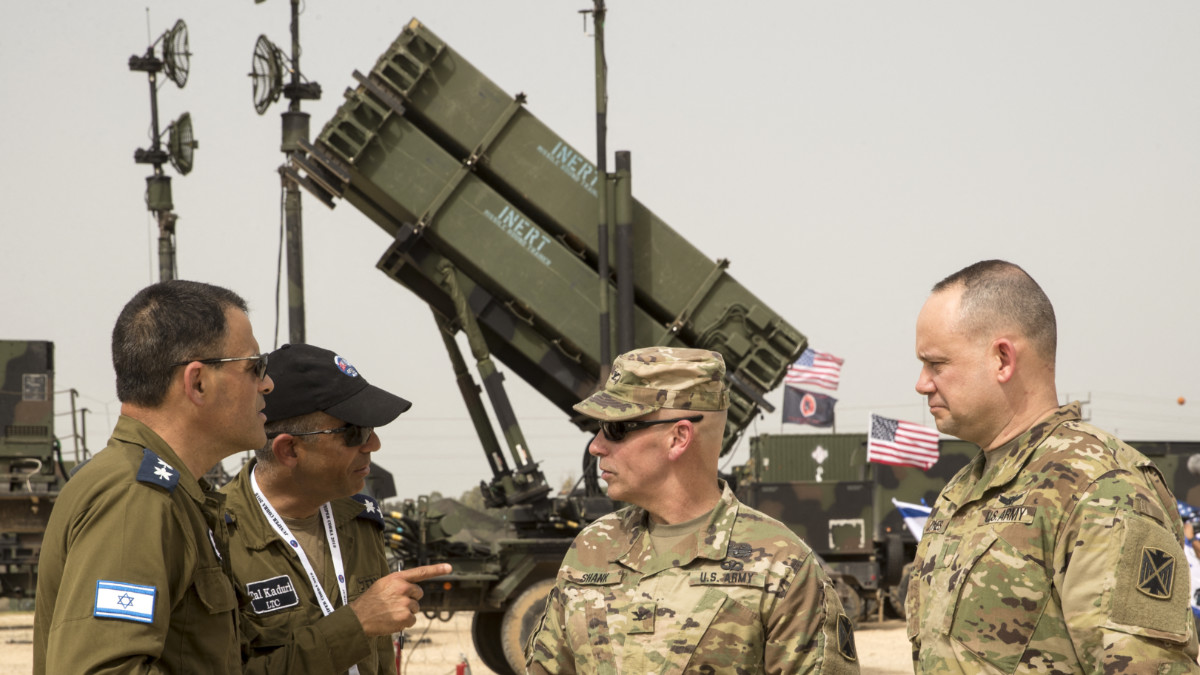
As former U.S. President Donald Trump confirms he is actively considering new military strikes against Iran, the United States has moved to bolster defenses across the Arabian Peninsula by deploying additional Patriot air defense batteries to two key Gulf energy producers, Saudi Arabia and Qatar, multiple sources familiar with the deployment confirm.
Axios first reported the deployment details Thursday, noting that one extra Patriot battery has been positioned in Saudi Arabia to shield a critical oil processing facility, while a second battery has been sent to Qatar to protect a major natural gas infrastructure site. What makes this troop movement particularly noteworthy is the global shortage of these highly sought-after air defense systems: the U.S. maintains only a limited stock of operational Patriot batteries globally. Data from the nonpartisan Missile Defence Alliance shows that just 33 batteries are currently stationed for domestic defense within the United States, while another 27 are deployed across all overseas U.S. military missions.
While major U.S. allies in the Gulf Cooperation Council—including Saudi Arabia, Qatar and the United Arab Emirates—already operate their own fleet of Patriot batteries, regional partners have increasingly turned to Washington for supplementary defensive support. Gulf states have faced the full force of Iranian retaliatory actions targeting Western and Israeli interests in the region, leaving their critical infrastructure vulnerable to attack.
Saudi Arabia faces the most acute security risks among Gulf states, with both major urban centers and core energy infrastructure facing repeated attacks. Yemeni Houthi fighters have launched regular strikes on Saudi targets, while Iran-aligned Shia militias operating out of Iraq have also carried out attacks against the kingdom. Riyadh has formally blamed Shia militias for a recent strike on its strategic East-West Pipeline, even as Houthi forces have launched their own attacks on Yanbu, Saudi Arabia’s primary oil export terminal on the Red Sea.
The decision to reinforce Gulf defenses comes at a moment of heightened tensions, after regional allies raised sharp criticism of U.S. security commitments earlier this year. When Gulf states faced a wave of intense Iranian missile and drone strikes in response to the U.S.-Israeli military campaign against Iran, many regional leaders said they felt sidelined by Washington. This backlash has thrown renewed scrutiny on the decades-old U.S. security umbrella that has anchored Washington’s relationships with the energy-rich Gulf states, with many allies questioning the reliability of American protection amid escalating regional conflict.
In public comments Thursday, Trump confirmed he is weighing a dramatic escalation of conflict, saying new strikes against Iran remain a clear possibility. “Now I have to make a decision; they’ll either sign a very fair deal, or they won’t exist any longer,” Trump stated, repeating his extreme threat to completely dismantle the Islamic Republic of Iran.
The Patriot deployments are just one part of a broader U.S. military buildup in the Middle East. The Pentagon is also moving thousands of additional troops and a third full aircraft carrier strike group to the region. The nuclear-powered aircraft carrier USS Theodore Roosevelt departed its home port of San Diego Sunday, while the USS Makin Island Amphibious Ready Group—made up of three large amphibious vessels carrying roughly 10,000 U.S. Marines—set sail a day later on Monday. The U.S. already has two other carrier strike groups, the USS George HW Bush and USS George Washington, operating in the Middle East. Once the Theodore Roosevelt arrives, the U.S. will have three aircraft carriers positioned in the region, the largest concentration of American naval air power there since April 2026.